When Roman Coins Spoke Louder Than Words
Estimated reading time: 15 minutes
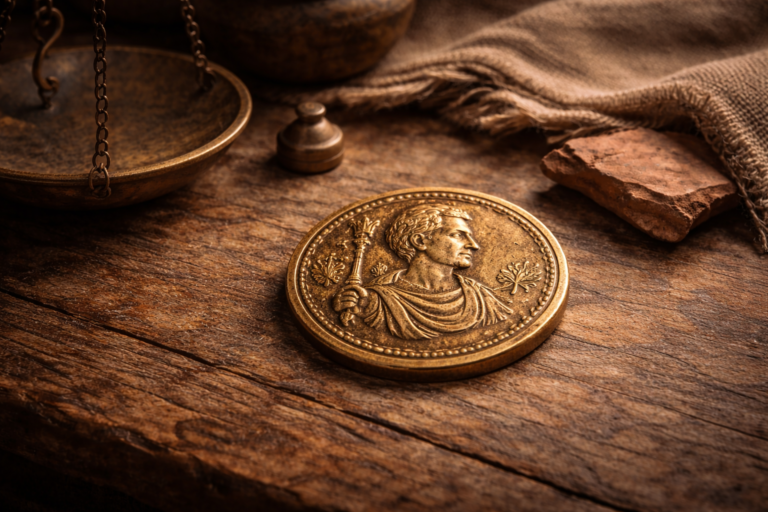
Roman coins were never just money. Long before newspapers, speeches, or modern media, small pieces of metal carried messages that reached millions of people who could not read, could not vote, and would never see the emperor in person. Coins spoke quietly, constantly, and everywhere. And because they were used every single day, their messages didn’t feel like propaganda. They felt like reality.
Why this matters
If you want to understand how Rome kept such a vast empire psychologically stable, you have to look beyond armies and laws. You have to look at the objects people touched most often. Coins were the empire’s most effective silent storytellers.
- Coins as the First Mass Communication System
- Why Images Mattered More Than Words
- The Emperor’s Face Everywhere
- Crisis Messaging and Political Stability
- Soldiers, Pay, and Manufactured Loyalty
- Gods, Virtues, and Moral Education
- Everyday Use and Psychological Power
- Regional Symbols and Imperial Control
- Silence, Erasure, and Forgotten Rivals
- The Long Shadow of Roman Coin Messaging
- Share and Reflect
- About PastMint
Coins as the First Mass Communication System
In the Roman world, information traveled slowly and unevenly. Messages carved in stone reached only those who passed nearby. Speeches disappeared the moment they were spoken. Written texts were useless to most of the population, because literacy was limited.
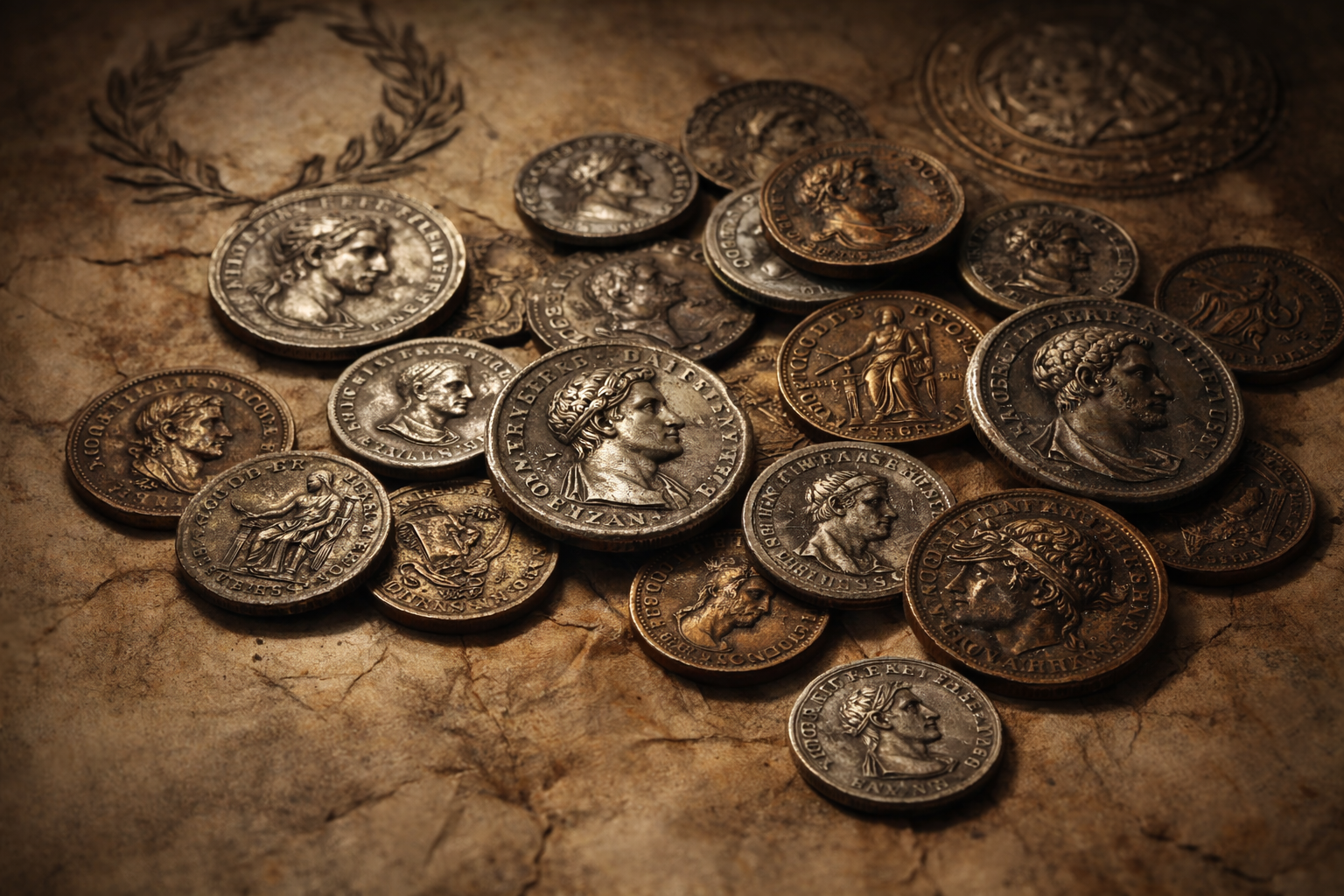
Coins solved all of these problems at once. They were durable. They were portable. And they were unavoidable. Coins moved through the hands of soldiers, merchants, farmers, slaves, officials, and travelers. A single design could circulate for years, repeating the same visual message over and over until it felt normal.
That made Roman coinage something unprecedented: a permanent, mobile message issued by the state. Not a single announcement. A system.
Why Images Mattered More Than Words
Rome did not rely on long explanations. It relied on symbols. That was not just a design choice, it was strategy.
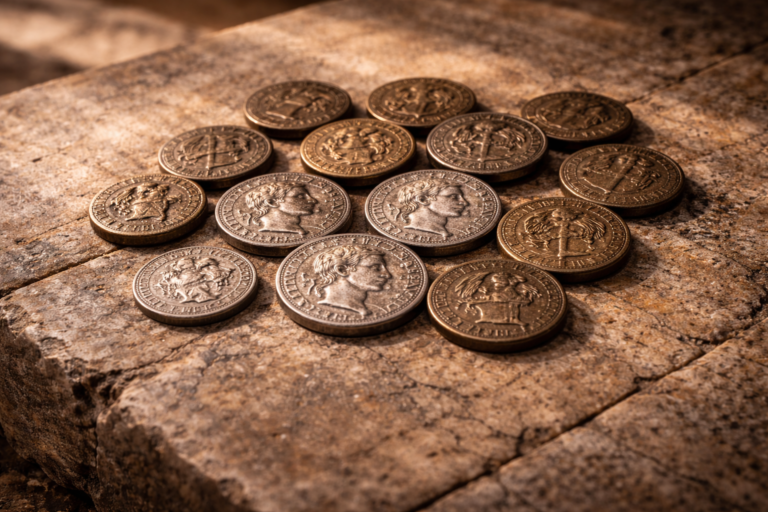
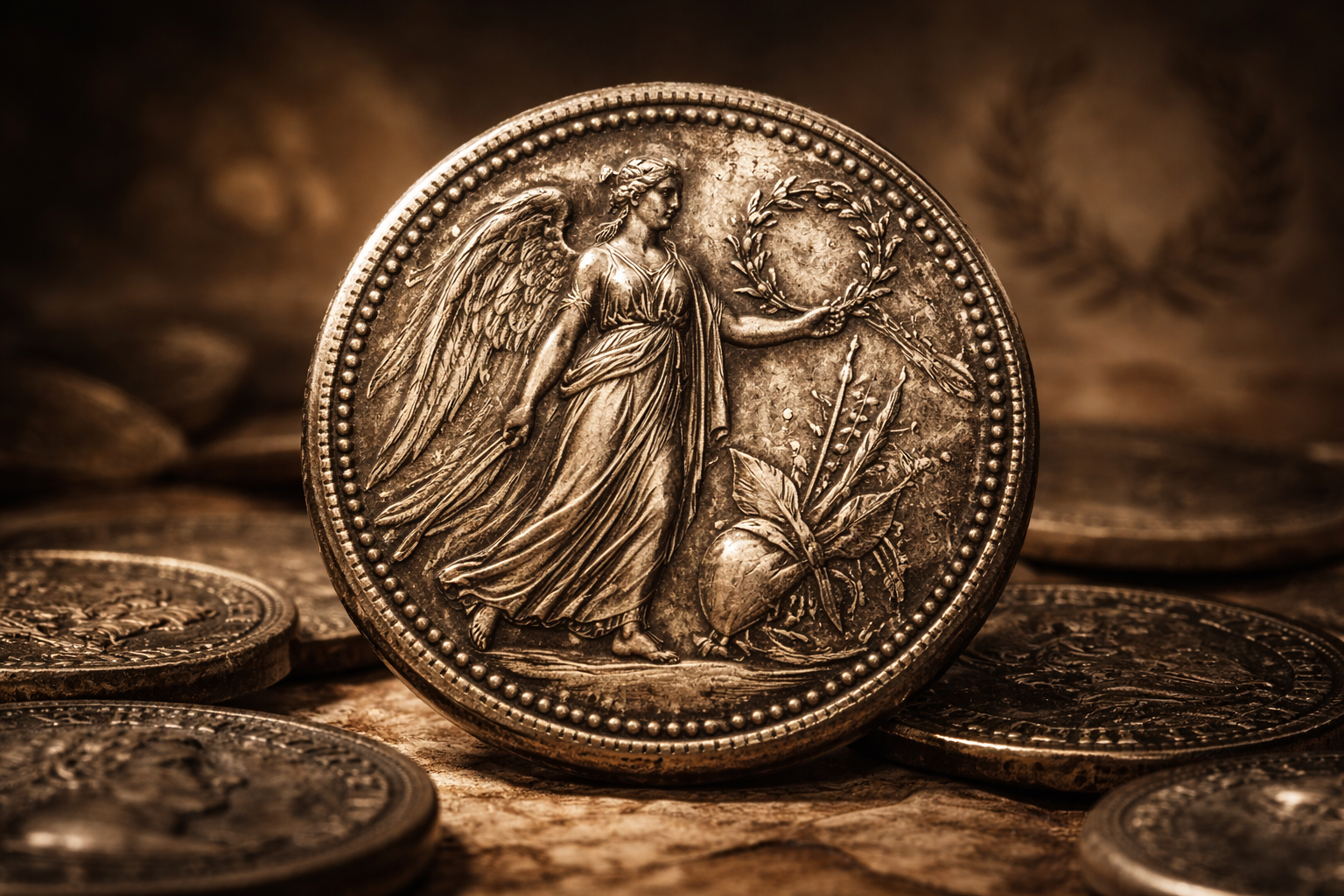
A laurel wreath signaled victory. A figure holding scales suggested justice. A cornucopia hinted at abundance. An olive branch whispered peace. Even without reading a single letter, people could recognize the story being told.
Reality Check
Symbols work best when they feel familiar. Rome didn’t need everyone to agree with the empire. It only needed everyone to recognize its authority every day, in a way that felt natural.
The Emperor’s Face Everywhere
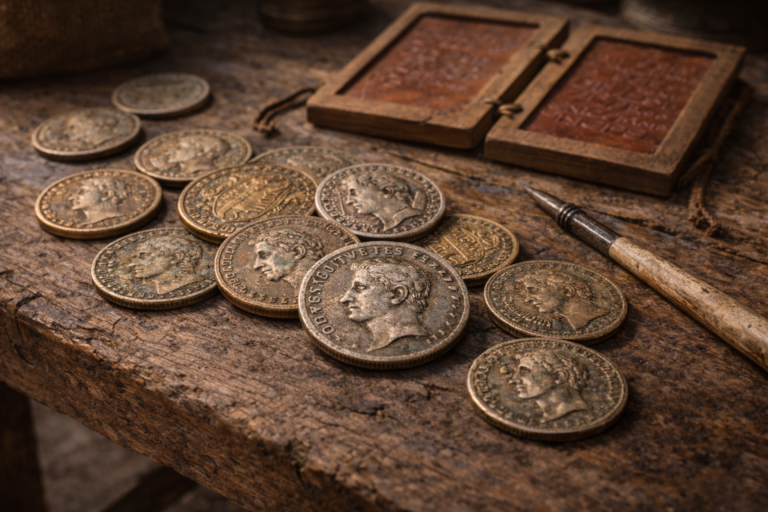
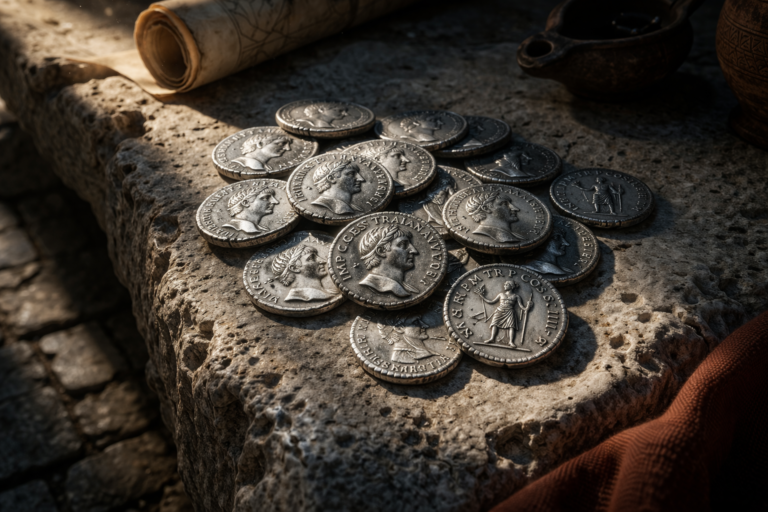
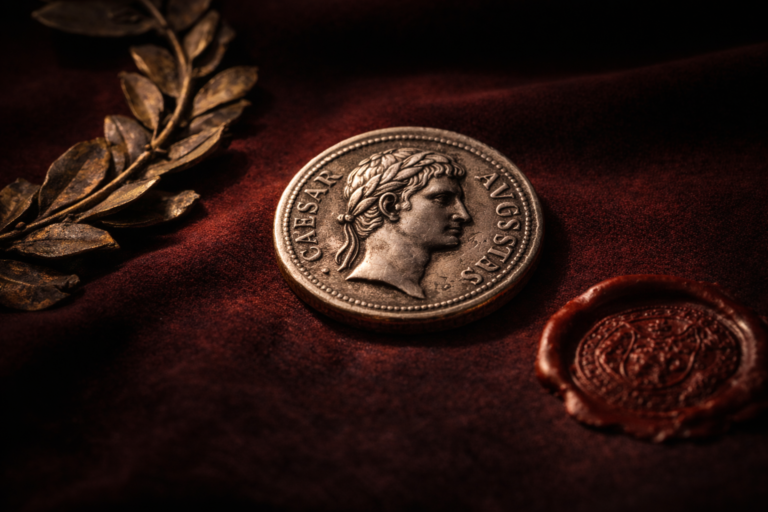
For many Romans, the only image they ever saw of their ruler was the one pressed into metal. The emperor’s portrait on coins wasn’t a “nice to have.” It was the empire’s most consistent public presence.
Portraits were carefully controlled. Youthful features suggested vitality. Stern expressions suggested strength and discipline. Divine hints and heroic posture suggested legitimacy that went beyond politics.
When a new emperor took power, one of the first urgent actions was often to change the coinage. That wasn’t cosmetic. Coins announced legitimacy faster than laws could, and farther than proclamations could travel.
Crisis Messaging and Political Stability
If you want to spot Roman anxiety, don’t only read historians. Look at what appears on coins during unstable years.
After assassinations, civil wars, or contested successions, coin themes shift sharply. Suddenly, the message becomes unity, harmony, restoration, peace. These designs often show a calm world that people were not actually living in.
Soldiers, Pay, and Manufactured Loyalty
The Roman army ran on money, and Roman money ran through the army. Soldiers were paid in coins that carried the emperor’s face and the empire’s claims.
Over time, this repeated connection became psychological. Your wages came from imperial authority. Your identity was reinforced by imperial imagery. Even your daily survival could feel tied to the ruler whose portrait stared back at you.
In frontier zones, coins were often the first Roman objects local communities encountered. Before roads, architecture, or law, the empire arrived in someone’s palm.
Gods, Virtues, and Moral Education
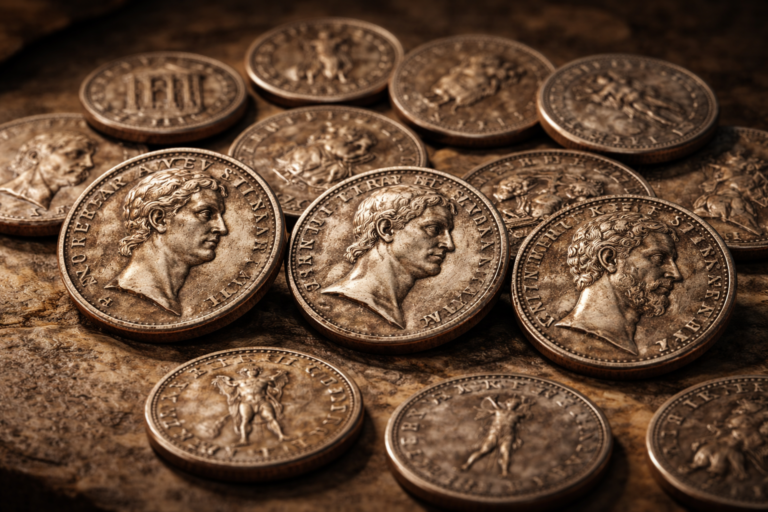
Roman coins didn’t only promote rulers. They promoted values. Courage. Loyalty. Justice. Mercy. Stability. These virtues often appeared as personified figures, as if the empire itself was morally guided.
Gods also appeared constantly, not just for worship, but for political reassurance. Divine protection implied that the empire’s order was not temporary. It was cosmic.
Everyday Use and Psychological Power
A message repeated once can be ignored. A message repeated daily becomes background truth.
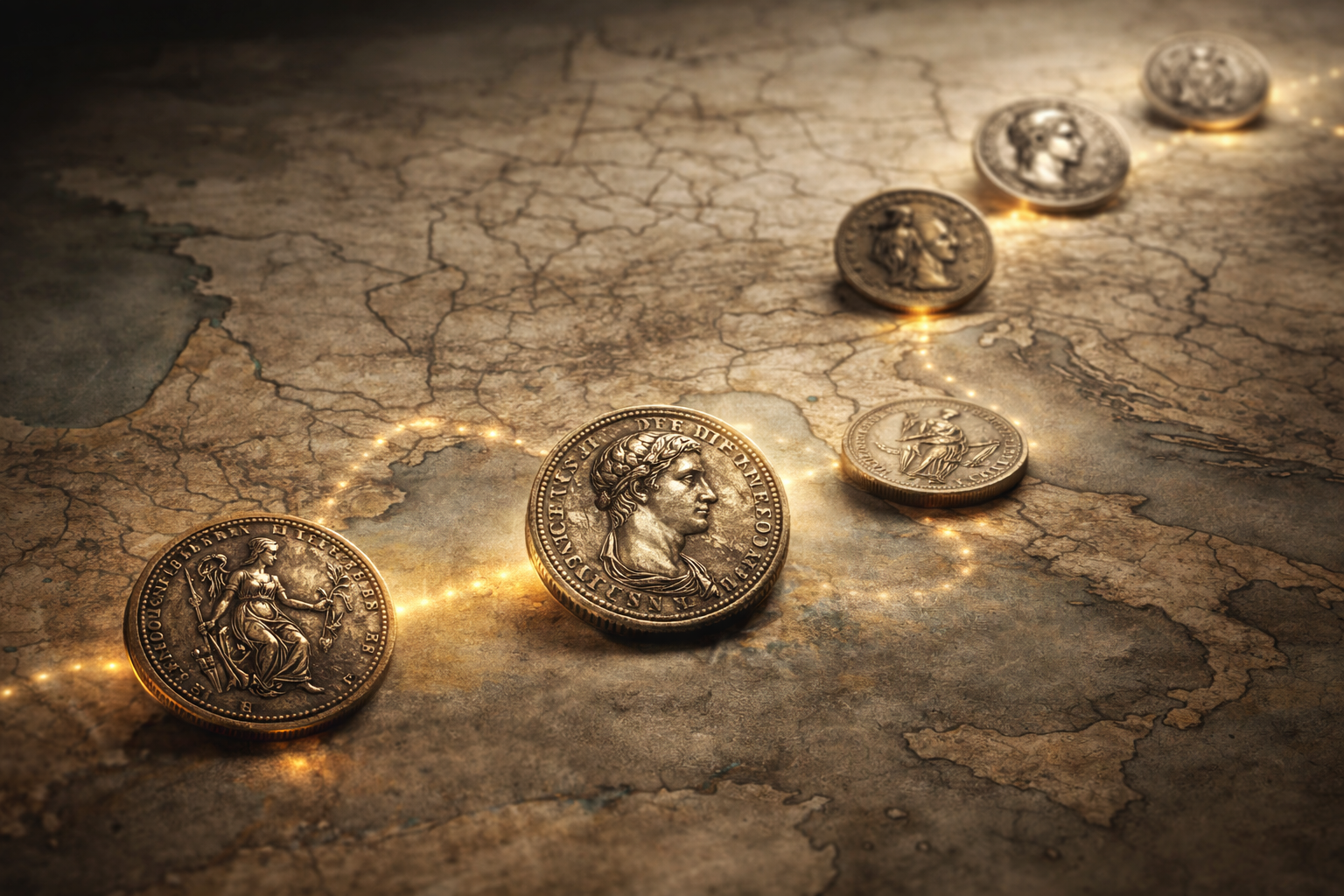
Coins did this without effort. Every purchase, every wage payment, every tax, every market exchange repeated the same symbols and claims. Authority became familiar. Familiarity became acceptance.
Key Takeaway
Roman power wasn’t only enforced by armies. It was reinforced by repetition. Coins turned authority into something people touched, used, and accepted as normal.
Regional Symbols and Imperial Control
Rome controlled the system, but the empire was vast and diverse. In many provinces, coin imagery blended Roman authority with familiar local symbols.
This wasn’t generosity, it was intelligent control. Familiar symbols reduced resistance. They helped communities feel included while still absorbing Roman messaging.
Coins didn’t only enforce identity. They negotiated it.
Silence, Erasure, and Forgotten Rivals
What coins did not show mattered as much as what they did. Defeated rivals disappeared. Failed rulers vanished. Uncomfortable events were avoided.
Coinage became a curated narrative. A public memory with sharp edges removed.
Final Verdict
Roman coins spoke louder than words because they never stopped speaking. They turned political messaging into everyday routine, shaping belief without debate. If you want to understand Rome’s psychological reach, start with the smallest artifact that traveled the farthest.
The Long Shadow of Roman Coin Messaging
Modern money still carries the DNA of Roman strategy. Portraits on banknotes. National symbols. Commemorative designs. The tools evolved, but the logic remains.
Power still speaks through objects we touch every day. And when a message is repeated often enough, it stops feeling like a message. It starts feeling like the world.
Share and Reflect
Share this article
If this perspective made you look at ancient money differently, share it with someone who loves history.
Article link:
When Roman Coins Spoke Louder Than Words
Reflection question: If coins shaped belief in ancient Rome, what everyday objects shape belief today?
About PastMint
PastMint
PastMint explores the hidden stories behind money, symbols, and everyday objects. We connect historical context with cultural meaning to show how small artifacts shaped entire civilizations—quietly, consistently, and often more effectively than words.