Roman Coins as Everyday Political Media

Estimated reading time: 16 minutes
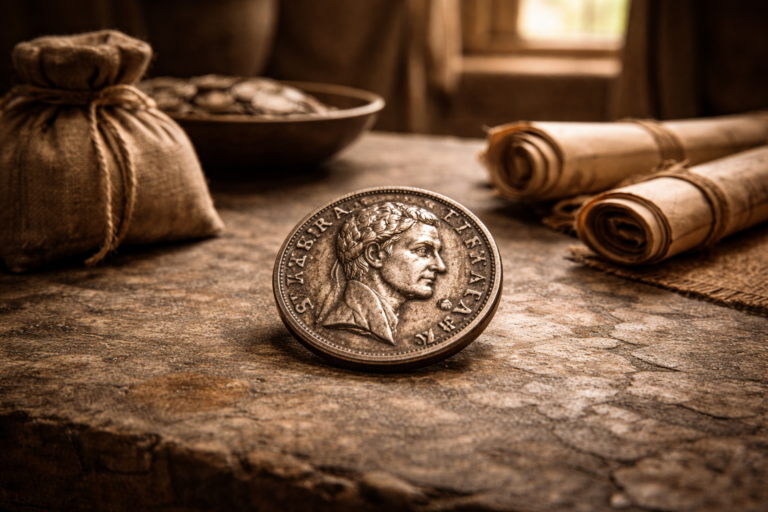
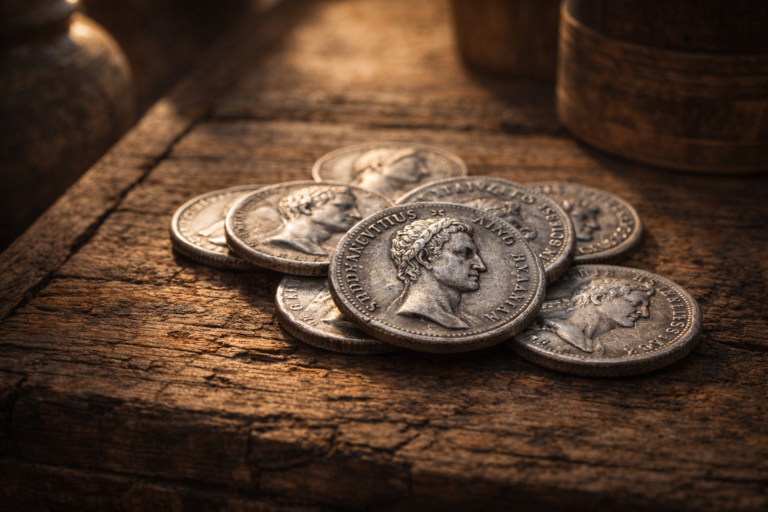
Imagine a media system that never sleeps, never needs electricity, and reaches people who cannot read. In ancient Rome, that system already existed—and it fit in your palm. Roman coins were political media in everyday disguise.
They didn’t only pay for bread or wine. They trained the public to recognize authority, accept narratives, and associate stability with whoever controlled the mint. In a world without modern newsfeeds, coins were a daily feed of symbols.
What you’ll see in this article
We’ll break down how Roman coin imagery worked like political messaging: who controlled it, why it was trusted, how it spread through daily life, and how it shaped belief without argument.
- Why Coins Worked Like Media
- Who Controlled the Message
- The Emperor Portrait as a Political Tool
- Symbols as Instant Political Shortcuts
- Coinage During Crisis
- The Marketplace Effect
- Why People Trusted Coin Messages
- What Coin Media Could Not Do
- Modern Echoes of Roman Coin Messaging
- Share and Reflect
- About PastMint
Why Coins Worked Like Media
Media is not only about newspapers or screens. At its core, media is a system that carries messages repeatedly to large groups of people. Rome needed this badly because its population was diverse, scattered, and often illiterate.
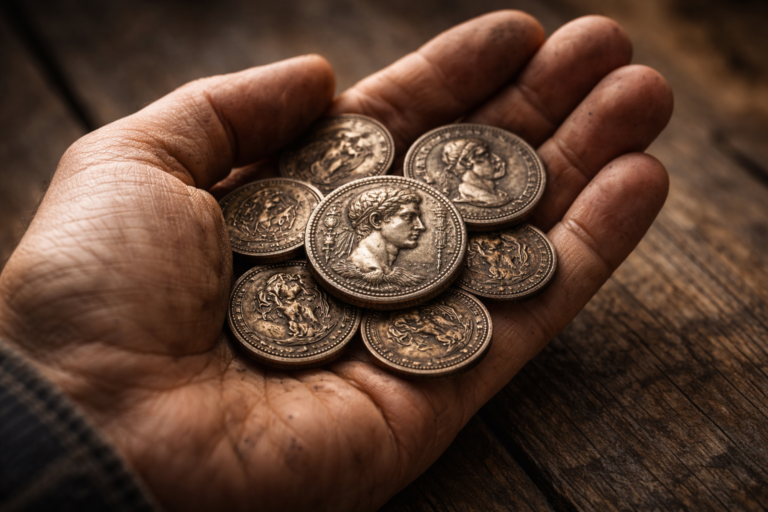
Coins solved the distribution problem automatically. They circulated naturally through wages, taxes, markets, trade routes, and military payment. A message printed once on a coin could be “published” millions of times through daily use.
Who Controlled the Message
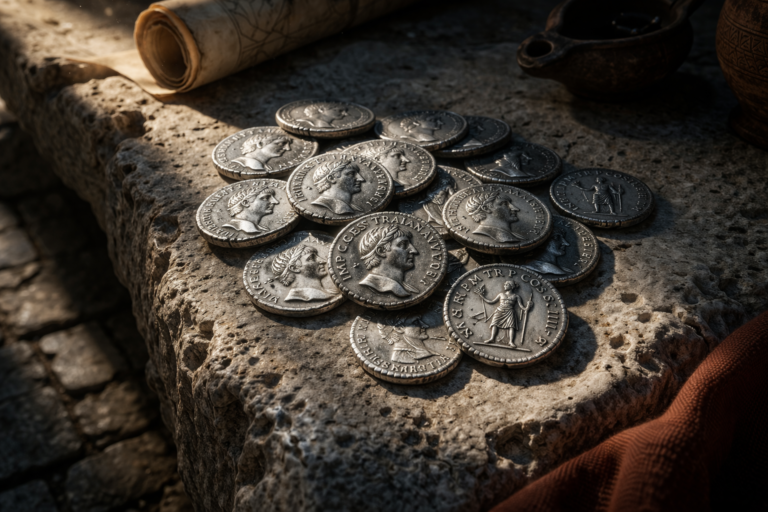
Coin designs were not random decoration. They were decisions made by power. Controlling coinage meant controlling what the public saw again and again: the ruler, the virtues, the victories, the promises.
Even when local mints operated in distant provinces, the overall visual language stayed aligned with imperial identity. The goal was consistency—so the empire felt present everywhere, even where the emperor never appeared.
The Emperor Portrait as a Political Tool
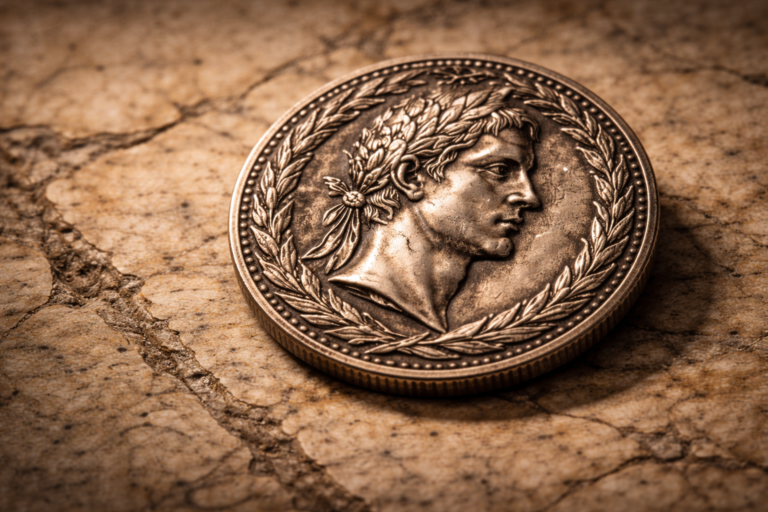
The emperor’s portrait was the empire’s most repeated face. It created familiarity, and familiarity creates psychological authority. People may never meet a ruler, but repeated exposure makes the ruler feel real, unavoidable, and permanent.
Portrait style mattered. A youthful profile could suggest energy and continuity. A stern face could suggest discipline and control. The message wasn’t “this is what he looks like.” The message was “this is what power should feel like.”

Symbols as Instant Political Shortcuts
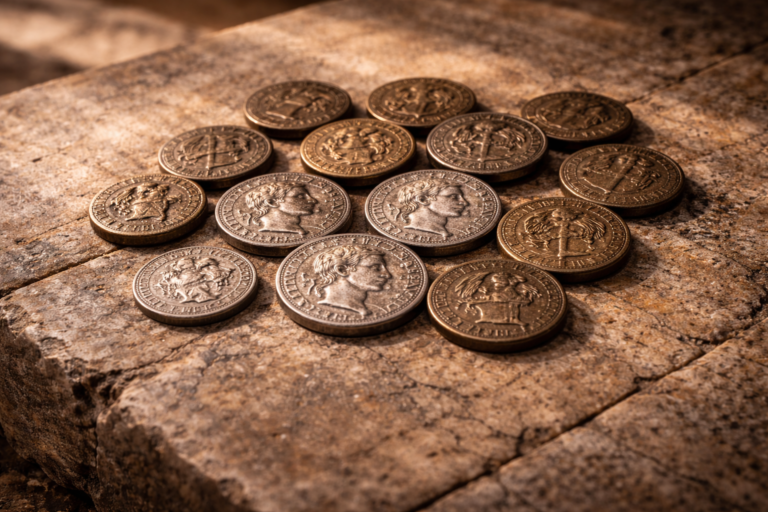
Roman coin symbolism worked like political headlines. It had to be fast, emotional, and instantly understandable. A laurel wreath didn’t just mean victory. It suggested that victory belonged naturally to the empire.
Virtues like justice, loyalty, harmony, and stability appeared as visual “proof” that the empire was morally guided. The coin didn’t say “trust us.” It showed a world where trust felt logical.
Reality Check
Coin messaging wasn’t written for skeptics. It was written for repetition. When a symbol appears often enough, it stops feeling like a claim and starts feeling like a fact.
Coinage During Crisis
One of the clearest places to see coin propaganda is during instability. After coups, civil wars, contested successions, or rebellions, coin designs often shift toward reassurance.
Suddenly the message becomes unity, peace, restoration, and “the return of order.” These aren’t celebrations. They’re campaigns. They are the empire trying to calm itself through symbols.
The Marketplace Effect
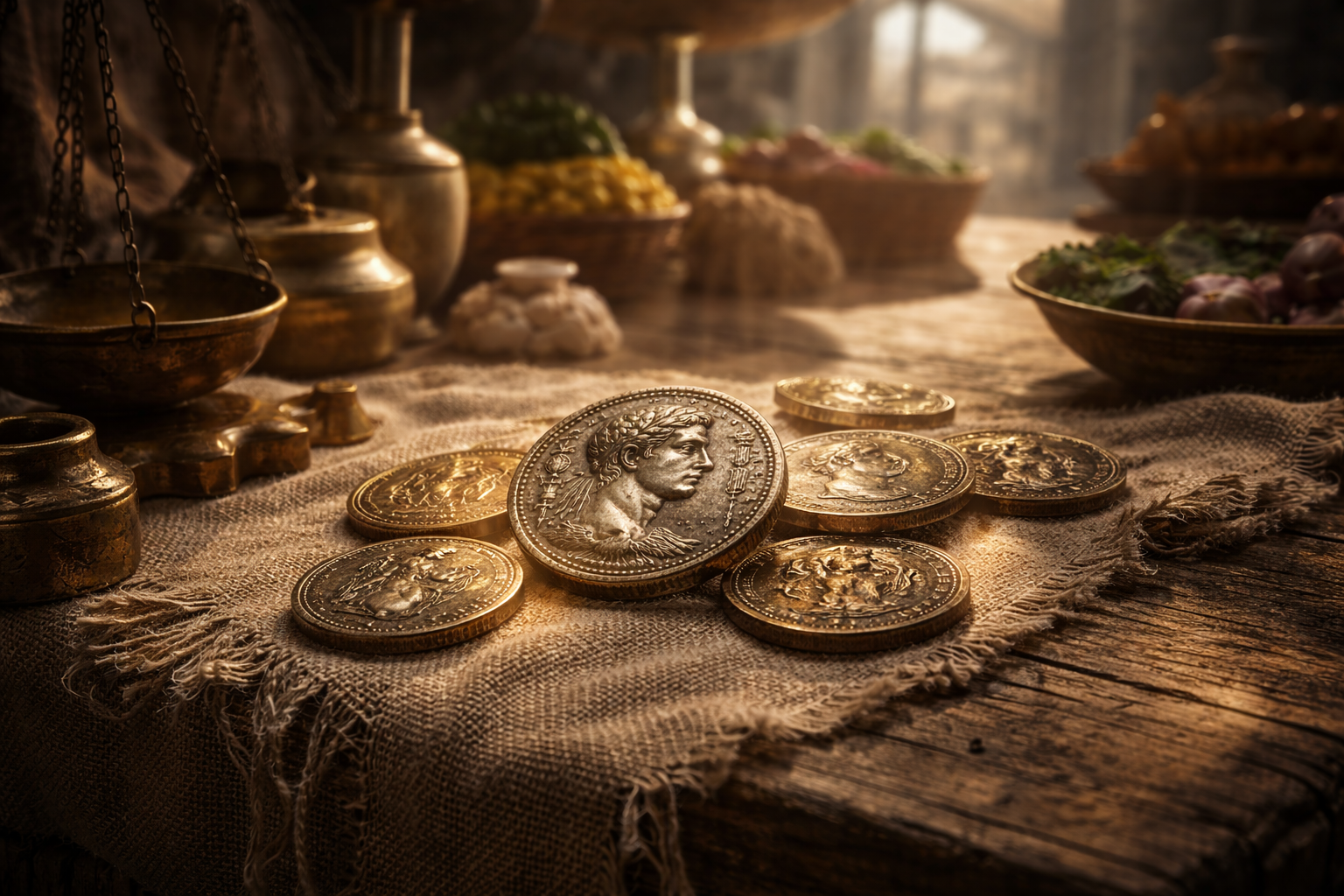
The Roman marketplace was where coin media became truly powerful. Not because merchants discussed coin images like scholars—but because exposure was constant. A coin could pass through dozens of hands in a single day.
That meant the political message didn’t need debate. It simply needed presence. Coins turned imperial narratives into background reality.
Key Takeaway
Rome didn’t need everyone to love the emperor. It only needed everyone to see imperial authority as normal—every day, in every transaction.
Why People Trusted Coin Messages
Coins had built-in credibility. They were tied to real economic life: wages, taxes, trade, survival. When something is connected to your daily needs, it feels more “real” than words on a wall.
Coin messages also felt neutral because they weren’t delivered as speeches. They were delivered as objects. That subtlety made them more effective.
What Coin Media Could Not Do
Coin messaging had limits. It could not explain complex policies. It could not respond quickly like modern media. And it could not control what people privately believed.
But it didn’t need to. Its job was simpler: repeat the empire’s chosen story until it became familiar.
Modern Echoes of Roman Coin Messaging
The Roman playbook still lives. Portraits on money, national symbols, commemorative issues—these continue the same strategy: make authority feel permanent through everyday objects.
The platform changed. The psychology didn’t.
Final Verdict
Roman coins were everyday political media because they made power feel normal. Their message wasn’t delivered once. It was delivered endlessly—through wages, markets, taxes, and trade—until imperial authority felt like part of daily life.
Share and Reflect
Share this article
If this changed how you see ancient money, share it with someone who loves history and culture.
Article link:
Roman Coins as Everyday Political Media
Reflection question: What modern “everyday object” shapes political belief today the way coins once did?
About PastMint
PastMint
PastMint explores the hidden stories behind money, symbols, and everyday objects. We connect historical context with cultural meaning to reveal how small artifacts shaped entire civilizations—quietly, consistently, and often more effectively than words.