The Hidden History of Everyday Money
Estimated reading time: 19 minutes
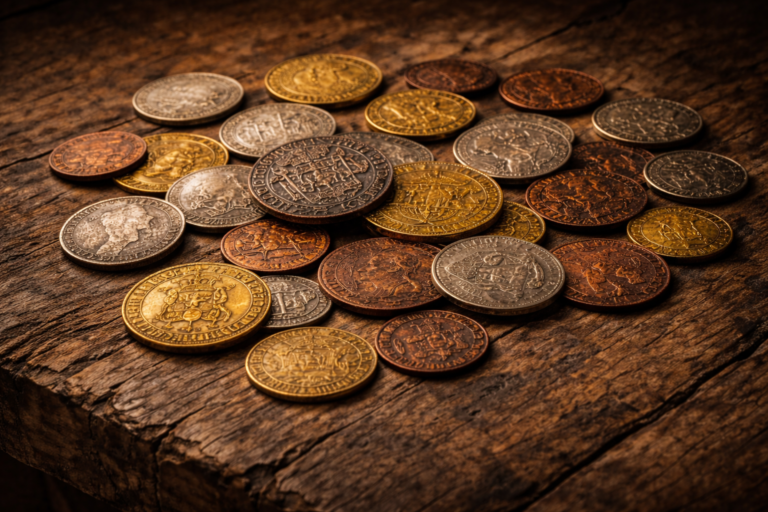
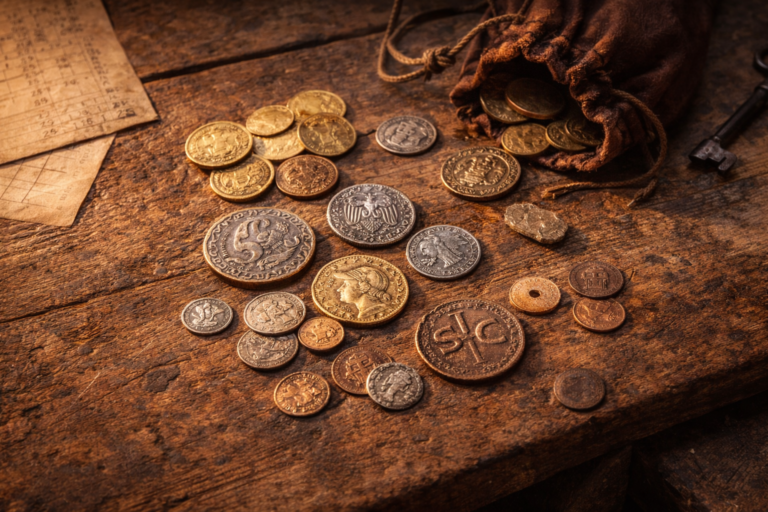
When people talk about money in history, they usually talk about power, gold, and empire. They talk about kings, treasuries, and wealth. But most money never lived in palaces. It lived in pockets, kitchens, markets, and tired hands.
The real history of money is not loud. It is quiet, repetitive, and deeply human. It is the history of everyday money — the small coins and simple exchanges that shaped daily life long before anyone wrote about economics.
Why everyday money is usually ignored
Big events dominate history books. Everyday systems fade into the background. Yet it is those systems that quietly shape how people live, survive, and think.
- Money as Invisible Infrastructure
- Life Before Everyday Money
- The Birth of Daily Exchange
- Small Coins and Big Consequences
- Markets and the Rhythm of Life
- Money Inside the Household
- Trust, Wear, and Familiarity
- Meaning Without Words
- Money in Memory and Ritual
- The Psychology of Everyday Money
- Lessons That Still Matter Today
- Share and Reflect
- About PastMint
Money as Invisible Infrastructure
Some systems shape life without ever being noticed. Roads guide movement. Language guides thought. Money guides behavior.
Everyday money acted as an invisible infrastructure. It created predictability. It allowed people to plan beyond the next meal. It turned survival into routine.
Life Before Everyday Money
Before everyday money became common, exchange relied on memory and trust. Barter worked inside small communities. It failed when distance grew.
A system that depends on remembering who owes what collapses quickly under pressure. As societies expanded, a quieter solution became necessary.
The Birth of Daily Exchange
Everyday money did not appear to create wealth. It appeared to reduce friction.
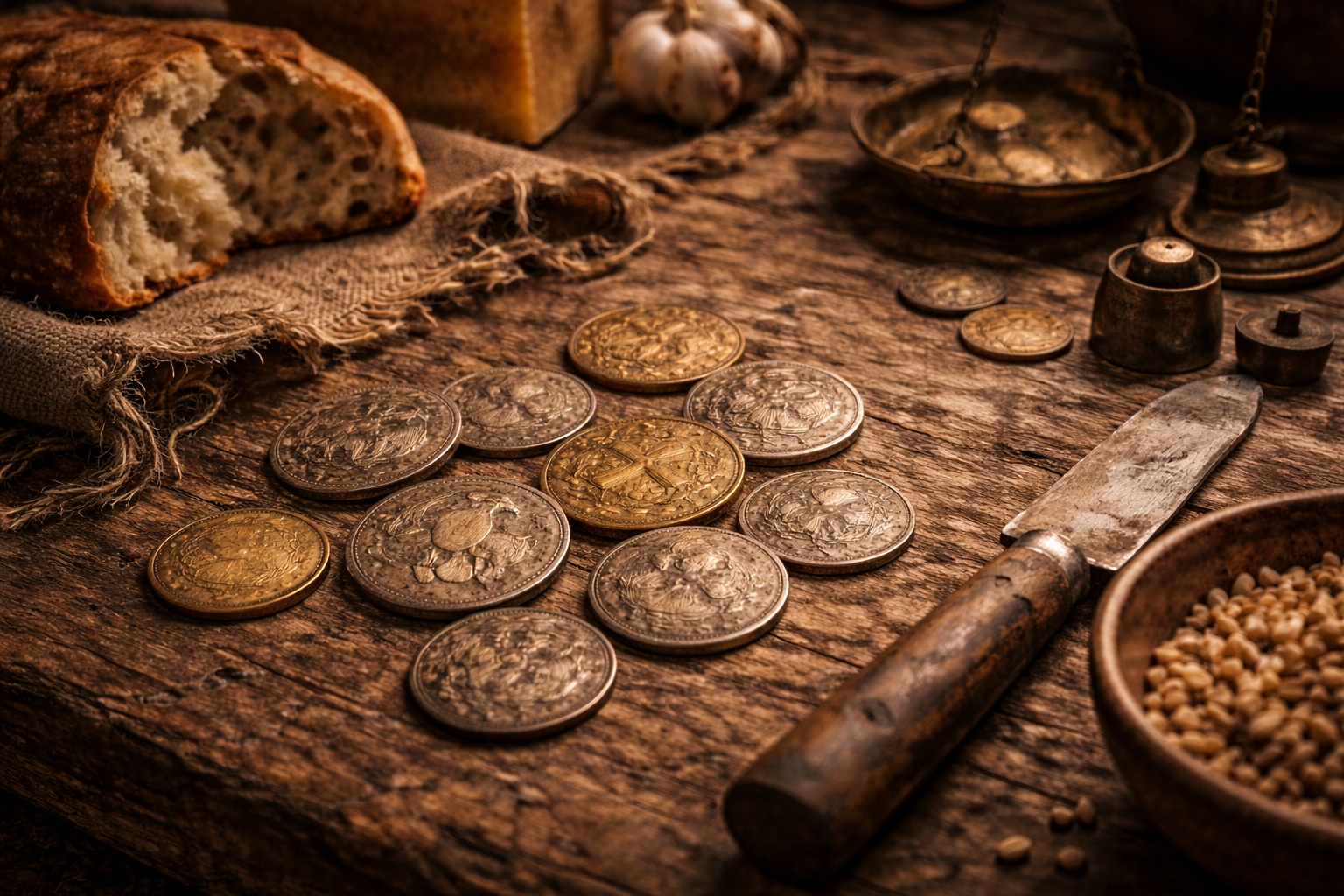
Small coins allowed people to exchange value without long negotiations. They replaced personal trust with shared acceptance.
Small Coins and Big Consequences
Large coins attract attention. Small coins shape behavior.
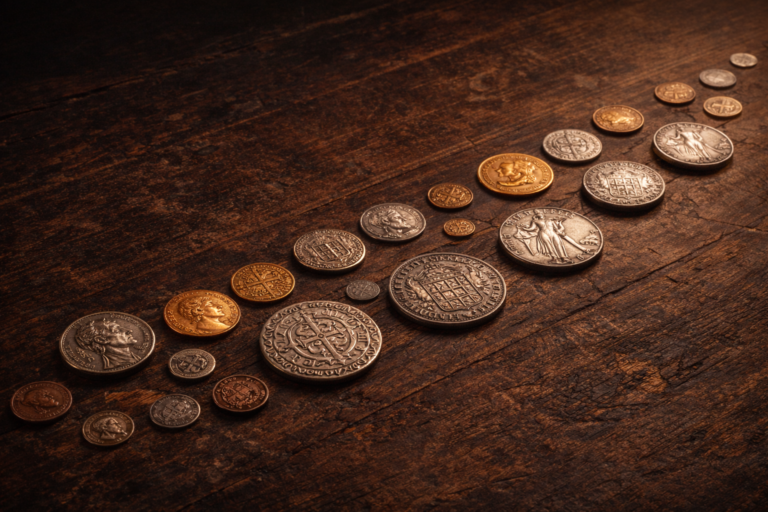
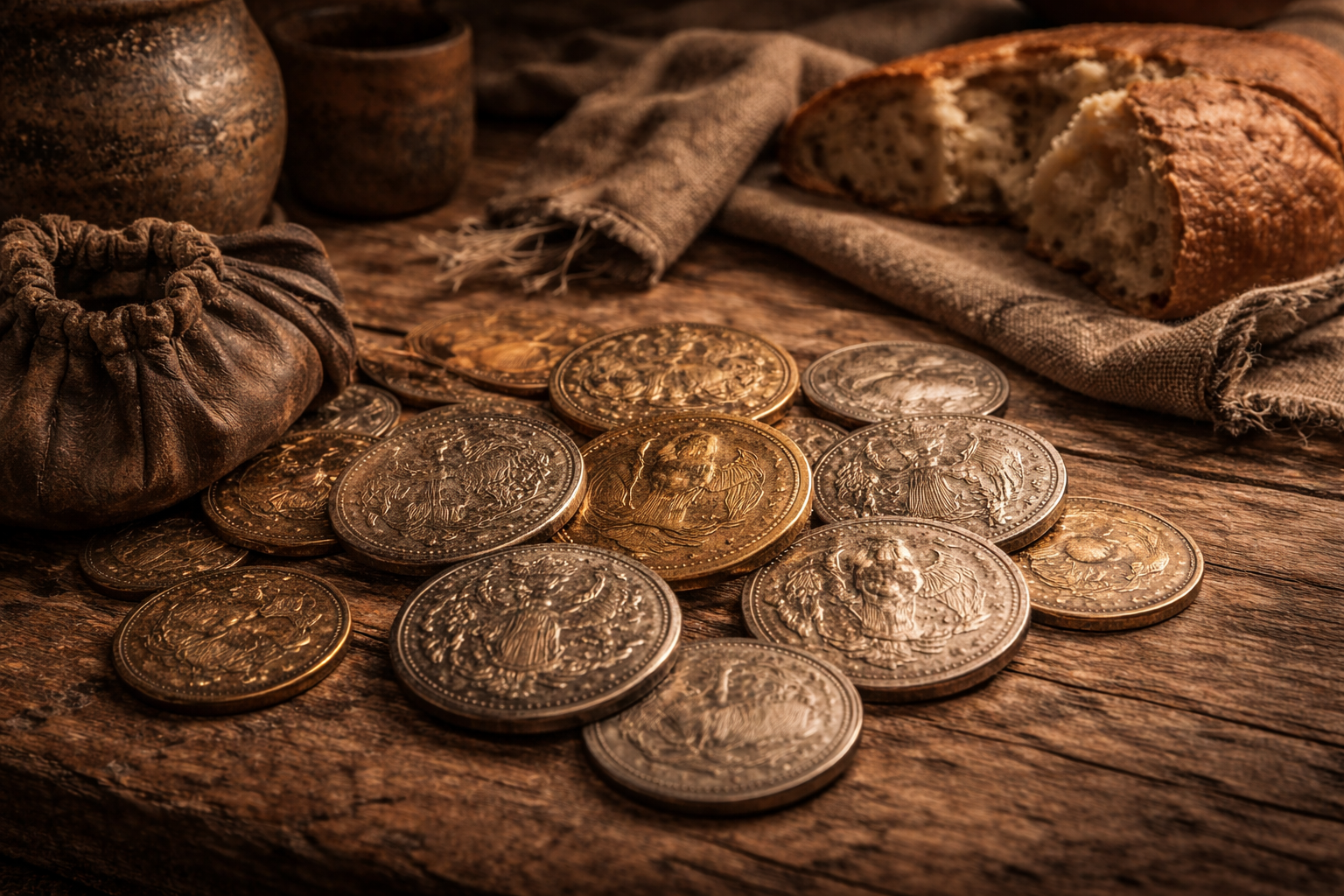
Small denominations controlled access to food, fuel, rent, and tools. They decided whether a household felt stable or fragile.
Markets and the Rhythm of Life
Markets were not chaotic spaces. They were rhythmic.
Money created tempo. It allowed prices to stabilize. It allowed expectations to form.
Money Inside the Household
Inside the home, money was practical. It measured responsibility. It shaped habits.
Households learned balance. Spend too fast and suffer later. Hold too tightly and risk shortage.
Trust, Wear, and Familiarity
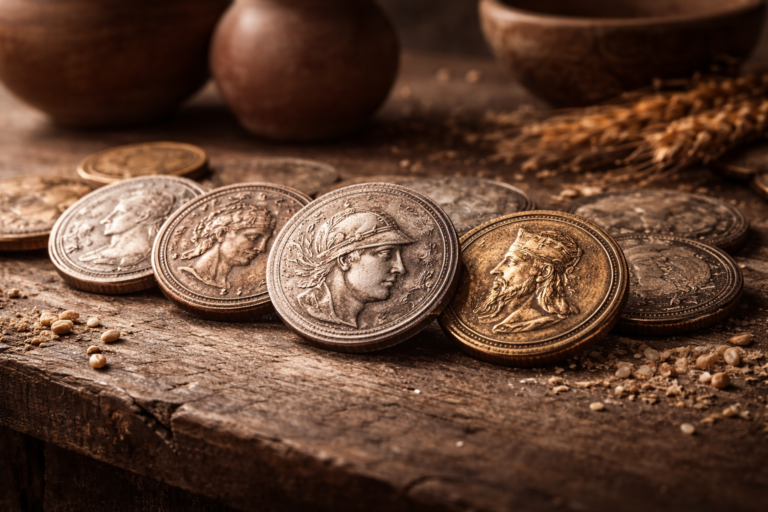
People trusted what they recognized. Coins earned trust through repetition.
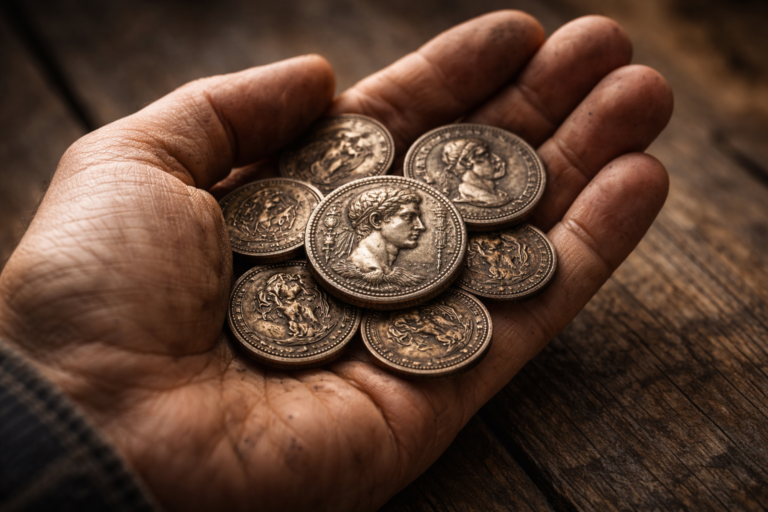
Wear became proof. A smooth coin had passed many hands. It had survived exchange.
Meaning Without Words
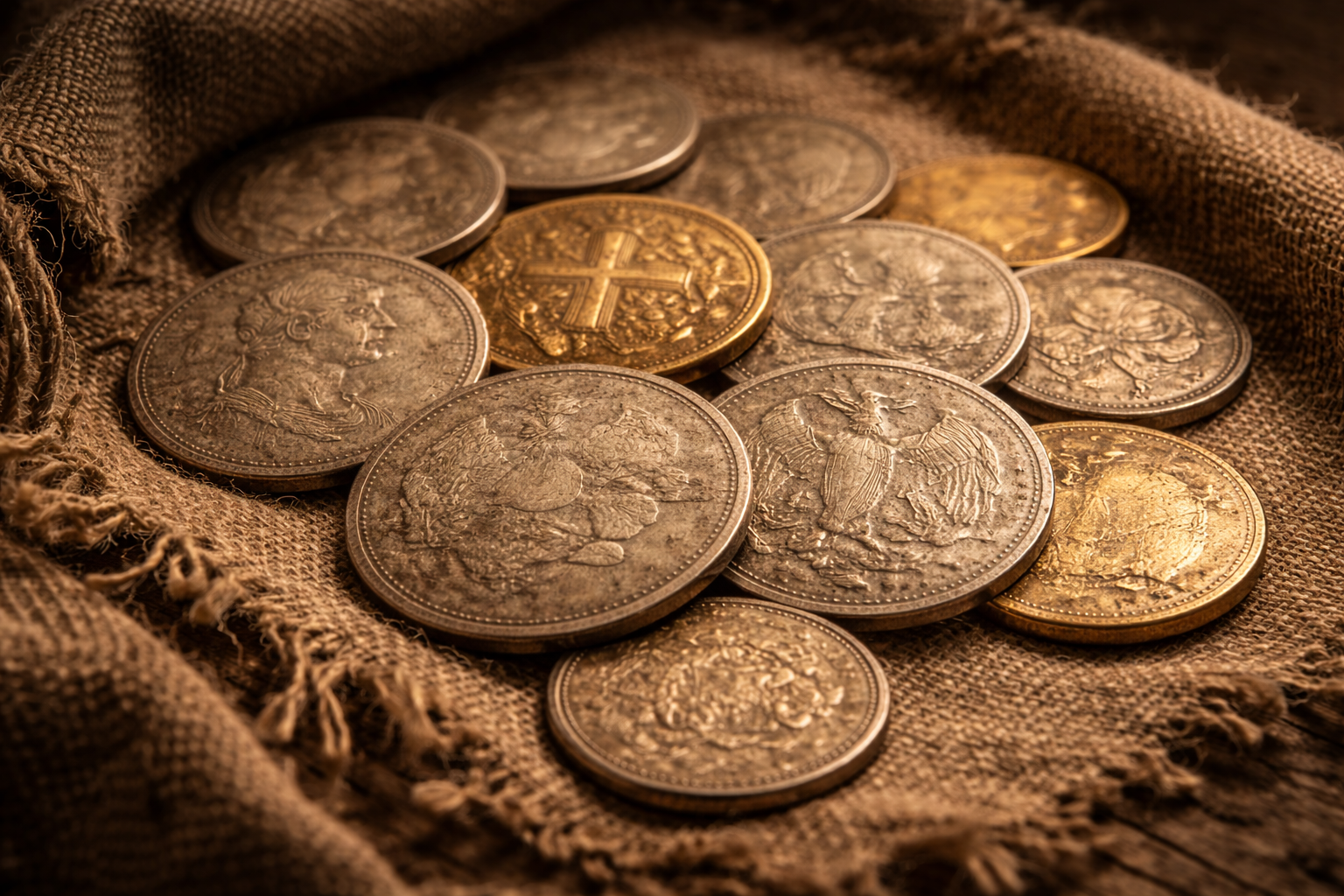
Everyday money also carried meaning. Images repeated daily shape perception.
Without speeches or texts, coins taught people what authority looked like.
Money in Memory and Ritual
Some coins were never spent. They were kept. Saved. Passed on.
Not because of value, but because of memory.
The Psychology of Everyday Money
Money trains behavior. Saving. Spending. Sharing. Hoarding.
Everyday money shaped emotional life quietly. Security. Fear. Hope.
Lessons That Still Matter Today
Modern money moves faster. But the psychology remains.
Stability still matters more than abundance. Familiar systems still feel safer than better ones.
Final Verdict
The hidden history of everyday money is the history of human routine. It shaped survival, trust, behavior, and identity long before economics had a name. To understand how people really lived, follow the small coins — not the crowns.
Share and Reflect
If this article changed how you think about money, share it with someone who values history beyond empires.
Article link: https://pastmint.com/the-hidden-history-of-everyday-money/
Reflection question: What everyday object today shapes your behavior without you noticing?
About PastMint
PastMint
PastMint explores the hidden stories behind money, symbols, and everyday objects. We focus on how ordinary systems quietly shaped civilizations—without spectacle, but with lasting impact.