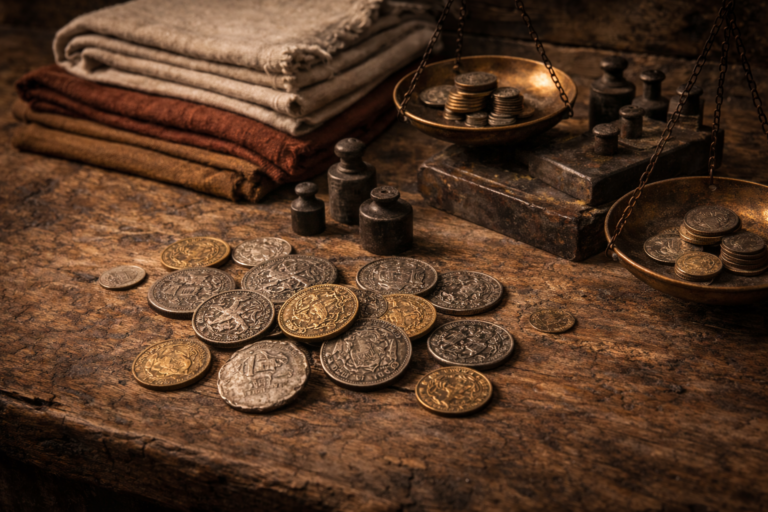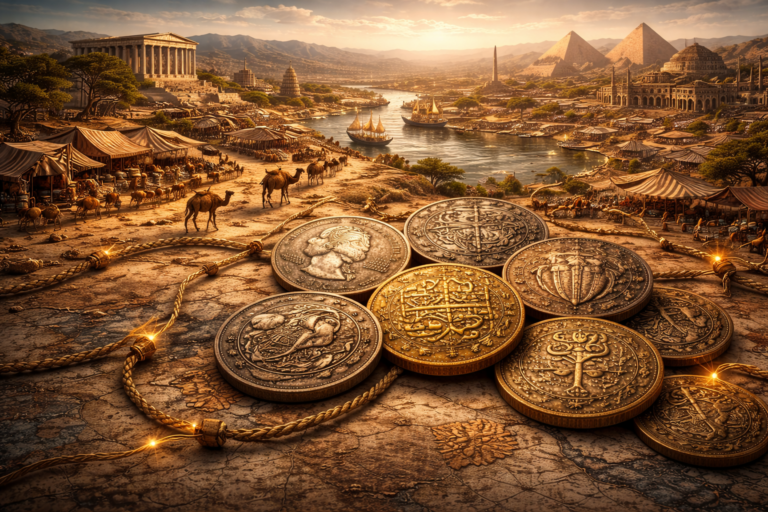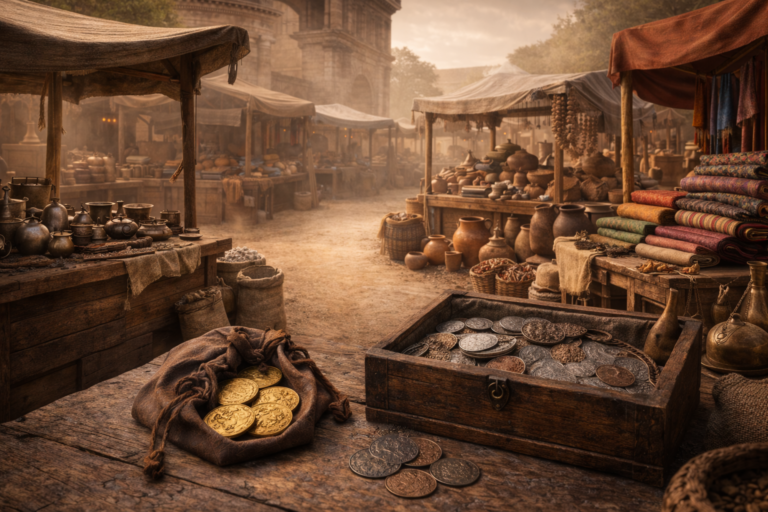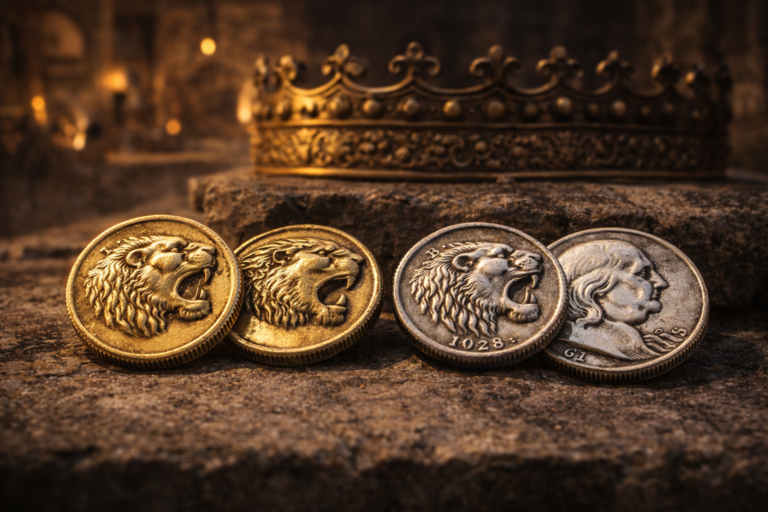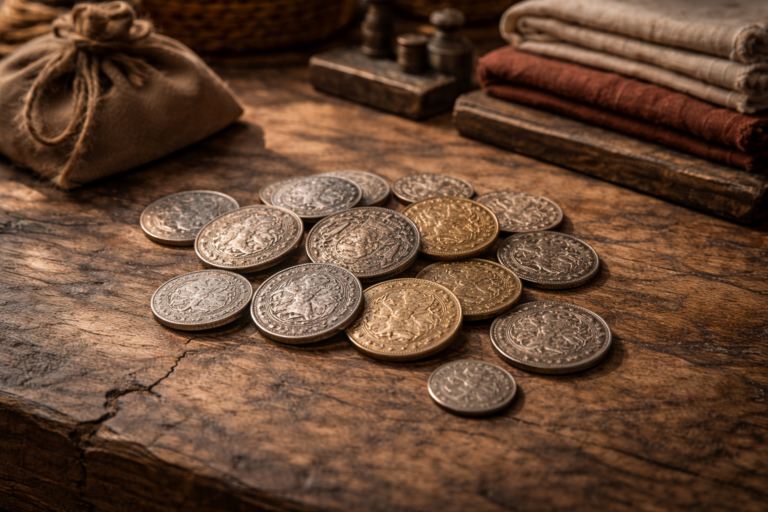
How Flemish Coins Reflected a Changing Europe
Estimated reading time: 20 minutes
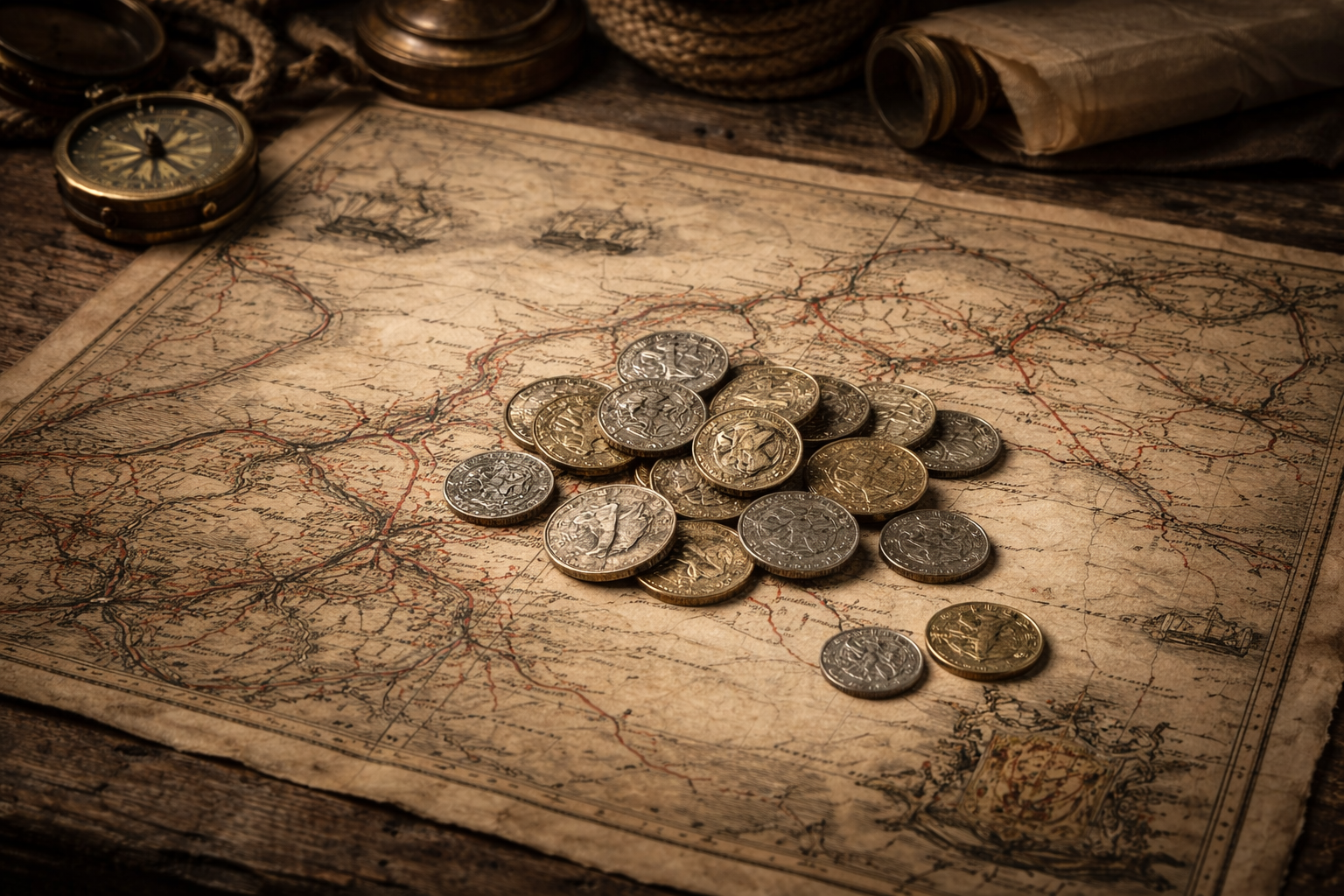
Europe did not change in one dramatic moment. It changed in thousands of quiet adjustments—new routes, new habits, new centers of trade, new ideas about power, and new ways of trusting strangers. And sometimes, the clearest evidence of that change is not a treaty or a cathedral. It is a coin.
Flemish coinage sits in a fascinating place in European history. Not because it is loud, but because it is practical. Flanders was connected. Busy. Commercial. And its coins moved through that world like small, durable witnesses—absorbing the story of a continent in motion.
What this article is about
No prices. No collecting talk. This is a human, trade-focused story about how Flemish coins reflected Europe’s changing economy, shifting power, and evolving identity during a pivotal era.
- Why Flanders Matters in the European Story
- Coins as Evidence of Change
- A Trade World Built on Trust
- Markets, Ports, and the Everyday Flow of Money
- How Flemish Coins Traveled Through Europe
- What Coin Imagery Reveals About Authority
- Coins as Identity Signals in a Mixed Europe
- Risk, Confidence, and the Language of Reliable Money
- When Europe Changes, Coin Symbols Change Too
- Modern Echoes of a Changing Europe
- Share and Reflect
- About PastMint
Why Flanders Matters in the European Story
Flanders is often described with a single word: trade. But “trade” is not just ships and goods. Trade is an entire way of organizing life—how people meet, how they trust, how they measure fairness, how they settle disagreements, and how they imagine the future.
In a trade-heavy region, money is not a background object. Money is the daily bloodstream. It moves through markets, workshops, ports, and households. It touches food, cloth, tools, wages, taxes, and travel.
That makes Flemish coins unusually revealing. They were not designed for quiet storage in a palace. They were built for movement. And in movement, money becomes history.
One of the clearest fingerprints is what their money needs to do every day.
Coins as Evidence of Change
When historians talk about “change,” they often focus on big symbols: a new dynasty, a major war, a famous invention.
But everyday change is more interesting because it is more honest. It shows up in daily systems—especially in how people exchange value. Coins are part of that system, and they reveal change in a way that speeches cannot.
A coin tells you what a system wants to present publicly. It tells you what people are expected to recognize. It tells you what authority looks like in everyday form. And it tells you, indirectly, what kind of trust the economy depends on.
In a connected European landscape, Flemish coinage reflects more than local life. It reflects contact. Movement. Competition. Integration. And the constant need to communicate reliability.
Reality Check
Coins do not show everything. They show what is repeated publicly. But that repetition itself is meaningful—especially in a period of shifting borders and changing economic habits.
A Trade World Built on Trust
Trade at scale depends on trust—especially when strangers do business. In local communities, reputation can replace formal systems. In large networks, that becomes impossible. You need portable trust.
Money becomes portable trust when people recognize it and believe others will accept it too. This is why the look and feel of coins matters. It is not merely aesthetic. It is an economic language.
In regions with intense trade, the “language of money” becomes sharper. People become more sensitive to weight, familiarity, and recognizable signs. They develop habits of verification. They learn quickly what seems stable and what seems suspicious.
Flemish coins existed inside that sensitivity. They were not just local tools. They were participants in a crowded European money environment—an environment where many systems competed for acceptance.
Markets, Ports, and the Everyday Flow of Money
To understand why Flemish coinage reflects change, imagine the everyday rhythm of a commercial region: the early movement of goods, the bargaining, the measured quantities, the wages paid, the taxes collected, the shipments organized.
Every one of these actions produces coin movement. Money does not stay still in an active economy. It circulates. And circulation creates exposure. People repeatedly encounter the same designs, the same signs of authority, the same “signature” of a system.
That repeated exposure shapes memory. It teaches recognition. It normalizes certain authorities and certain trade relationships. In that way, money becomes a social organizer, not just an economic tool.
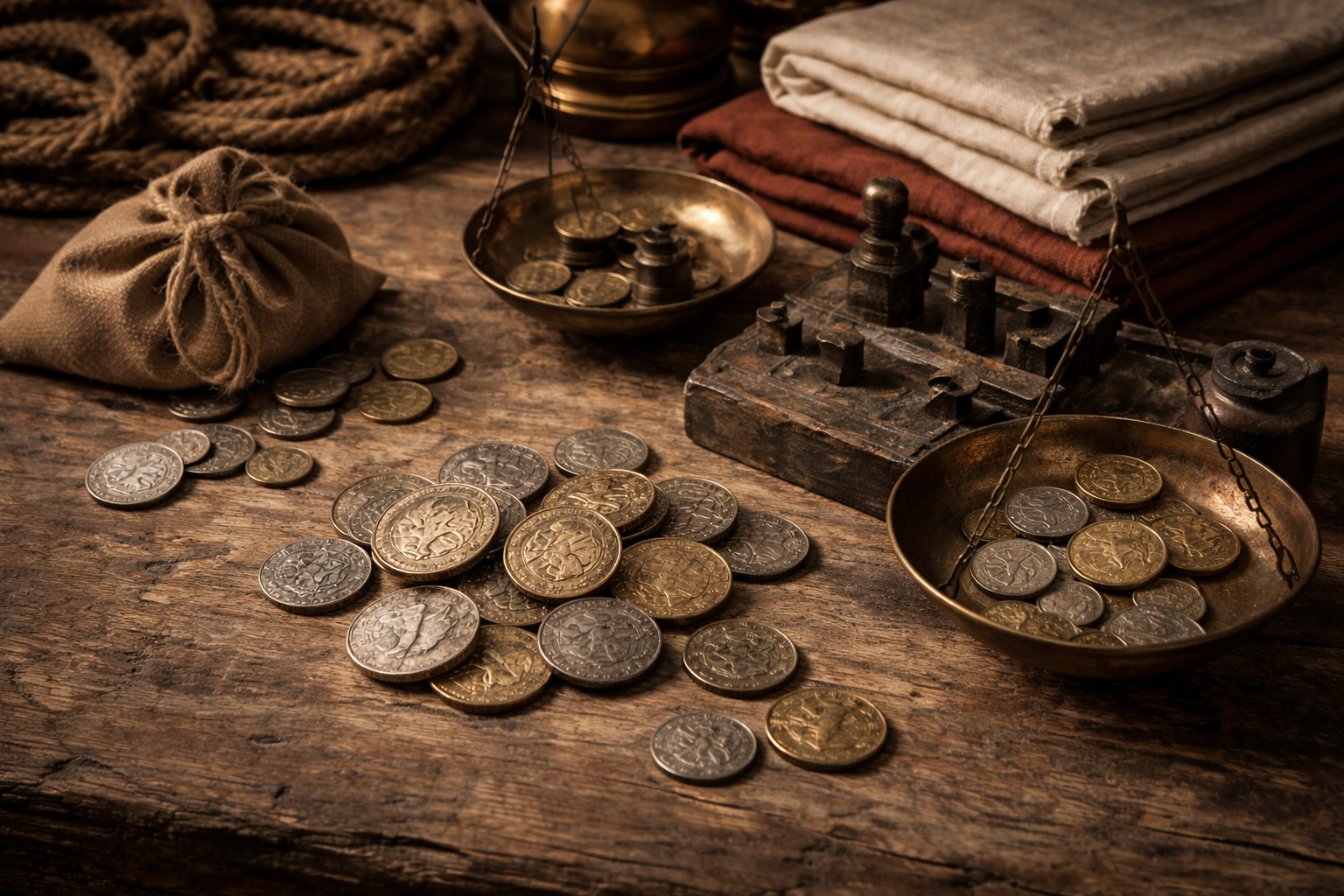
In busy exchange zones, people often care less about ideology and more about reliability. But reliability itself becomes political when it is tied to a recognizable authority. That is where coin imagery becomes more than decoration. It becomes a public claim: this coin belongs to a stable system.
How Flemish Coins Traveled Through Europe
When you think about movement, it is tempting to picture one dramatic journey. But coin travel is usually quieter. It happens in fragments: a small payment in one town, a purchase in another, a wage paid to a worker who travels, a merchant’s pouch moving across regions.
Over time, these fragments build a network. Coins become travelers without passports. They cross cultural boundaries and carry the look of their origin with them. That look matters. It creates recognition. It creates expectation. It sometimes creates prestige.
In a changing Europe, networks expand and shift. Routes become safer or riskier. Cities rise or decline. Markets change direction. When that happens, money adapts—not only in the quantity available, but in what it needs to communicate.
If a coin is expected to circulate widely, it benefits from clear signals: strong recognizable imagery, a sense of official backing, and a design that is difficult to confuse with something unreliable. Even without technical knowledge, people can develop “coin instincts.” They sense what feels legitimate. That feeling is built from repetition and shared experience.
What Coin Imagery Reveals About Authority
Coin imagery is never neutral. It is selected. It is repeated. And it is designed to be recognizable. That makes it a public statement of authority.
In a period of European transformation, authority often needed to be reinforced. Not always through violence, but through the steady visibility of official symbols. Coins accomplish this quietly: they place authority into daily hands. They make governance feel present even when officials are distant.
For traders and households, authority becomes practical when it affects acceptance. If a coin is recognized and accepted widely, the authority behind it gains a quiet advantage. It becomes part of the daily system of trust.
That is one reason coins reflect a changing Europe: they show how authorities adapt their public face in response to shifting networks, shifting alliances, and shifting public expectations.
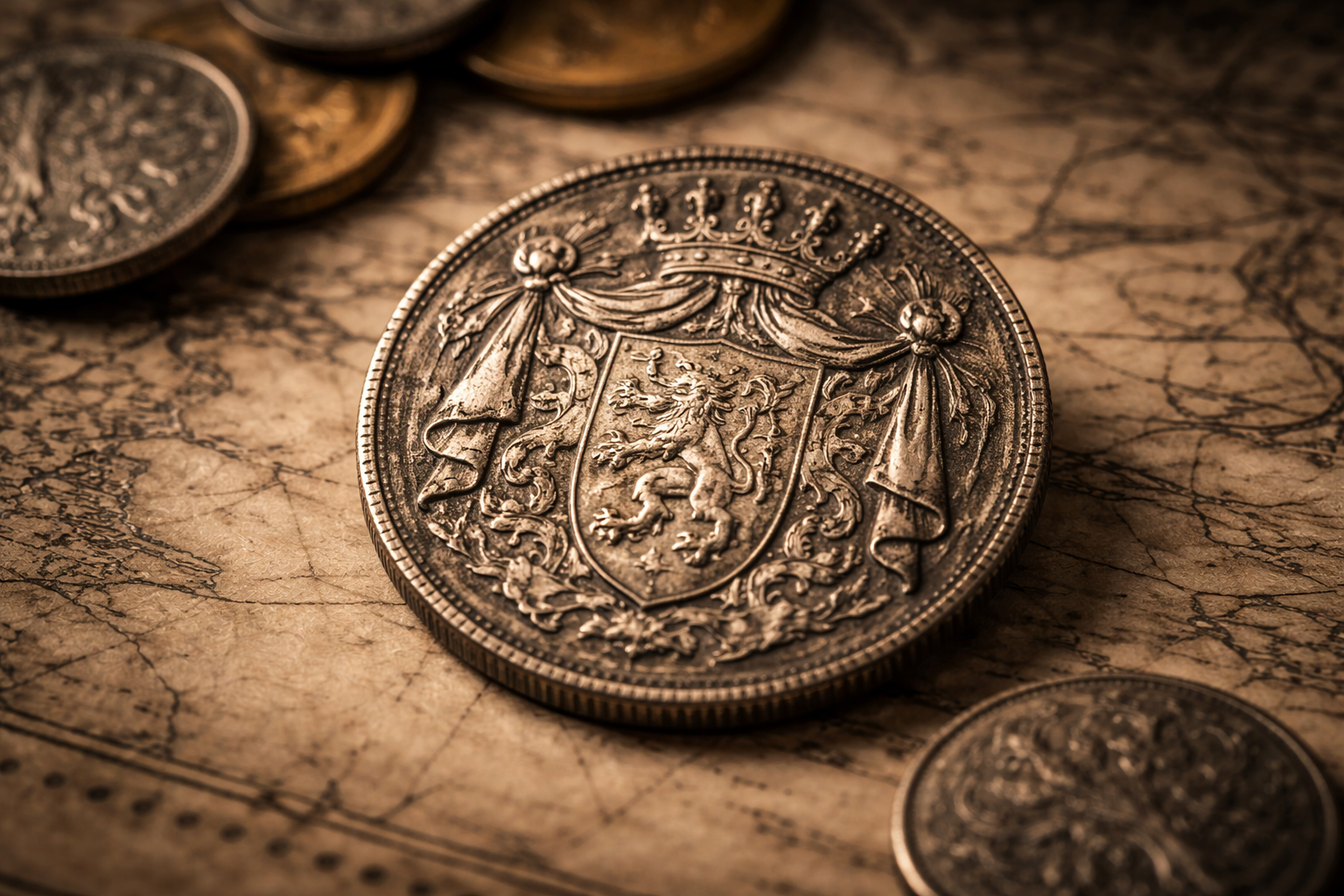
A single symbol can carry multiple layers: continuity for locals, recognition for outsiders, and reassurance for people who feel uncertainty. This is why many coin designs aim for steadiness. In a changing world, steadiness is persuasive.
Coins as Identity Signals in a Mixed Europe
Europe’s change was not only economic. It was also cultural. Trade produces contact. Contact produces mixture. Mixture produces questions about identity: who is “us,” who is “them,” what belongs here, what feels foreign.
Coins sit inside these questions because they circulate across boundaries. A foreign coin introduces foreign imagery into local daily life. Over time, foreign imagery becomes less foreign. It becomes familiar. That familiarity can soften boundaries.
At the same time, local coin designs can reinforce local identity. They can signal pride, legitimacy, and continuity. They can communicate that the system has a recognizable “face.”
In a mixed environment, identity signals become more important, not less. The more contact there is, the more valuable clear recognition becomes. Coins contribute to recognition because they carry consistent signs through repeated use.
coins helped people recognize what system they were dealing with—without needing a shared language.
Risk, Confidence, and the Language of Reliable Money
Trade always carries risk. A merchant risks goods, time, and security. A household risks stability when supplies depend on market prices and seasonal uncertainty.
Reliable money reduces some of that risk by simplifying exchange. But reliability is not automatic. It is built socially. People must believe others will accept the same coin tomorrow. That is a belief about the future.
Coins support that belief through visible signals and consistent experience. If the coin looks official, familiar, and stable, people feel calmer using it. If the coin feels uncertain, people become cautious. They may demand verification. They may prefer other forms of settlement.
In a changing Europe, confidence is fragile. That makes the “language of reliable money” even more valuable. Coins that look like they belong to a stable system can travel further, because they carry the feeling of stability with them.
Reality Check
No coin can create stability on its own. But coins can amplify the appearance of stability—especially when they repeat familiar symbols in uncertain periods.
When Europe Changes, Coin Symbols Change Too
One of the most practical ways to study change is to watch what public symbols do. Coins are public symbols that travel. That makes them excellent indicators of shifting priorities.
When authority becomes contested, coin imagery may emphasize legitimacy. When trade becomes central, coins may emphasize signals of reliability and recognition. When identity feels uncertain, designs may lean into tradition. When new relationships matter, designs may become more communicative to outsiders.
This does not mean every coin design was planned like a modern branding campaign. But it does mean that repeated public imagery always interacts with the social environment. Coins are not only minted in metal. They are minted in context.
Flemish coinage reflects a changing Europe because Flanders itself sat inside shifting networks. It lived at a crossroads where commerce met authority, where local identity met wider contact. In that position, money becomes a mirror.
Key Takeaway
Flemish coins reflected a changing Europe because they moved through changing networks. Their circulation, recognition, and imagery reveal how trade, trust, and authority evolved together.
Modern Echoes of a Changing Europe
Modern Europe is different, but the mechanism still feels familiar. Trade networks still shape identity. Money still carries symbols. People still rely on recognizable systems when dealing with strangers.
Even when money becomes digital, the “identity layer” remains. We still recognize which system we are using. We still associate design with trust. We still prefer stable patterns in uncertain times.
The past shows something important: the story of change is often hidden in everyday infrastructure. And money is one of the most revealing infrastructures of all.
Final Verdict
Flemish coinage reflects a changing Europe because it lived inside movement—trade routes, cultural contact, shifting authority, and evolving trust. Coins turned these changes into everyday reality by circulating through markets and households, carrying familiar signs that helped people navigate a continent in motion. To understand Europe’s transformation at human scale, follow the money that moved through ordinary hands.
Share and Reflect
If this article helped you see coins as witnesses of change rather than simple tools, share it with someone who enjoys hidden history.
Article link:
How Flemish Coins Reflected a Changing Europe
Reflection question: What everyday object today reveals change before headlines do?
About PastMint
PastMint
PastMint explores the hidden stories behind money, symbols, and everyday objects. We connect historical context with cultural meaning to reveal how small artifacts shaped civilizations—quietly, consistently, and often more effectively than words.