How Flemish Coins Shaped Everyday Trade and Trust
Estimated reading time: 24 minutes
Trade does not survive on goods alone. It survives on trust. Without trust, exchange slows, suspicion grows, and markets shrink back into local silence. In early European history, few regions understood this better than Flanders.
In a previous article, we explored how Flemish coins reflected a changing Europe , following their movement across expanding trade networks and shifting centers of power. This article moves closer to everyday life. Here, we focus on how those same coins shaped trust, routine exchange, and daily trade inside Flemish markets.
What this article focuses on
This is not a story about large political change. It is a story about small decisions made thousands of times a day. How merchants trusted strangers. How households accepted risk. And how familiar coins quietly reduced uncertainty in everyday trade.
- Why Trust Was the Core of Flemish Trade
- Everyday Markets as Trust Laboratories
- Coins as Proof of Reliability
- Familiarity Versus Suspicion
- Weighing, Testing, and Routine Verification
- Trading With Strangers
- Household Trade and Small Transactions
- When Trust Failed
- Coins and the Management of Economic Anxiety
- Trust Across Trade Networks
- Lessons From a Trust-Based Economy
- Share and Reflect
- About PastMint
Why Trust Was the Core of Flemish Trade
Flemish trade thrived not simply because goods moved efficiently, but because people believed exchange would work. Merchants needed confidence that payment would be accepted tomorrow. Households needed confidence that their money would still function next week. Markets needed confidence that disputes could be settled without violence.
Trust is not abstract. It is built through routine. Repeated experiences teach people what to expect. Coins were part of that teaching process. They provided a stable reference point in an economy that was otherwise full of uncertainty.
Unlike written contracts, coins did not require explanation. They simply needed to be recognized. Recognition itself became a form of trust. If others accepted the same object yesterday, they were likely to accept it today.
when recognition becomes routine.
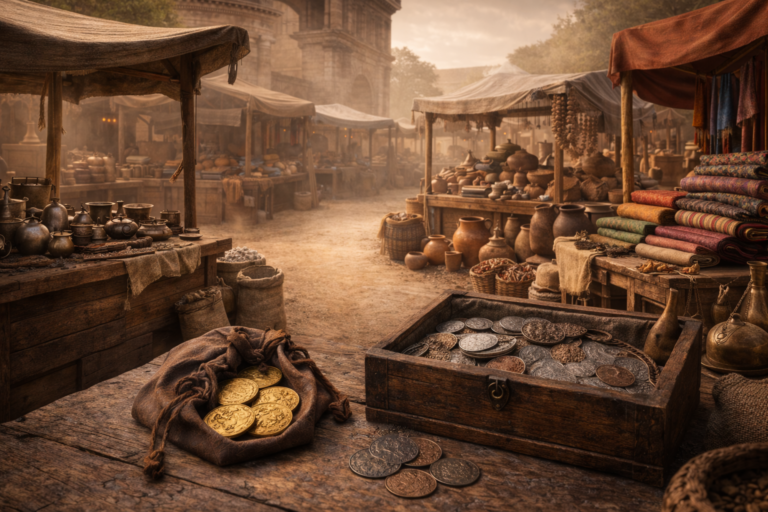
Everyday Markets as Trust Laboratories
Markets are where trust is tested. Each exchange is a small experiment: Will this person accept my payment? Will this object hold its place in the system? Will tomorrow look like today?
In busy Flemish markets, these experiments happened constantly. Coins changed hands quickly. Small transactions accumulated. Patterns formed. Over time, certain coins became associated with smooth exchange. Others raised questions.
This daily testing transformed markets into laboratories of trust. People learned not from theory, but from experience. Coins that passed easily became trusted. Coins that caused friction were avoided.
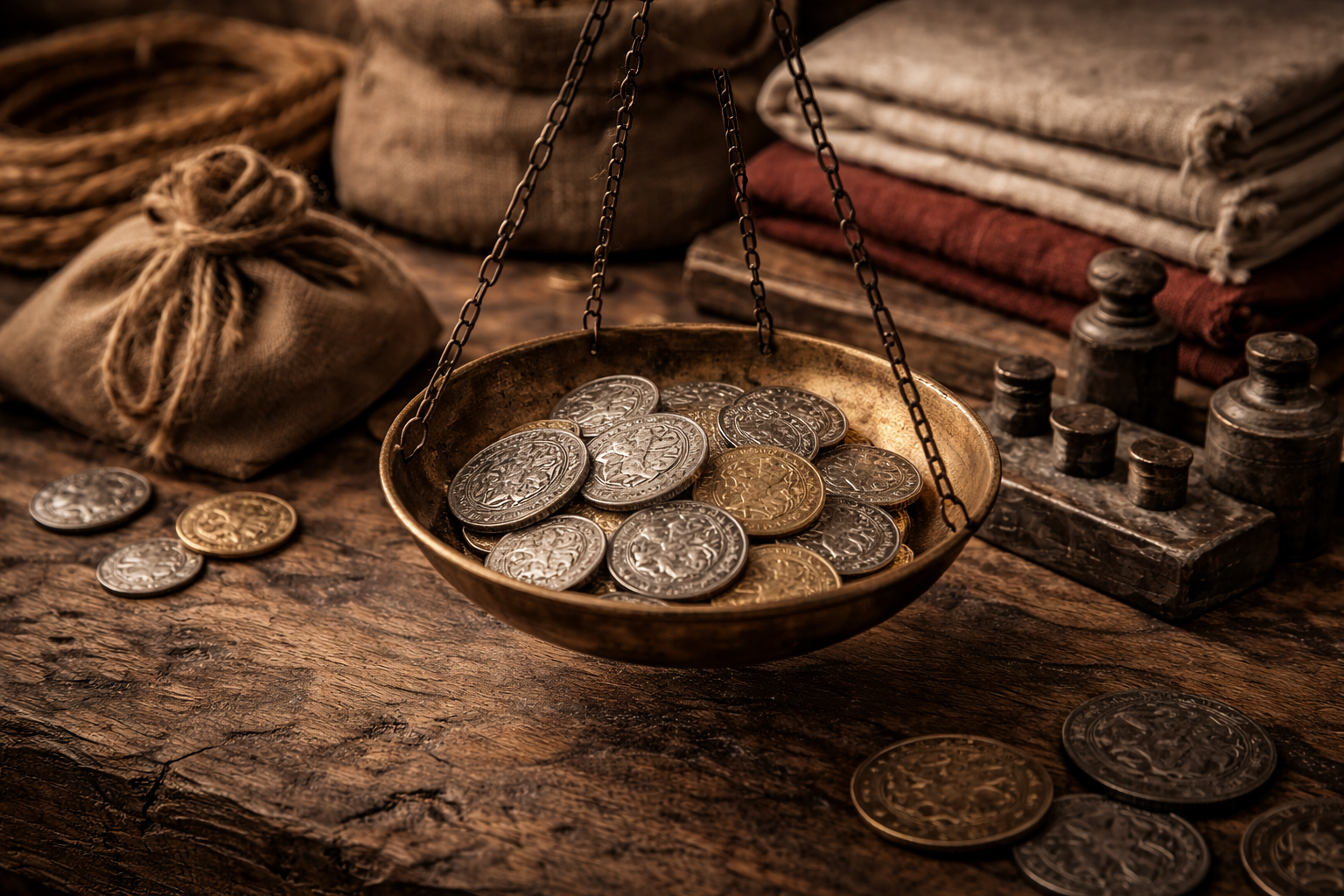
The key point is repetition. One successful exchange means little. Hundreds of smooth exchanges create confidence. Coins benefited from this repetition more than any other object.
Coins as Proof of Reliability
In a trade-heavy region, reliability matters more than perfection. People did not expect coins to be ideal. They expected them to work.
A reliable coin is one that others accept without hesitation. That acceptance is social, not technical. It depends on shared expectations rather than absolute certainty.
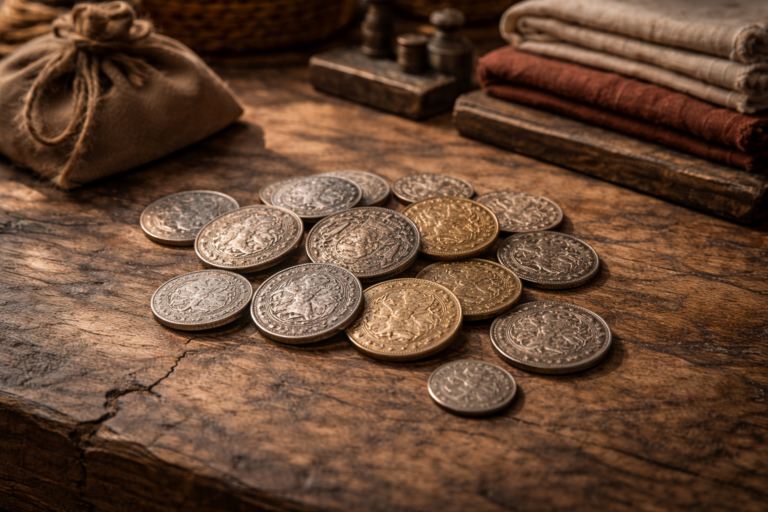
Flemish coins earned reliability by behaving predictably. They appeared regularly. They felt familiar. They circulated widely enough to be recognized across different settings.
This reliability reduced the need for negotiation. It allowed trade to move faster. And speed itself reinforced trust: when transactions happen smoothly, people assume the system is stable.
Familiarity Versus Suspicion
Human psychology prefers the familiar. In uncertain environments, unfamiliar objects trigger caution. This instinct shaped trade behavior deeply.
Coins that looked familiar felt safer. Coins that looked unfamiliar invited scrutiny. That scrutiny slowed exchange. Over time, people gravitated toward what felt normal.
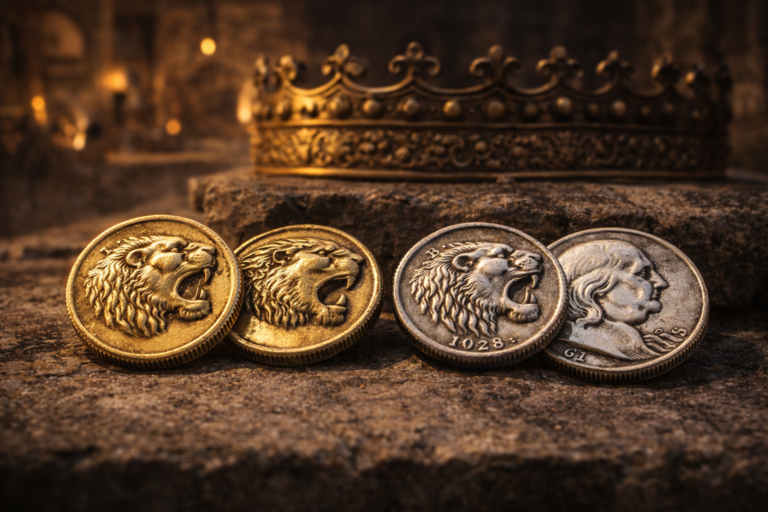
Familiarity does not mean uniformity. It means recognition. A coin does not need to be perfect. It needs to be known.
familiarity often matters more than precision.
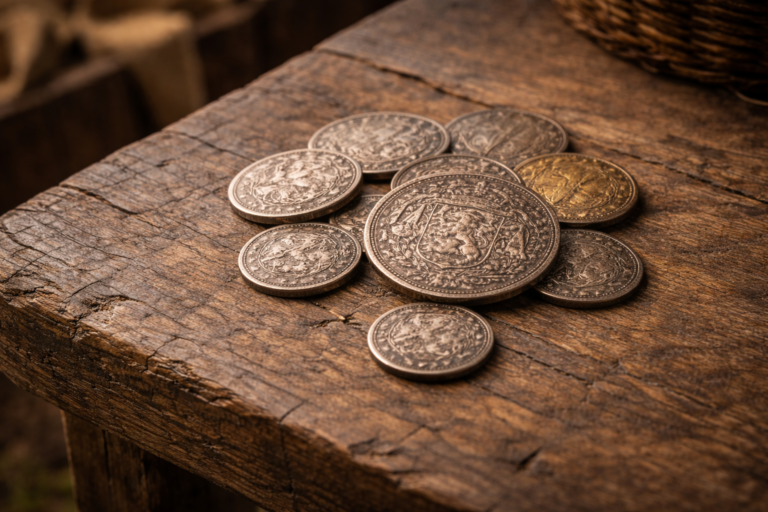
This is why coins that circulated widely became anchors of trust. Their wear became a sign of experience. Their softened edges told a story of acceptance.
Weighing, Testing, and Routine Verification
Trust does not eliminate verification. It reduces the need for constant suspicion.
In Flemish markets, weighing and testing were part of routine. They were not signs of distrust. They were rituals of reassurance.
A quick check confirmed expectations. A smooth transaction followed. Over time, these small rituals reinforced confidence rather than undermining it.
Importantly, verification itself became standardized. People learned what felt right. Coins that passed these quick tests repeatedly earned a place in everyday exchange.
Trading With Strangers
Trade expands fastest when strangers can do business. That requires systems that replace personal reputation.
Coins served that role. They allowed people with no shared language or background to exchange value. The coin stood in for trust.
When both sides recognized the same object, exchange could proceed. The system did not depend on friendship. It depended on familiarity.
This ability to trade with strangers transformed Flemish markets. It expanded reach. It increased volume. And it reduced reliance on closed local networks.
Household Trade and Small Transactions
Large trade often attracts attention. But small transactions shape daily life.
Households interacted with money constantly: food purchases, materials, small services, occasional savings.
For households, trust meant predictability. A coin that worked yesterday was expected to work tomorrow. This expectation allowed planning. Planning reduced anxiety.
In this way, coins shaped emotional stability as much as economic exchange. They created a sense of continuity in uncertain times.
When Trust Failed
No system is perfect. Sometimes trust broke down. Coins were questioned. Exchange slowed. People hesitated.
These moments reveal how important trust had become. When familiar patterns were disrupted, people felt it immediately. They responded by tightening verification or limiting exchange.
Failure did not erase the system. It highlighted its importance. Trust mattered most when it was threatened.
Reality Check
Trust is not blind faith. It is cautious confidence built through repetition and experience. Coins helped maintain that balance.
Coins and the Management of Economic Anxiety
Economic anxiety is not new. Uncertainty has always shaped human behavior.
Coins helped manage that anxiety by offering consistency. Even when trade routes shifted or markets fluctuated, familiar money provided a psychological anchor.
This anchor mattered. It allowed people to continue exchanging even when the future felt unclear.
In that sense, coins were not just tools of trade. They were tools of emotional stability.
Trust Across Trade Networks
Trust does not stop at city boundaries. As Flemish trade networks expanded, coins carried trust with them.
Each successful exchange in one place reinforced acceptance elsewhere. Networks grew not just through goods, but through shared expectations.
Coins acted as connectors. They linked markets. They linked habits. They linked confidence.
This networked trust allowed trade to scale. Without it, expansion would have stalled.
Lessons From a Trust-Based Economy
The Flemish experience offers a simple lesson: economies grow when trust becomes routine.
That trust does not need grand ideology. It needs reliable systems. It needs repeated success. And it needs objects that people recognize and accept.
Coins provided that foundation. They transformed uncertainty into manageable risk. They allowed strangers to cooperate. And they made everyday trade possible at scale.
Final Verdict
Flemish coins shaped everyday trade by shaping trust. Through familiarity, routine verification, and widespread recognition, they reduced uncertainty and allowed markets to function smoothly. In a changing Europe, these small objects made large systems possible—one transaction at a time.
Share and Reflect
If this article helped you see trust as the real engine of trade, share it with someone who enjoys understanding history at human scale.
Article link:
How Flemish Coins Shaped Everyday Trade and Trust
Reflection question: What everyday system do you trust without thinking about it?
About PastMint
PastMint
PastMint explores the hidden stories behind money, symbols, and everyday objects. We focus on how small systems quietly shape large societies—through routine, trust, and human behavior.