Who Decided What Appears on Coins
Estimated reading time: 14–16 minutes.
Coin designs look permanent, almost inevitable. But every symbol, portrait, and mark on a coin began as a choice. Someone decided what people would see in their hands every day. And those decisions shaped trust, belonging, and authority long before modern media existed.
This article explores who decided what appears on coins, why those decisions mattered, and how coin imagery balanced power, tradition, and public recognition across different places and periods.
Quick Context
This article continues the Coin Meanings direction. If you want the broader foundation of how coins taught power and belonging through repeated imagery, read What Coins Taught People About Power and Belonging. If you want a focused view on how coins communicated authority without needing words, continue with How Coins Explained Authority Without Words. And for the immediate bridge from symbols to community identity, see How Coin Symbols Created a Sense of Belonging.
- The First Question: Who Had the Right to Choose
- Authority Wanted Visibility
- Tradition Wanted Familiarity
- The Mint as the Decision Engine
- The Public Was a Hidden Decision Maker
- Coins, Messaging, and Limits
- Why Coin Designs Differed Across Regions
- What Happens When Designs Change
- Final Verdict
- Frequently Asked Questions
The First Question: Who Had the Right to Choose
In most periods of history, coin design was not chosen by artists alone. It was chosen by whoever controlled the right to issue money. That “right” could belong to a ruler, a city, a council, a temple authority, or a later state institution.
But the important detail is not only who held power. It is what they needed coin imagery to do. Coins were tools that moved fast and traveled far. A design decision could reach more people than a speech.
So the choice of imagery became a practical strategy. What should people recognize. What should they feel. What should they assume when they see this coin.
A coin is a small object with a large audience. That is why design decisions were never trivial.
Authority Wanted Visibility
One of the simplest goals of coin design was visibility. Authority needed to be seen. In eras without mass printing or modern broadcasts, a coin could act like a portable announcement.
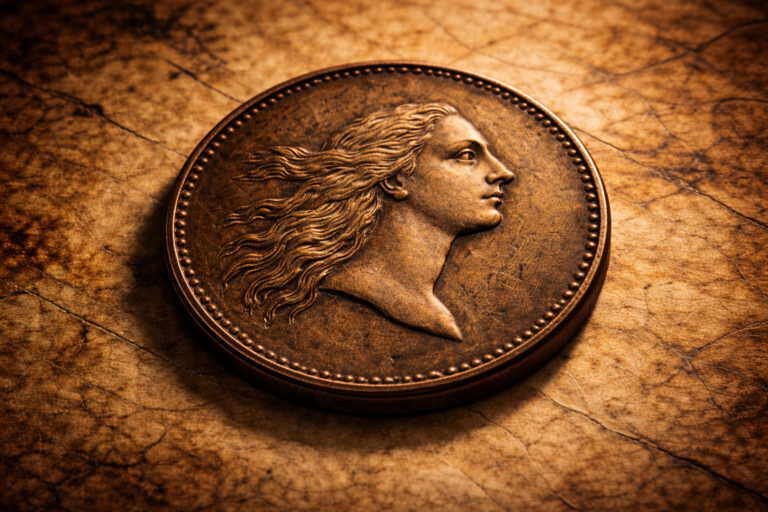
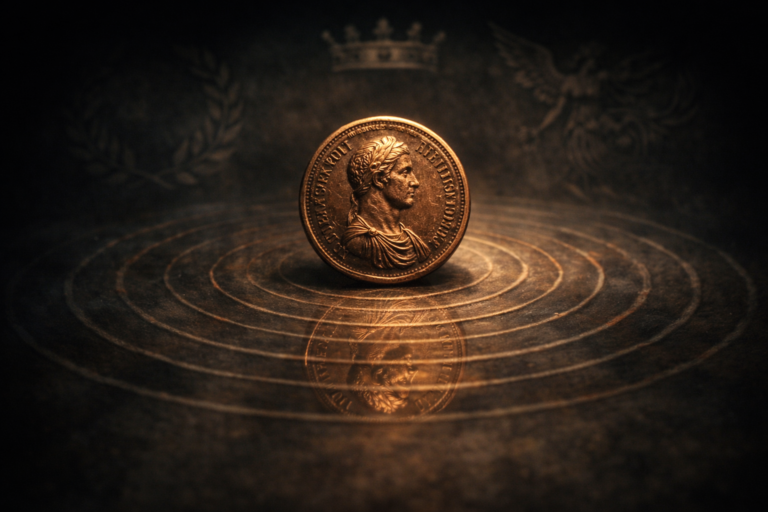
This is why coin imagery often included portraits, emblems, crowns, or official marks. These elements were not just decoration. They signaled that the coin belonged to a recognized issuer.
If you want the deeper logic of how coins communicated authority without needing words, this earlier piece connects directly: How Coins Explained Authority Without Words.
Tradition Wanted Familiarity
Authority could place its mark on money, but it could not ignore public habit. Coins needed to be accepted in daily trade. A design that felt alien could slow exchange. So coin imagery often had to balance power with familiarity.
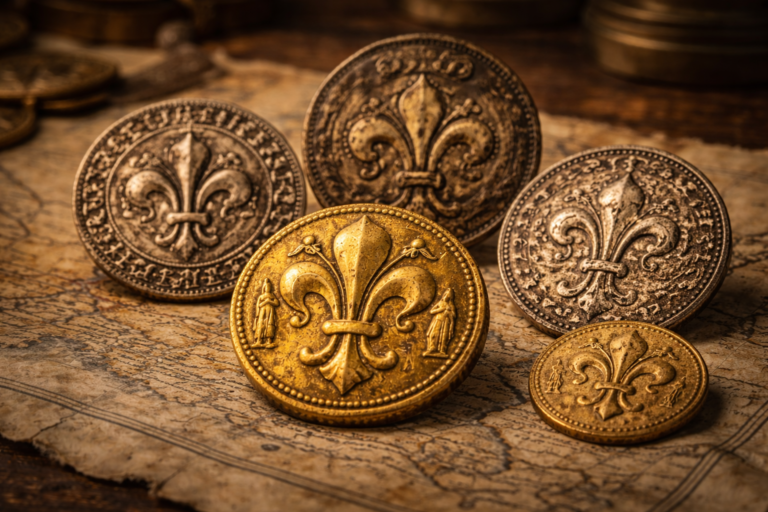
This is where tradition entered the decision. Local symbols, religious motifs, animals, plants, and city emblems carried meaning people already understood. Using them made a coin easier to accept, because acceptance begins with recognition.
That is the quiet reason many coin designs look “obvious” in hindsight. They were built from existing cultural anchors. Coins did not invent meaning from nothing. They concentrated meaning into an object that traveled everywhere.

The Mint as the Decision Engine
Most people imagine coin design as a single moment of choice. In reality, it was a process. Someone approved the direction, but the mint made it real.
The mint had constraints. Designs needed to be recognizable at small scale. They needed to survive wear. They needed to be repeatable with the available tools. This practical reality shaped what “appears on coins” as much as politics did.
That is why many successful coin symbols are simple. They are built for repetition. And repetition is what turns imagery into public memory.
Reality Check
A design can be meaningful and still fail if it cannot be repeated clearly. On coins, clarity and repeatability often mattered more than complexity.
The Public Was a Hidden Decision Maker
Even when a ruler or institution had final authority, the public still influenced design. Not through voting, but through acceptance.
A coin that confused people would slow trade. A coin that felt unfamiliar would trigger hesitation. Over time, issuers learned that the public’s response mattered. If people did not accept the imagery as legitimate, the system paid a cost.
This connects to the idea that symbols can create belonging. When designs feel familiar, people relax. When they relax, they accept. When acceptance becomes routine, belonging forms. That bridge is explored here: How Coin Symbols Created a Sense of Belonging.
Coins, Messaging, and Limits
It is tempting to call all coin design “propaganda.” Sometimes it was. Coins could celebrate victories, legitimacy, or a ruler’s image.
But coin messaging had limits. Money had to work. If a design made a coin feel untrustworthy, messaging would fail. This is why effective coin imagery tends to be stable, recognizable, and culturally anchored.
The most successful coin designs often achieved something subtle. They made power feel normal. They made tradition feel official. They made daily trade feel part of a larger order.
Why Coin Designs Differed Across Regions
If you compare coins from different regions, you notice how varied the imagery can be. That variety is not random. It reflects different needs.
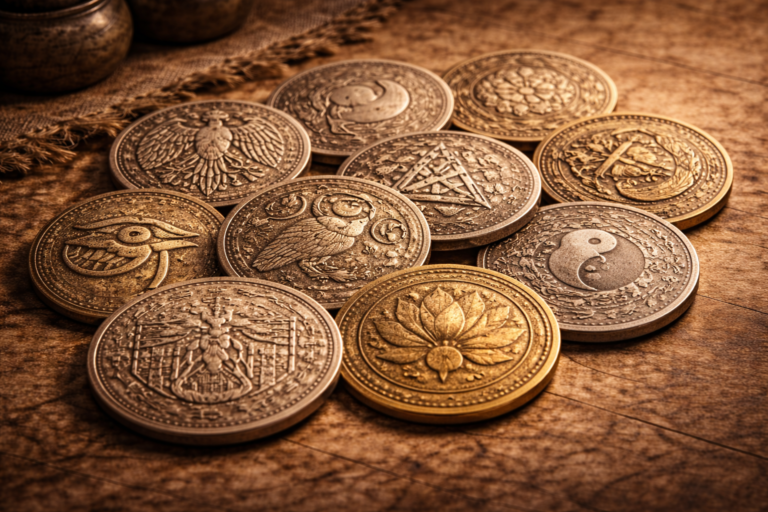
Some places emphasized rulers. Some emphasized city identity. Some used religious motifs. Some preferred animals, tools, or abstract marks. The design choice tells you what a community wanted to highlight as legitimate.

In many cases, the same symbol could carry different meanings in different contexts. That is why coin history is not only about what appears. It is about what people understood when they saw it.
What Happens When Designs Change
When coin designs change suddenly, the system often experiences a period of hesitation. People ask questions. Merchants become cautious. Older coins may feel safer simply because they are familiar.
This reaction is not always political. It is psychological. Familiarity reduces uncertainty. A new design has not yet earned repetition. It has not entered shared memory.
Over time, if the new design circulates widely and consistently, acceptance catches up. The same mechanism works again. Repetition becomes familiarity. Familiarity becomes normal. Normal becomes legitimate.
Final Verdict
Final Verdict
Coin designs were decided by power, shaped by tradition, and tested by public acceptance. The issuer wanted visibility and legitimacy. The community wanted familiarity and clarity. The mint demanded repeatability. When these forces aligned, coin imagery became stable enough to feel natural, and meaningful enough to shape trust and belonging across generations.
Frequently Asked Questions
Did rulers always choose what appeared on coins?
Often rulers or issuing authorities had final control, but many designs still reflected local tradition and public habit. Acceptance in daily trade acted like a practical check on purely top down choices.
Why do coins repeat the same symbols for long periods?
Repetition builds recognition. Recognition reduces uncertainty in markets. Stable symbols become familiar, and familiarity makes money feel legitimate and safe to use.
Were coin designs meant to send messages?
Yes, but the messaging had limits. Money must function smoothly. Effective designs usually combined authority signals with familiar cultural anchors that people already recognized.
Is this content safe for AdSense?
Yes. It is educational and historical, and it contains no pricing, valuation, or financial advice.