How Merchants Traveled in the Ancient World
Estimated reading time: 10 minutes.
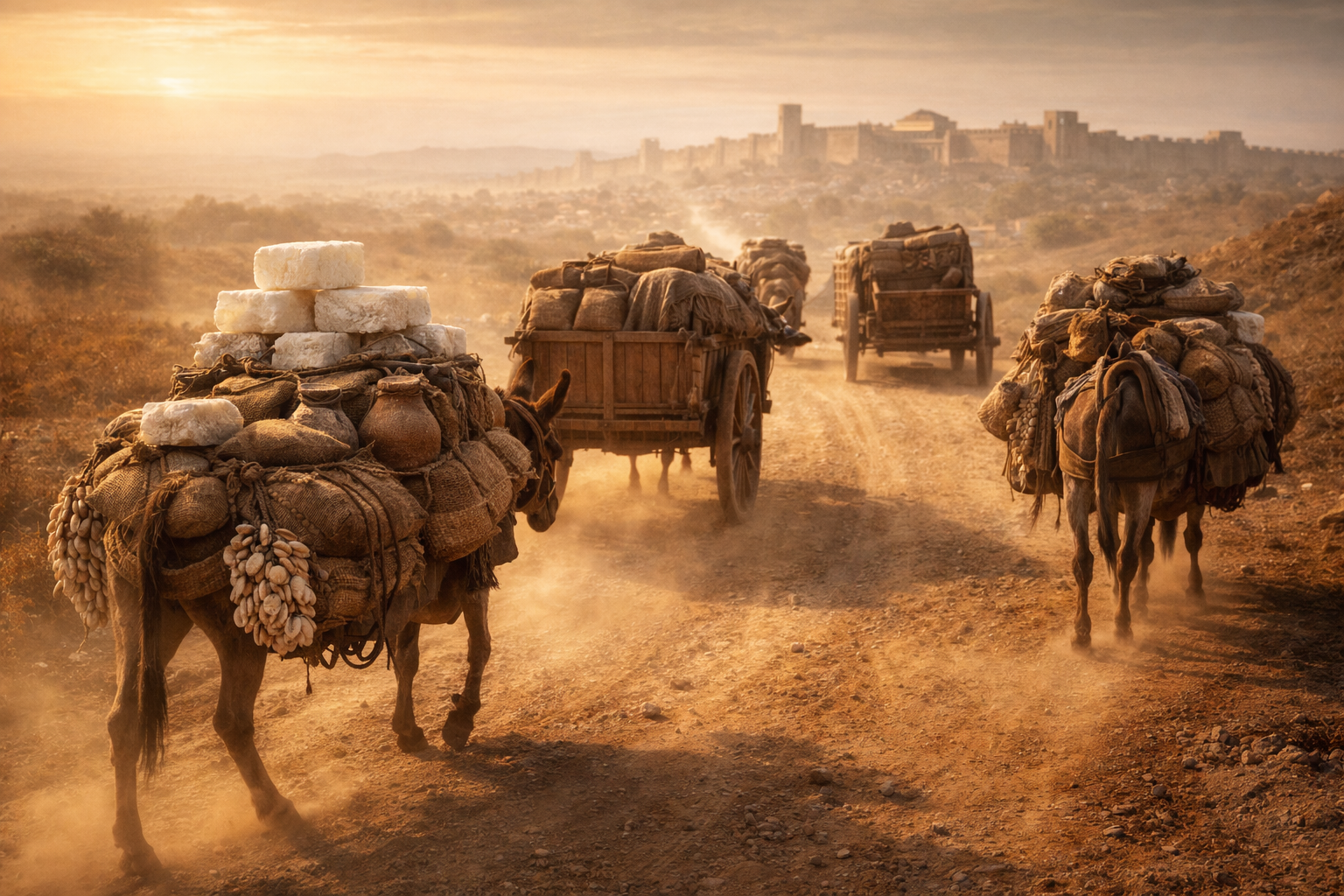
If you want to understand ancient trade, do not start with maps. Start with a tired merchant walking toward the horizon with everything tied to rope. A route was not a line. It was a lived experience. Dust in the mouth. Heat on the back. And the constant worry that one mistake could end a journey before it even begins.
Ancient merchants traveled because markets demanded it. Not once. Repeatedly. And that repetition turned dangerous movement into a system that connected distant places long before modern transport existed.
What this article explains
We explain how merchants traveled in the ancient world through planning, transport choices, risk management, and daily routines on the road. This is historical and educational and avoids pricing or modern financial advice.
Why merchants traveled at all
Ancient merchants traveled because markets created demand that local production could not always satisfy. Sometimes it was salt. Sometimes it was fine fabric. Sometimes it was metal tools, dyes, spices, or glass.
But the deeper reason was reliability. If a city learned that certain goods would arrive again, people began to plan around that expectation. That expectation created trade. Trade created routes. Routes required merchants who could repeat the journey.
This is why merchants shaped the ancient world. They turned desire into routine.
Choosing routes and timing
A merchant did not simply pick the shortest path. Short was not always safe. Safe was not always possible.
Routes were chosen based on water, shelter, checkpoints, local politics, and seasonal weather. Timing mattered because a single storm or extreme heat could destroy cargo and exhaust animals.
Many journeys were designed around known stopping points. That is how trade became repeatable. Not by courage alone, but by structure.
Packing and protecting goods
Packing was not an afterthought. It was the difference between profit and loss. Goods had to survive dust, vibration, humidity, theft, and accidents.
Containers were chosen to match the goods. Rope mattered. Weight distribution mattered. And merchants learned quickly that a poorly packed load can ruin a journey even if the road itself is calm.
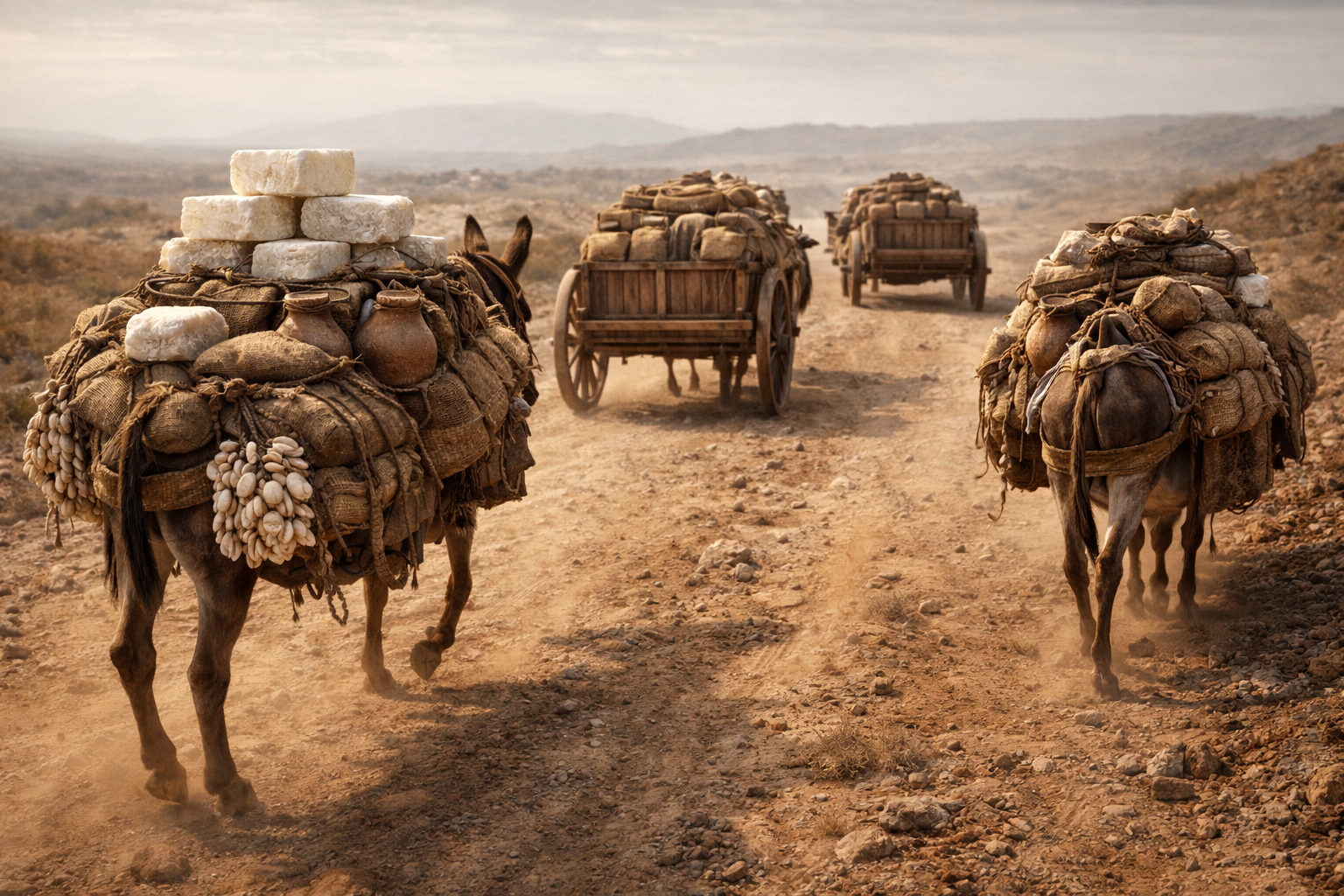
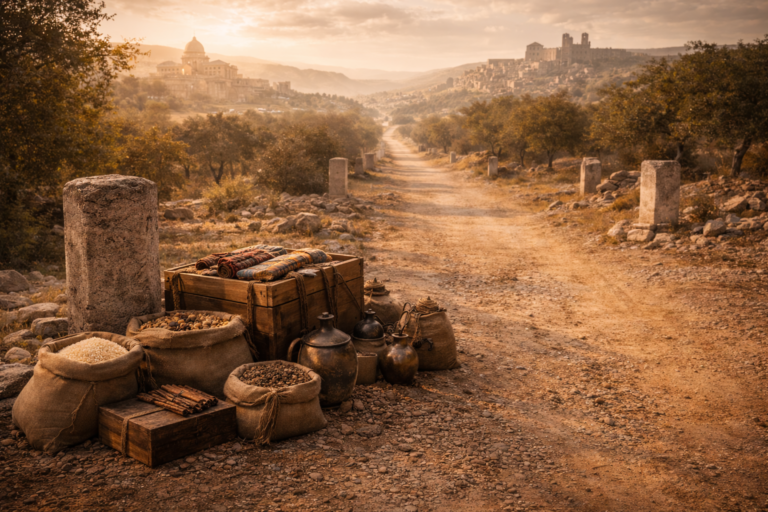
The visible wear on containers tells a story. Goods were handled repeatedly. Loaded. Unloaded. Counted. Repacked. A journey was a sequence of small careful actions, not one heroic march.
Reality Check
The most dangerous part of long distance trade was not the distance. It was the number of chances for something small to go wrong.
Travel routines on the road
Most merchants traveled in patterns that reduced risk. Move early. Rest during the harshest heat. Stop before darkness becomes a threat.
Journeys were also paced by animals and people, not by ambition. A smart merchant protects the body that carries the trade. Exhaustion is not bravery. It is a liability.
This is why trade routes shaped daily life. They forced discipline. Discipline created reliability. Reliability created connection.
Camps and rest as part of the system
Camps were not just sleeping places. They were checkpoints where the journey could be stabilized. Goods were checked. Ropes were tightened. Containers were inspected. Plans were adjusted based on what the road revealed.

A camp also created community. Merchants shared information. They learned which roads were safe. Which markets were crowded. Which leaders demanded fees. That information was a form of protection.
Trust networks and local helpers
No merchant succeeds alone for long. Ancient trade depended on local knowledge. Guides who knew terrain. Brokers who knew language. Hosts who provided shelter.
Trust networks reduced uncertainty and made repeat travel possible. This is how trade became a system rather than a gamble. When trust is stable, routes become reliable. When routes become reliable, markets connect.
Merchant Journey Table
This table maps the practical parts of merchant travel and explains why each part mattered for long distance trade.
Merchant Journey Table
This table summarizes how merchants made long journeys repeatable through planning, protection, and trusted routines.
| Journey element | What it involved | Daily purpose | Why it shaped trade |
|---|---|---|---|
| Route planning | Water, shelter, seasonal timing | Reduce risk | Made journeys repeatable, not random |
| Secure packing | Rope, containers, weight balance | Protect cargo | Prevented loss from small failures |
| Travel pacing | Early movement, rest cycles | Protect people and animals | Kept routes reliable over time |
| Camp routines | Inspection, repair, information | Stabilize the journey | Turned travel into a system |
| Trust networks | Guides, brokers, local support | Reduce uncertainty | Connected markets through reliability |
Related Roman Coins
If you want to connect merchant travel to everyday exchange inside one society, these Roman Coins articles add that daily layer.
Final Verdict
Final Verdict
Ancient merchants traveled by turning danger into routine. They planned routes, packed carefully, paced movement, and used camps to stabilize journeys. Most importantly, they relied on trust networks that made repeat travel possible. That is how merchants connected civilizations long before modern transport.
Frequently Asked Questions
What was the biggest challenge for ancient merchants
Uncertainty. Weather, security, and the risk of small failures could end a journey. Merchants survived by building routines that reduced risk over time.
Did merchants travel alone
Sometimes, but many traveled with groups or relied on local helpers. Trust networks, guides, and shared camps made long distance travel more reliable.
How did merchants protect goods on long journeys
Through secure packing, durable containers, careful pacing, and frequent checks at camps. Protection was a daily routine, not a single action.