How Ancient Merchants Managed Risk on Long Journeys
Estimated reading time: 10 minutes.
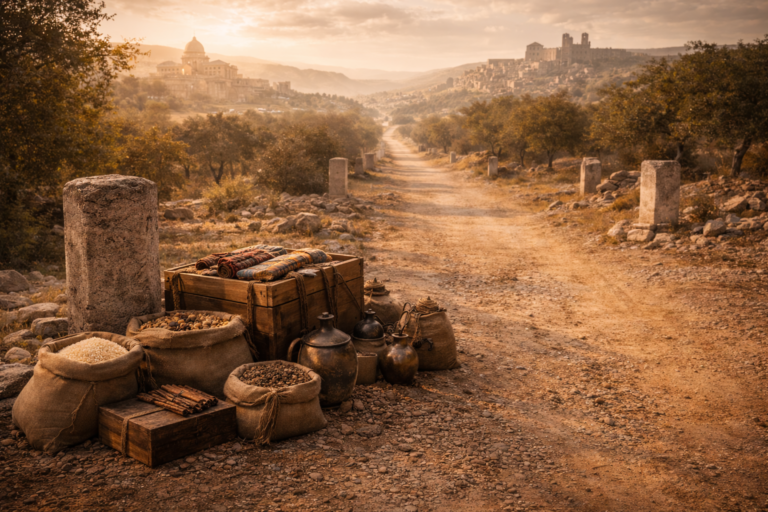
Every ancient trade journey began with a simple truth. The road was never safe. Distance was not just space. It was uncertainty. Weather, theft, politics, and simple human error could destroy a journey before it reached its destination.
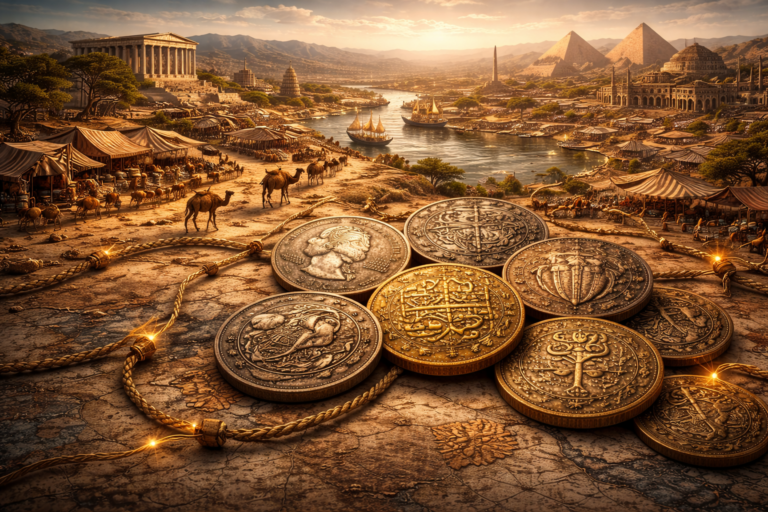
Ancient merchants did not remove risk. They learned to manage it. Through planning, routine, trust, and smart decisions made at the right moment. That is what allowed long distance trade to exist at all.
What this article explains
We explain how ancient merchants managed risk through preparation, route choice, cargo protection, and trust networks that kept journeys repeatable and markets stable.
What risk meant in ancient trade
Risk in the ancient world was constant. A broken container. A dishonest broker. A blocked road. Or a storm that arrives at the wrong moment.
Merchants did not expect safety. They expected problems. And they built their journeys around the idea that something will go wrong.
Planning reduced danger
The first defense against risk was planning. Merchants studied seasons, routes, and political conditions. They learned when to travel and when to wait.
Planning turned danger into something predictable. And predictable danger is easier to manage than surprise.
Protecting cargo and value
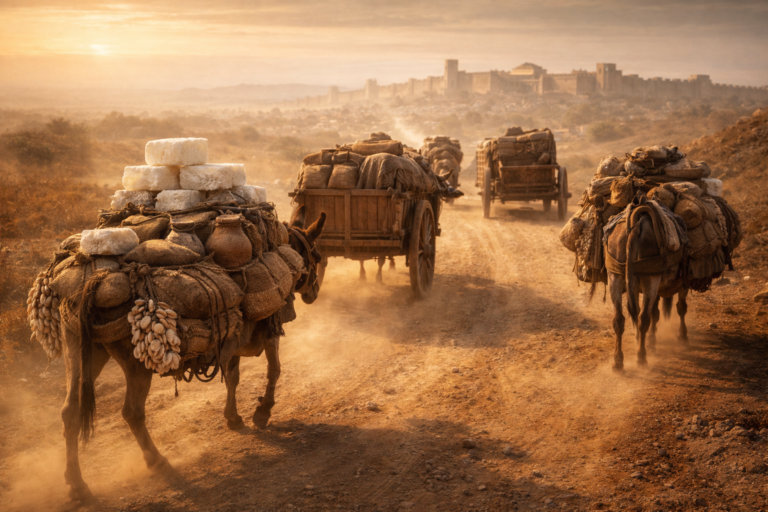
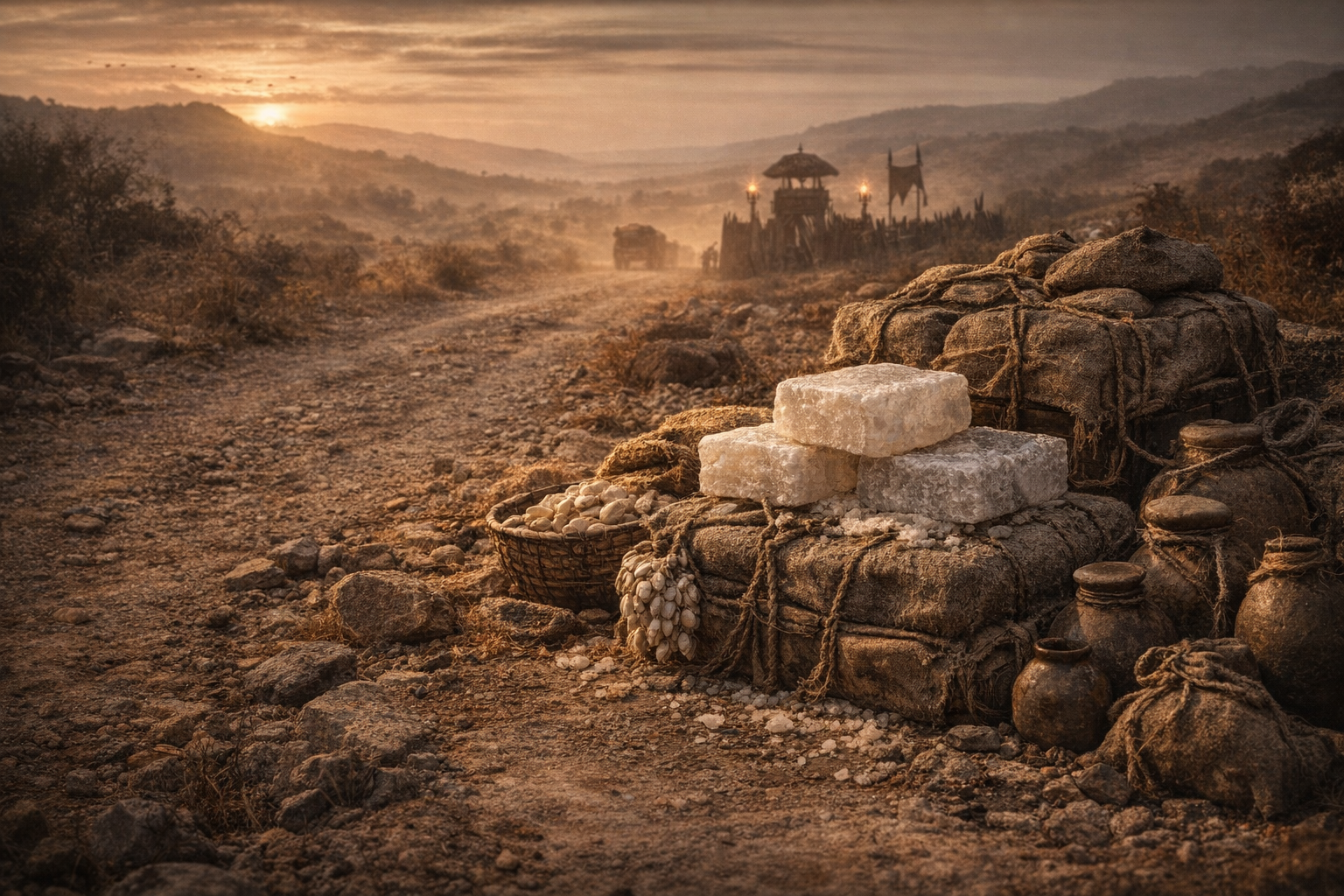
Goods were sealed, tied, and packed carefully. Containers were chosen to survive the road. Seals reduced theft and fraud.

A merchant who ignored packing details risked losing everything before reaching the market.
Reality Check
In ancient trade, small mistakes caused big losses. Attention to detail was a survival skill.
Choosing safer routes
Not all roads were equal. Some were faster. Others were safer.
Merchants often chose a longer path if it reduced danger. Safety was more valuable than speed.

Trust networks and protection
Merchants relied on networks of trust. Local guides, brokers, and partners provided protection and information.
These networks turned unknown regions into familiar territory. And familiarity reduces risk.
Risk Management Table
Risk Management Table
| Risk type | Merchant response | Daily action | Long term result |
|---|---|---|---|
| Weather | Season planning | Travel at safe times | Fewer lost journeys |
| Theft | Seals and guards | Secure cargo | Greater trust |
| Route danger | Alternative paths | Safer travel choices | Stable trade routes |
| Fraud | Trusted partners | Work with known people | Repeat trade |
Related Trade Articles
Final Verdict
Final Verdict
Ancient merchants did not avoid risk. They managed it. Through planning, protection, and trust. That is how trade routes survived and civilizations connected.
Frequently Asked Questions
What was the biggest risk in ancient trade
Uncertainty. Weather, theft, and route danger were constant threats.
How did merchants reduce loss
By sealing cargo, choosing safer routes, and working with trusted partners.
Why did trade continue despite risks
Because demand remained strong and systems were built to manage danger.