How Roman Coins Built an Empire Through Trade Power and Daily Life
Estimated reading time: about twenty four minutes
Rome did not rise on gold alone. It rose on coins that moved quietly between people every day. In markets, in military camps, and in distant towns, small pieces of metal created a shared system that held the empire together.
A loaf of bread, a soldier’s salary, a merchant’s trade agreement. These moments were simple, but they depended on something powerful. Roman coins carried trust, identity, and authority. Over time, they became the silent language that connected millions of people who never met each other.
- How Roman coins created trust across distant regions
- How different coins shaped daily life and trade
- How money connected power markets and ordinary people
- Why Roman coins became a quiet system that held the empire together
Where Roman coins began
In its earliest days, Rome was a modest city where trade depended on direct exchange. People traded goods with neighbors, often relying on familiarity and trust built over time. But as the city expanded and trade reached beyond local communities, that system began to struggle.
Strangers needed a shared standard. They needed something that could represent value without negotiation every time. Roman coins answered that need. At first they were simple and heavy, marked with basic symbols, but they carried a powerful idea. The mark on the coin was a promise that the value inside the metal would be accepted.
That promise slowly became one of the foundations of Roman life. It allowed people who did not share language or culture to trade calmly. It turned uncertainty into routine and helped build a stable economic environment across a growing empire.
Money as trust across distance
Imagine traveling far from your home city into a region where everything feels unfamiliar. The language sounds different and the customs are not your own. Yet when you present a Roman coin, the person across from you understands it immediately.
This was the quiet strength of Roman money. Coins created a shared sense of trust that extended across vast distances. Merchants, farmers, and travelers did not need long negotiations. The coin itself carried recognition and confidence.

When soldiers received their pay, they did not question the value of the coins they held. They knew those coins would be accepted for food, clothing, and transport wherever they traveled. As those coins moved from the army into local markets, the trust moved with them.
Over time, this chain of trust connected different regions of the empire. It allowed people to interact with confidence, even when they were far from their home communities.
Coins in daily life
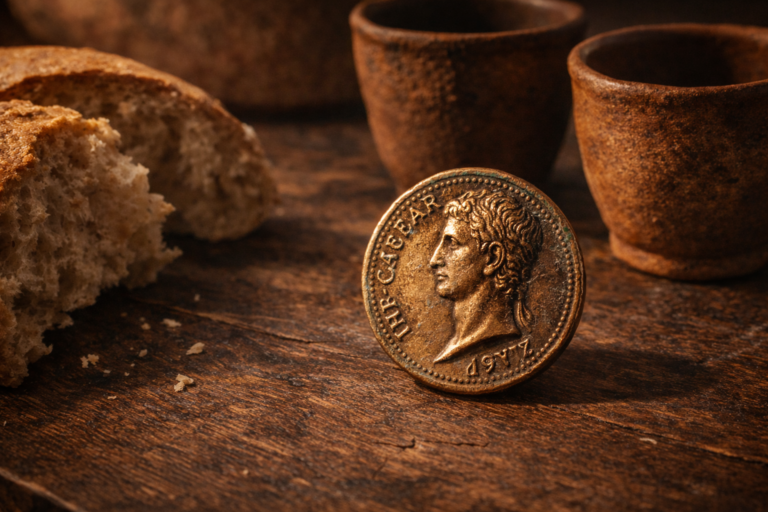
The Roman economy did not depend only on large transactions. It depended on everyday life. Most exchanges were small and frequent. Bronze coins played a central role in these moments, allowing people to buy basic goods and services with ease.
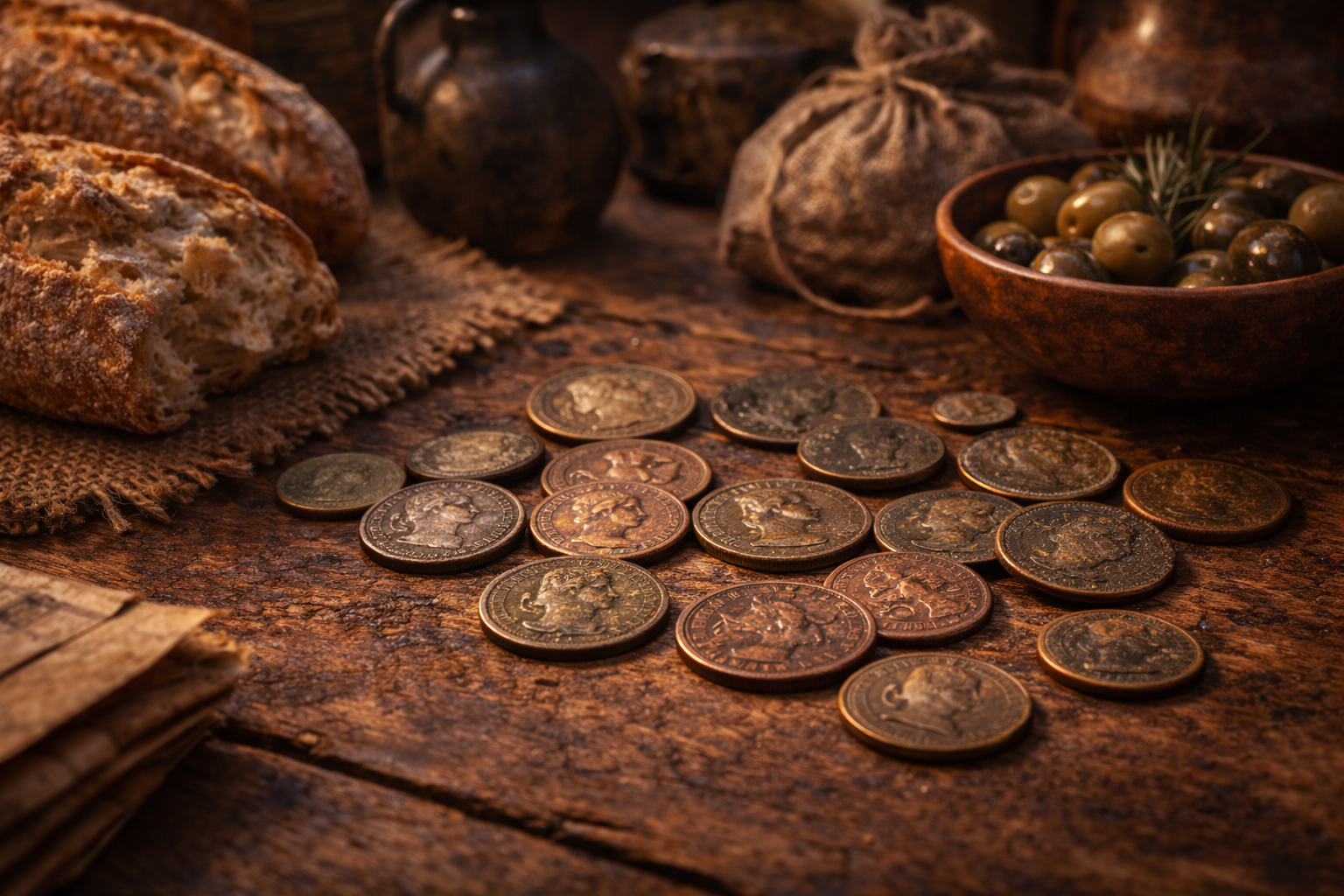
In busy markets, these coins moved constantly. Bakers, farmers, and craftsmen used them throughout the day. Children learned their value early, and workers relied on them after long hours of labor. These small coins made daily life smoother by removing the need for constant bargaining.
They were not symbols of wealth. They were tools of routine life. They allowed the city to function calmly and efficiently, supporting millions of daily interactions across the empire.
Coins as symbols of power
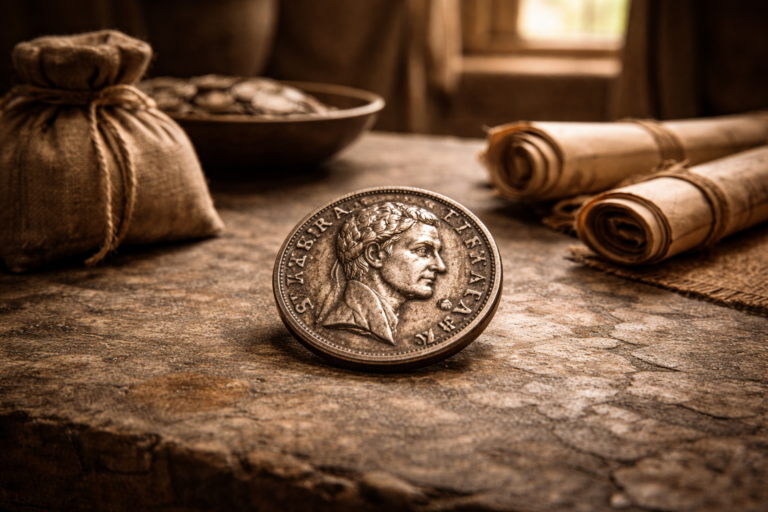
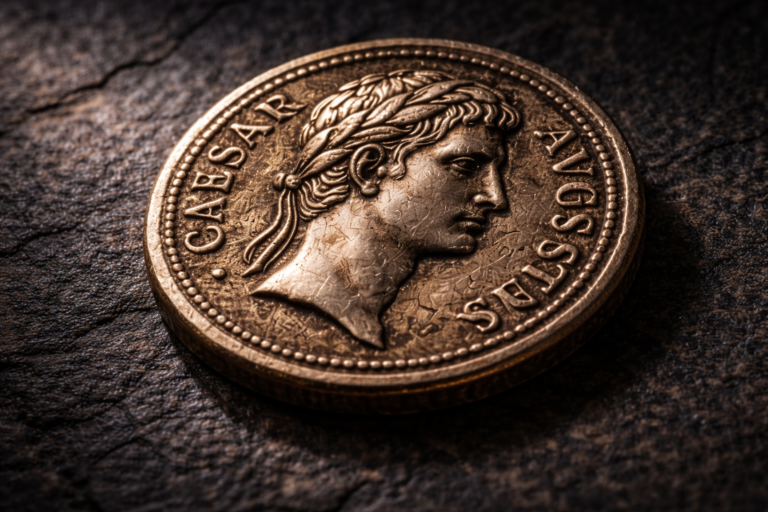
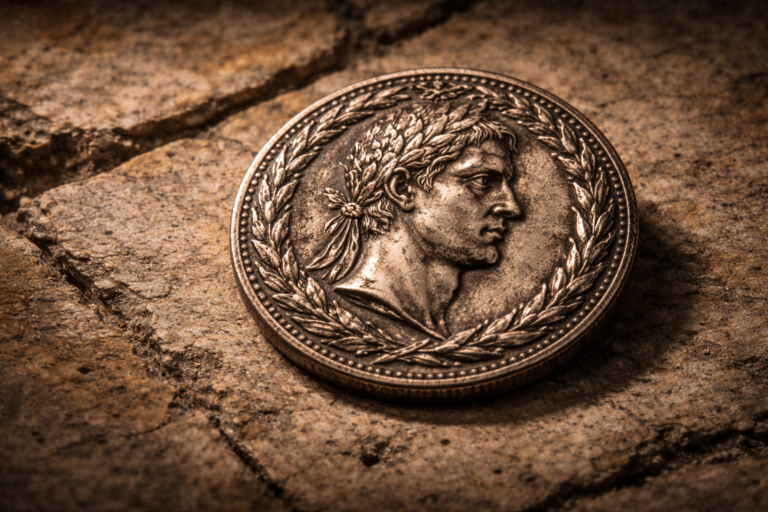
Roman coins were more than economic tools. They were also instruments of communication. Each coin carried an image, often the portrait of the emperor. That image reminded people who stood behind the currency and who held authority across the land.
Even in distant regions where people had never visited Rome, the image of the emperor appeared in their daily transactions. This created a sense of unity and presence. Authority was not distant or abstract. It was visible in every exchange.
Over time, coins helped shape how people understood power and order in their daily lives. They connected personal transactions to a larger political structure. You can explore this role further in how Roman coins acted as everyday political media and carried messages from the state into daily life.
This constant presence of coins also influenced how people experienced authority in ordinary moments. Power was not only in laws or soldiers. It was in the money people used each day. This deeper idea is explored in how Roman coins shaped everyday authority across the empire.
Trade networks and moving money
Rome’s trade network stretched across regions connected by roads, rivers, and sea routes. Goods moved constantly between cities, provinces, and ports. Wine, grain, textiles, and tools traveled long distances, and coins traveled with them.
A coin minted in one region could pass through many hands across the empire. Each exchange reinforced a shared understanding of value. Prices became easier to agree on, and transactions could happen quickly without complex negotiation.
This efficiency supported large scale trade. It allowed merchants to plan and invest with confidence. It also reduced conflict, because both sides trusted the value represented by the coin.
The balance between small and large payments
The Roman monetary system included different types of coins, each designed for a specific role. Smaller coins supported daily purchases, while silver and gold coins handled salaries and large trade agreements. This balance made the system flexible and practical.
One interesting example of this balance is the dupondius. It sat between small bronze coins and higher value pieces, helping bridge everyday needs and medium level transactions. If you want a closer look, you can explore how the dupondius connected small and medium payments in Roman markets.
Coins like this made the system more human and adaptable. People could move easily between small and larger payments without leaving the shared structure of Roman money.
When trust began to change
For a long time, Roman coins carried a steady sense of reliability. People trusted the metal, the mark, and the authority behind it. Over time, that trust began to shift in quiet and gradual ways.
Economic pressure, political changes, and growing military demands placed strain on the monetary system. The content of coins changed in subtle ways, and the balance between different types of coins was adjusted. These changes were not always obvious at first, but people could feel them in their daily exchanges.
When value becomes uncertain, even slightly, everyday life begins to feel different. Prices begin to move. Negotiations take longer. Confidence becomes more cautious. The system that once flowed easily starts to slow.
This shift did not happen all at once. Roman money continued to function for a long time. But the quiet stability that once defined it was no longer as strong as before.
How ordinary people experienced change
For ordinary people, money was never an abstract idea. It was part of daily life. A worker needed coins to buy food. A merchant needed coins to continue trading. A family needed coins to plan and survive.
When the value of coins felt less certain, people adapted. Some preferred certain types of coins. Others adjusted prices. Many relied more on trusted relationships and familiar trade partners.
In this way, money was always human. It was not only metal or design. It was trust, habit, and shared understanding between people living their daily lives.
Authority identity and daily life
Even as the system evolved, Roman coins continued to carry authority and identity. The images on coins reminded people of the state and its structure. They reinforced the presence of power in everyday life.
In distant towns, people who had never seen Rome still saw its presence in their coins. This created a sense of belonging to a larger world. Authority was not only enforced by law or soldiers. It was visible in everyday exchange.
Coins connected individuals to a wider system. Every small purchase was also a reminder of the larger structure that shaped Roman life.
The lasting legacy of Roman coins
Even after political structures changed, the idea behind Roman coins did not disappear. The concept of trusted currency continued to influence later societies. The idea of shared value backed by authority remained central to how money worked.
Roman coins showed that money could be more than a tool of exchange. It could connect people, support trade, and communicate identity at the same time.
This legacy continues today. Modern money still depends on trust, recognition, and shared agreement. Many of those ideas began in systems like the one Rome created.
| Reality Check |
|---|
|
Roman coins were not perfect and their value did change over time. Political decisions and economic pressure sometimes affected stability. Yet for long periods the system still provided a reliable daily exchange for millions of people across the empire. |
| Aspect of the system | Long term impact |
|---|---|
| Shared coin standards | Allowed trade across distant regions |
| Recognized authority on coins | Connected daily life with state power |
| Range of coin values | Supported both small purchases and large trade |
| Circulation across provinces | Created a unified economic space |
| Final Verdict |
|---|
|
Roman coins formed a living system of trust that supported trade and daily life. They connected ordinary people with state authority through everyday exchange. Through small purchases and large payments they built a shared language that held an empire together for centuries. Their legacy continues in the idea that money is built on trust and shared understanding between people. |
FAQ
How did Roman coins help build the empire
They created trust and allowed trade to move smoothly across large distances which supported economic growth
Why were different types of Roman coins important
Each coin served a role from daily purchases to salaries and large trade which made the system flexible
What is the legacy of Roman coins today
They influenced later monetary systems by showing how shared trust and recognized currency can connect societies