How the First Coins in History Were Created in Ancient Lydia

Estimated reading time: 15 minutes.
Long before the Roman Empire dominated the Mediterranean and long before the famous silver coins of Greece circulated across ancient markets, the idea of money itself was still evolving. Trade existed everywhere, but the tools used to support it were often unreliable. People relied on barter, weighing metal, or exchanging goods directly. These systems worked, but they were slow and sometimes confusing.
In the western part of Anatolia, however, something remarkable happened. In a region known as Lydia, merchants, rulers, and craftsmen created a small but revolutionary object that would change trade forever. These objects were the first coins in history.
What this article explains
This article explores how the first coins were created in ancient Lydia and why they changed the way people traded. It examines the materials used, the political decisions behind coin minting, and the impact these coins had on trade and economic systems across the ancient world.
- The world before coins existed
- Why Lydia became the birthplace of coinage
- The discovery of electrum
- How the first Lydian coins were made
- The lion symbol and royal authority
- How coins improved ancient trade
- King Croesus and the first gold and silver coins
- How Lydian coinage influenced Greece and Rome
- Table | Early evolution of coinage
- Reality Check
- Final Verdict
- FAQ
The world before coins existed
To understand why Lydian coins were so revolutionary, we must first imagine a world without coins. Before coinage existed, trade depended largely on barter systems. Farmers might exchange grain for tools. Craftsmen might trade pottery for textiles. These exchanges worked when both parties needed something the other possessed.
However, barter had clear limitations. It required a direct coincidence of needs. If a merchant had olive oil but needed metal tools, he had to find someone who wanted oil and also had tools to trade. Without that match, trade became complicated.
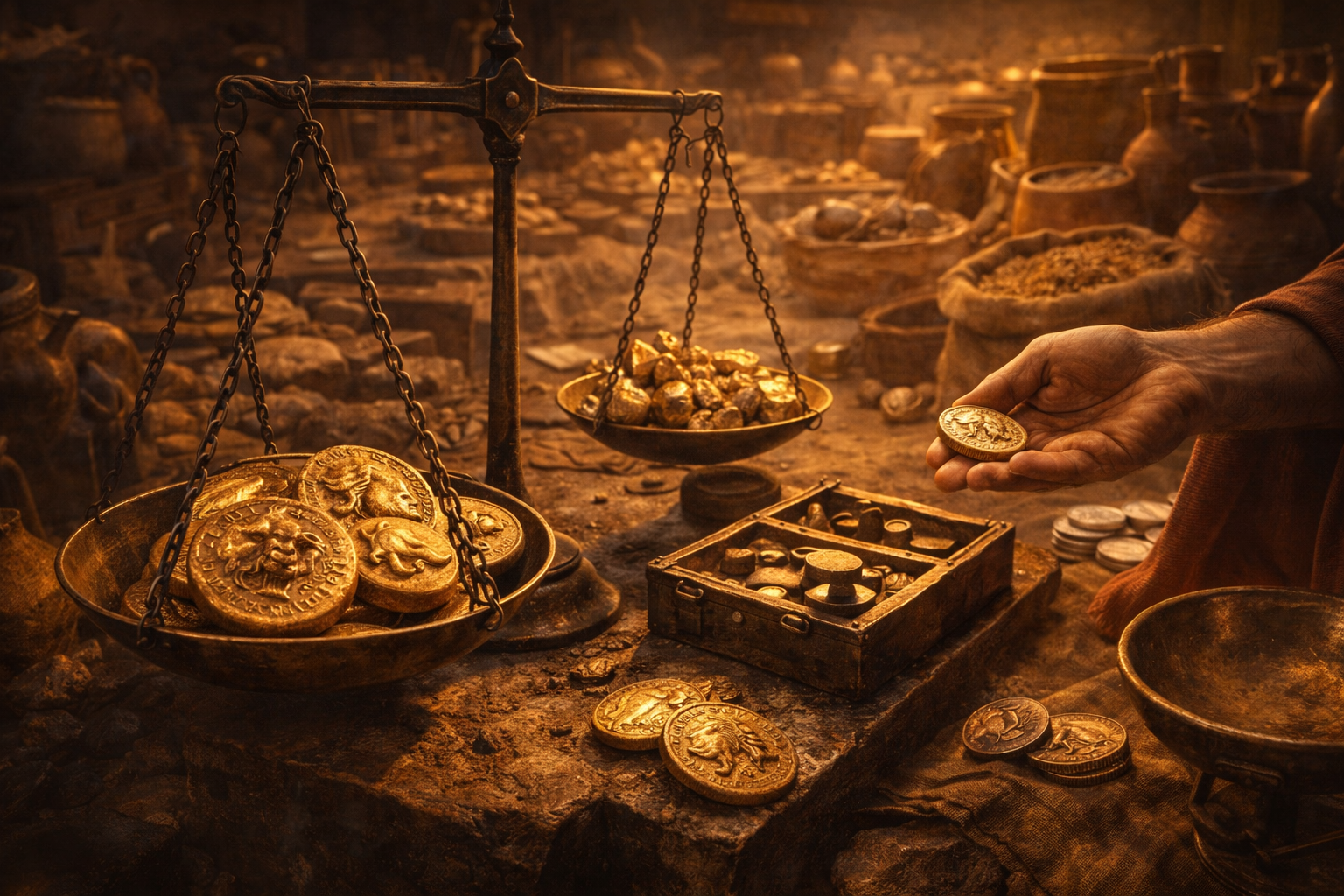
Another method involved using pieces of precious metal such as gold or silver. These metals had value, but they had to be weighed carefully for every transaction. Scales were required, and trust was essential. A dishonest trader could easily manipulate weights or mix metals of lower quality.
These difficulties created a clear need for a standardized form of money.
Why Lydia became the birthplace of coinage
Lydia occupied a strategic location in western Anatolia, near important trade routes connecting Asia and the Mediterranean. The region benefited from fertile land, strong trade connections, and access to natural resources.
One of these resources was particularly important. The rivers flowing through Lydia carried deposits of electrum, a naturally occurring alloy of gold and silver. Electrum had long been valued for its beauty and durability, and it became the perfect material for early coinage.
Because Lydia was already involved in active trade, merchants needed a reliable way to exchange goods. Standardized pieces of metal marked with official symbols offered a solution.
The discovery of electrum
Electrum is a natural alloy composed primarily of gold and silver. It occurs naturally in river deposits and was known to ancient civilizations long before coinage began.
The unique composition of electrum made it especially suitable for early coins. It was durable enough to survive repeated use, yet valuable enough to represent meaningful wealth. Its distinctive color also made it easy to recognize.
Lydian rulers realized that electrum could be shaped into small pieces of consistent weight. By stamping these pieces with official marks, they could create standardized units of value.
How the first Lydian coins were made
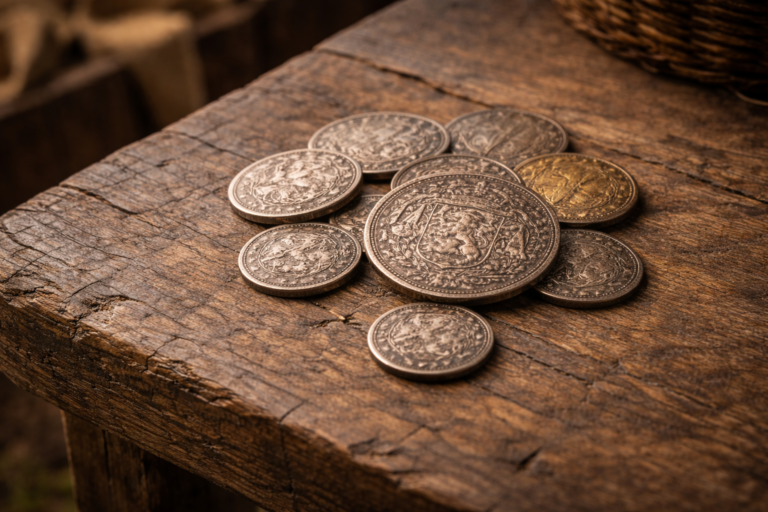
The earliest Lydian coins were created by shaping small lumps of electrum and striking them with a die bearing a symbol. The stamping process left an official mark that guaranteed the coin’s weight and authenticity.
This mark served a powerful purpose. Instead of weighing metal during every transaction, traders could simply trust the stamp placed on the coin. The authority of the issuing ruler ensured the value of the piece.
In many cases the reverse side of the coin displayed a simple punch mark, created during the striking process. These marks were not decorative but were part of the minting technique used to hold the metal in place during stamping.
The lion symbol and royal authority
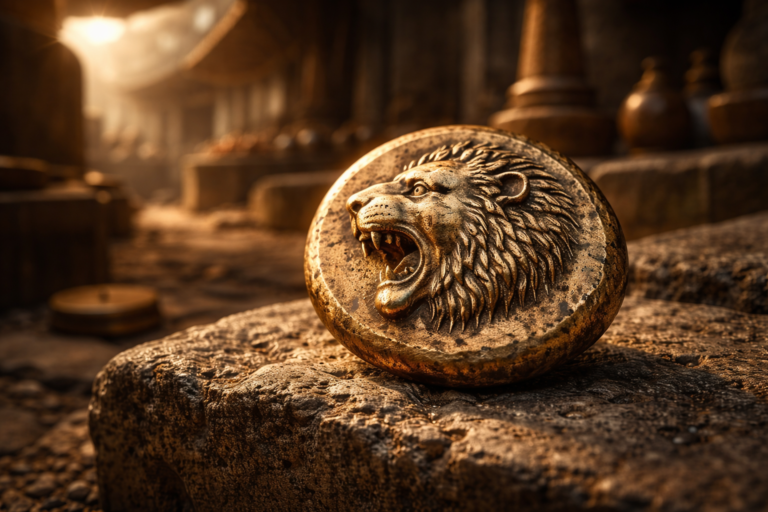
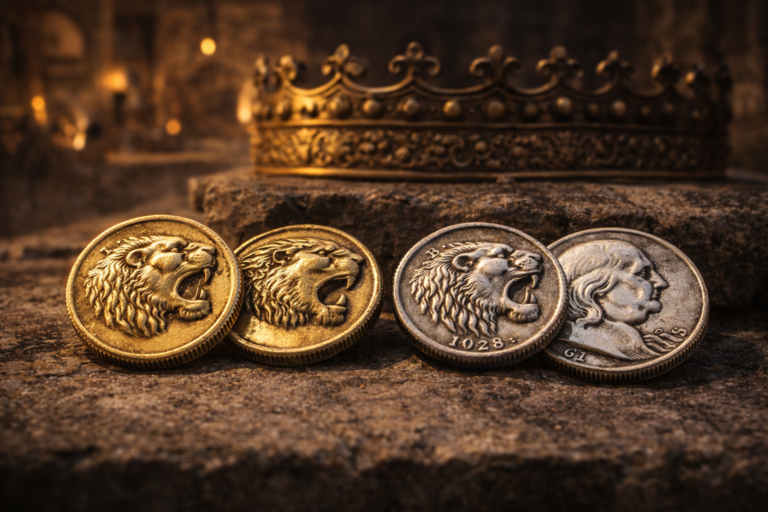
One of the most recognizable symbols found on early Lydian coins is the lion. This symbol represented royal power and authority. By placing the lion emblem on coins, Lydian rulers signaled that the coin was backed by the state.
This was an important step in the development of money. The value of a coin was no longer determined solely by the metal itself but also by the authority guaranteeing its weight.
The lion emblem also helped create visual recognition. Even people who could not read or write could easily identify the symbol of royal coinage.
How coins improved ancient trade
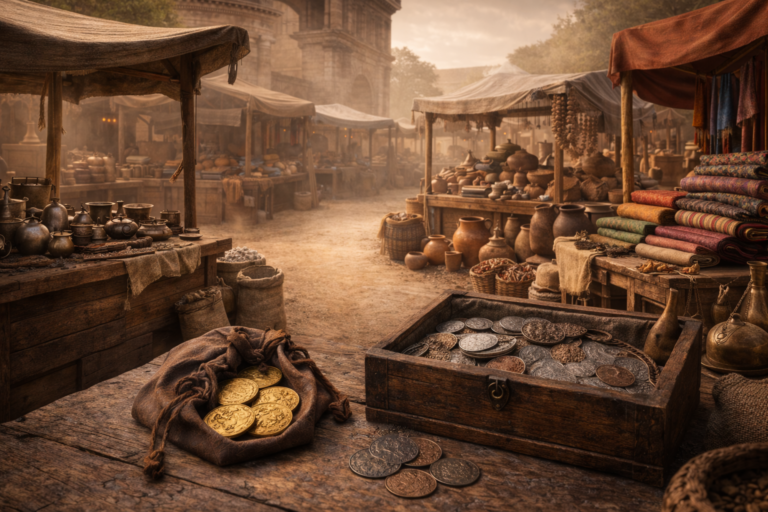
Once coins began circulating in Lydia, trade became faster and more efficient. Merchants no longer needed to weigh metal or negotiate complicated barter arrangements. Instead, standardized coins could be exchanged quickly.
Coins also allowed prices to become more consistent. Goods could be valued according to fixed amounts rather than uncertain exchanges of goods.
This transformation encouraged wider trade networks and greater economic activity.
King Croesus and the first gold and silver coins
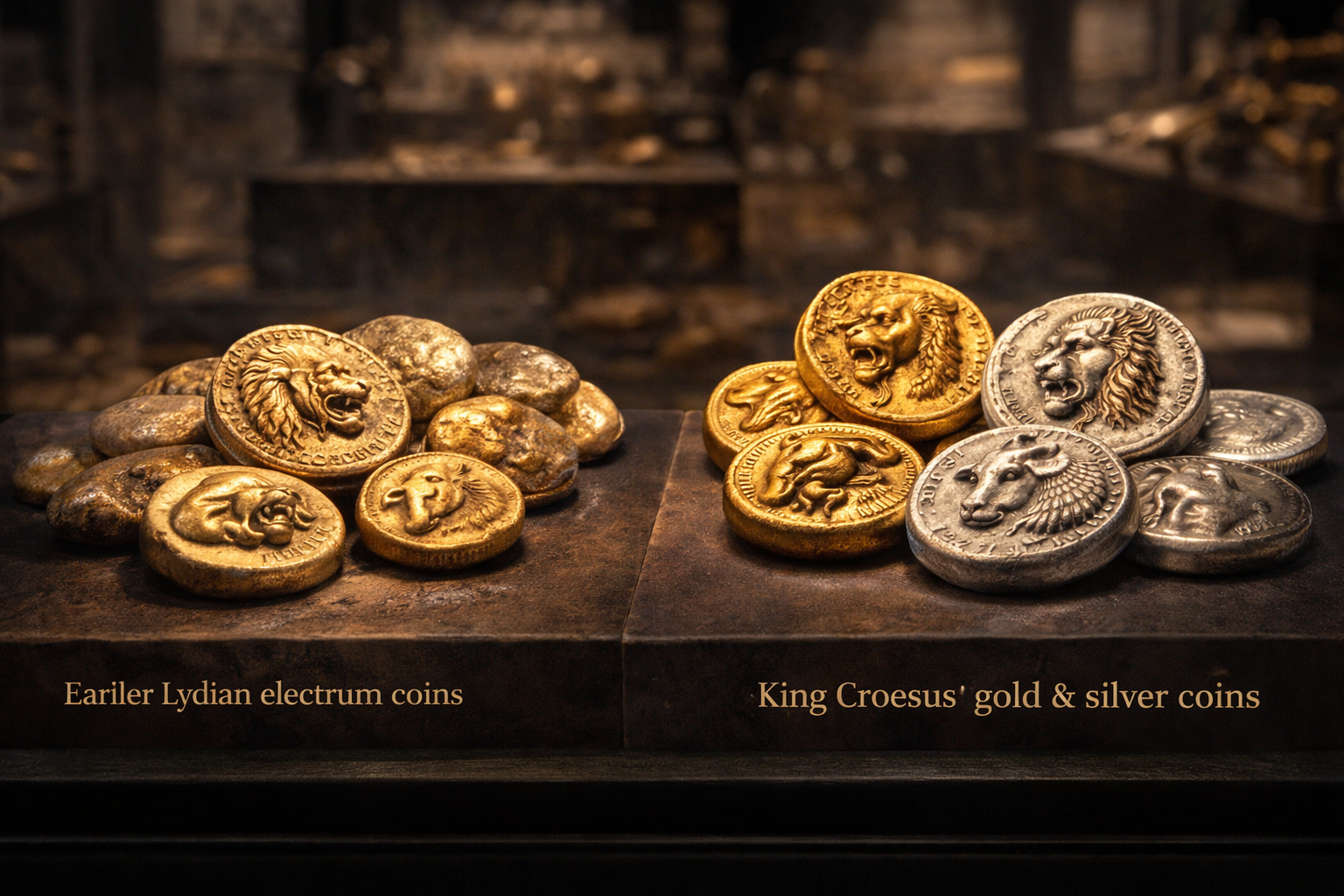
Several generations after the earliest electrum coins, the Lydian king Croesus introduced a major improvement. Instead of using electrum, which contained unpredictable mixtures of gold and silver, Croesus created separate coins made from pure gold and pure silver.
This innovation allowed the value of coins to become even more precise. Gold and silver coins could be produced with clearly defined weights and consistent value.
How Lydian coinage influenced Greece and Rome
The success of Lydian coinage quickly attracted attention from neighboring civilizations. Greek city states soon adopted similar minting techniques, producing their own silver coinage.
Greek coins later influenced the development of Roman coinage systems. In this way, the idea first introduced in Lydia eventually shaped monetary systems throughout the Mediterranean world.
Table | Early evolution of coinage
| Period | Development | Impact |
|---|---|---|
| Pre coinage era | Barter and weighed metal | Slow and unreliable trade |
| Lydian electrum coins | First standardized coinage | Faster transactions |
| Croesus coin reform | Separate gold and silver coins | More precise value system |
| Greek adoption | Expansion of coin systems | Regional economic growth |
| Roman coinage | Large imperial monetary system | Empire wide currency network |
Reality Check
The invention of coins did not instantly replace barter systems everywhere. For many years both systems existed together. However, the advantages of coinage gradually made it the dominant method of exchange across the ancient Mediterranean.
Final Verdict
The first coins created in ancient Lydia were small objects with enormous influence. By combining valuable metal with official authority, Lydian rulers created a system that transformed trade.
These early electrum coins simplified transactions, increased trust between merchants, and encouraged the development of larger economic networks. Later improvements introduced by King Croesus refined the system even further.
From Lydia the idea of coinage spread across the ancient world. Greek city states adopted it, and eventually the Roman Empire built one of the most powerful monetary systems in history.
What began as small stamped pieces of electrum eventually shaped the global concept of money itself.
FAQ
Where were the first coins invented
Most historians believe the first official coins were created in the kingdom of Lydia in western Anatolia during the seventh century BCE.
What metal were the first coins made from
The earliest coins were made from electrum, a natural alloy of gold and silver found in river deposits.
Why were Lydian coins important
They introduced standardized currency, making trade faster and more reliable than barter systems.