Coins That Traveled Before People Did
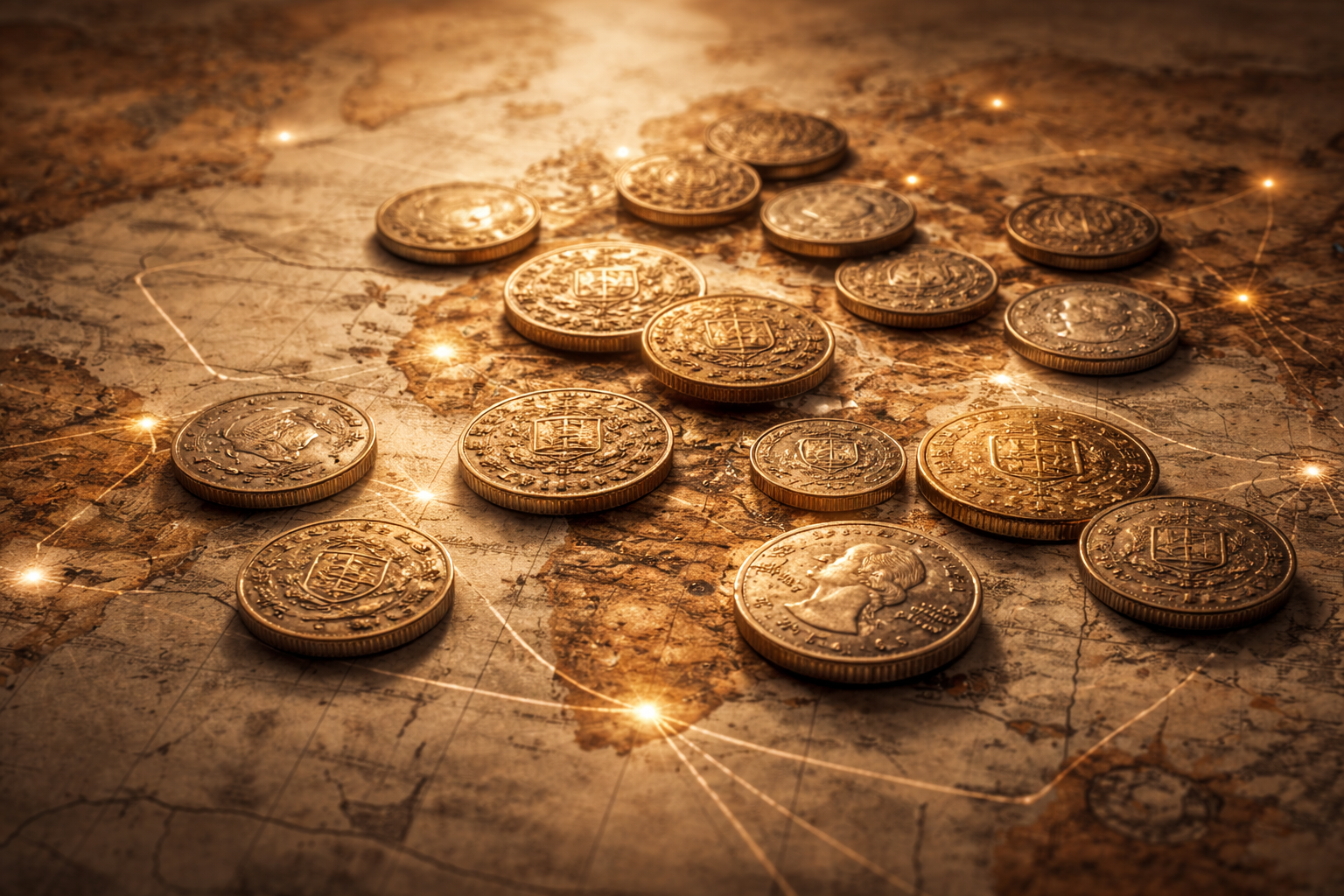
Estimated reading time: 20 minutes
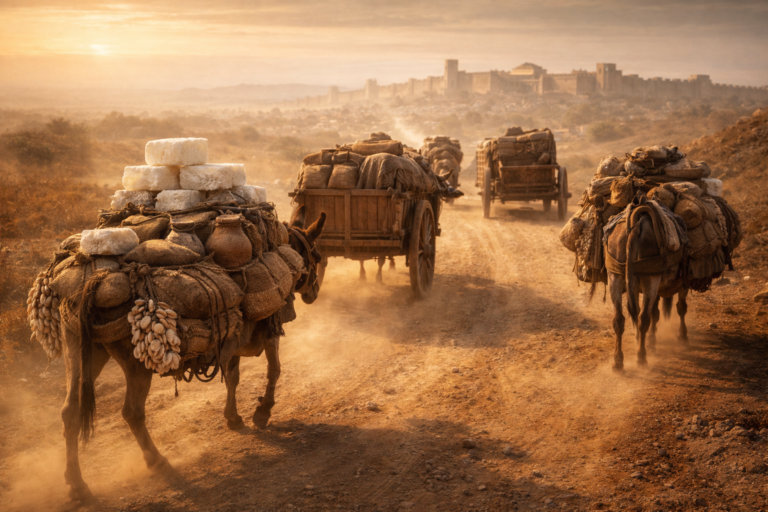
Long before most people could safely travel far from their homes, coins were already crossing borders. They moved through hands that never met, across roads that many would never walk, and between cultures that might not even share a language.
In a strange way, coins became the first travelers of the ancient world. They arrived before armies, before officials, and sometimes before the idea of an empire reached a region. And wherever they went, they carried more than buying power. They carried trust, influence, and identity.
What this article uncovers
We’ll explore how coins moved through ancient trade networks, why they were trusted, how they crossed cultures, and what their journeys reveal about early global connection—long before modern travel was normal.
- Why Coins Traveled More Than People
- Trade Routes as Invisible Highways
- Trust, Acceptance, and the Problem of Strangers
- Markets, Ports, and Caravan Worlds
- Mixed Coinage and Cultural Contact
- When Coins Arrived Before Power
- How Ordinary People Met the Wider World Through Money
- Coins as Signals of Safety and Connection
- Early Globalization and Modern Echoes
- Share and Reflect
- About PastMint
Why Coins Traveled More Than People
In the ancient world, travel was expensive, dangerous, and often unnecessary for ordinary life. Most people lived and died within a limited radius of where they were born. Moving long distances meant risk: illness, robbery, storms, political borders, or simply getting lost.
Coins faced fewer obstacles. A coin did not need food, shelter, or permission. It could move quietly, passed from one transaction to another, traveling further with every exchange.
This is the first secret of ancient connectivity: people didn’t have to travel for cultures to interact. Money did it for them.
Trade Routes as Invisible Highways
When we imagine trade routes, we often picture dramatic caravans and heroic sailors. But the true power of trade routes was their reliability. They were not single journeys. They were repeated patterns.
A route becomes meaningful when it is used again and again. Over time, these paths became invisible highways, carrying goods, news, beliefs, and currency.
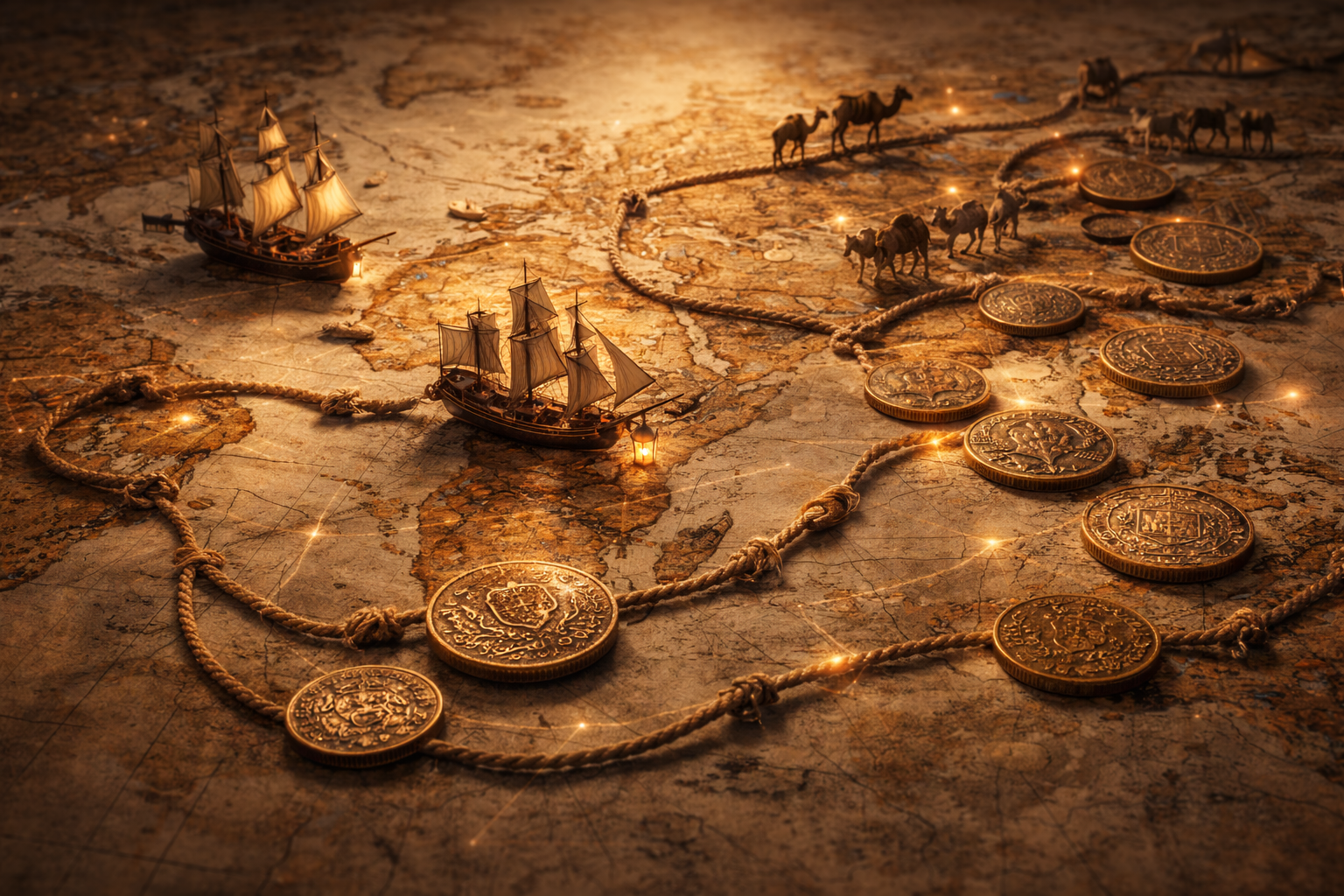
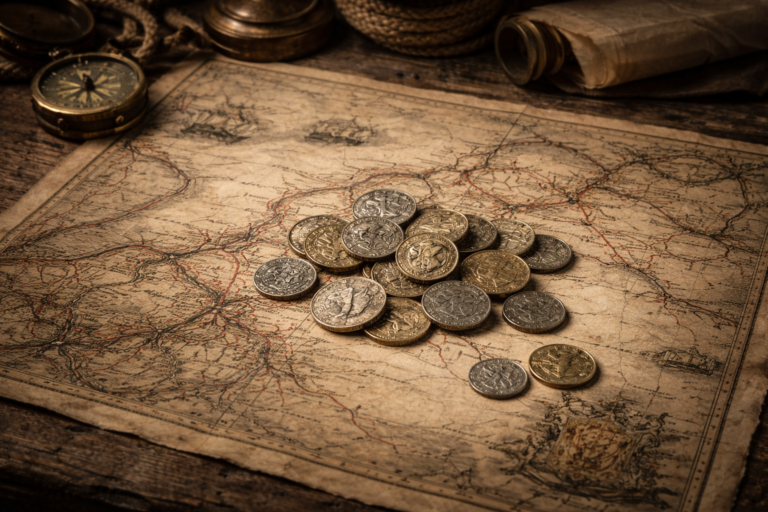
Coins were ideal passengers. Unlike fragile goods, they did not spoil. Unlike people, they did not get tired. They simply continued moving—quietly mapping the economy of connection.
Trust, Acceptance, and the Problem of Strangers
Barter works best among people who know each other. Trade routes, however, are built on strangers. That creates a problem: how do you exchange fairly with someone you may never meet again?
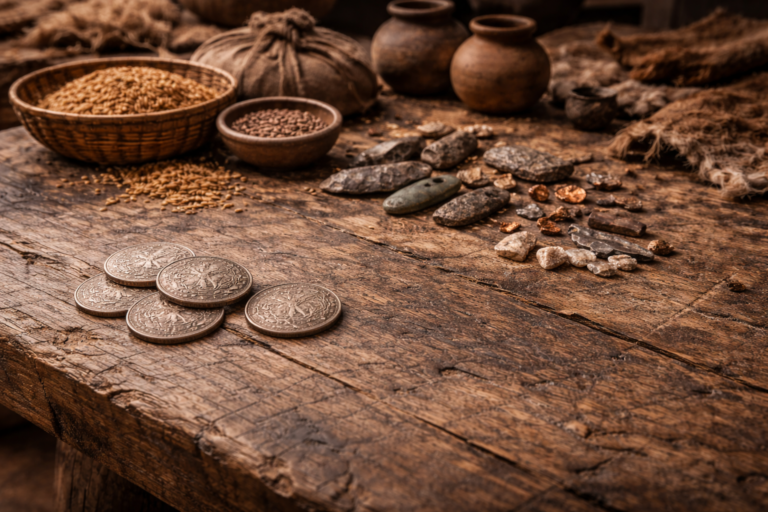
Coins offered a solution. Not perfect—but powerful. A coin’s metal, weight, and recognizable design acted like proof. It could be tested, counted, and accepted quickly.
In this sense, coins were not just payment. They were trust tools. They allowed exchange without personal relationships.
Reality Check
Acceptance was never automatic. A coin had to earn trust through familiarity, stability, and reputation. Where trust was weak, coins were weighed, inspected, or rejected.
Markets, Ports, and Caravan Worlds
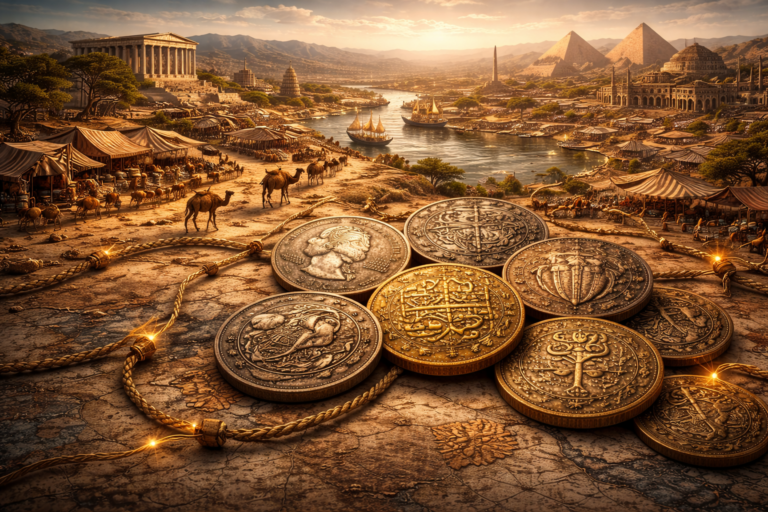
Trade routes were not just lines on a map. They were ecosystems. Ports became meeting points between cultures. Caravan cities became melting pots of language and custom.
In these spaces, coins moved faster than almost anything else. A merchant could sell goods for local currency, then exchange it for another coin type, then move again. Money became the flexible bridge between worlds.
And the more coins moved, the more they carried culture with them. Images traveled. Symbols traveled. Even political claims traveled, printed on metal.
Mixed Coinage and Cultural Contact
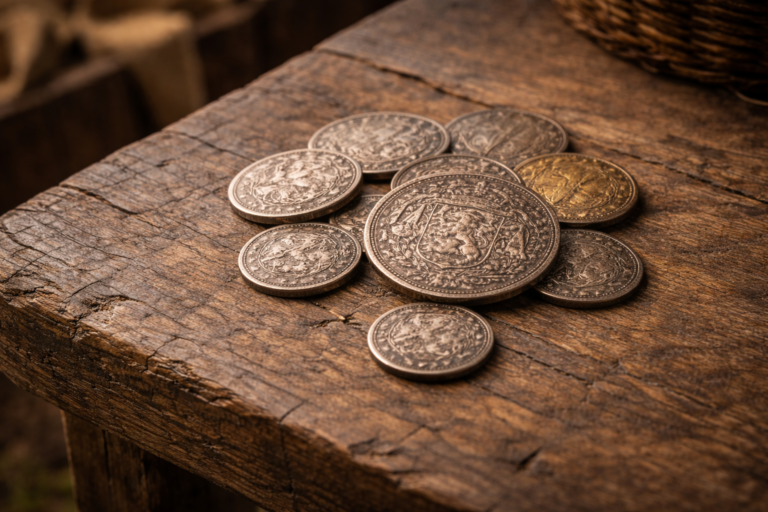
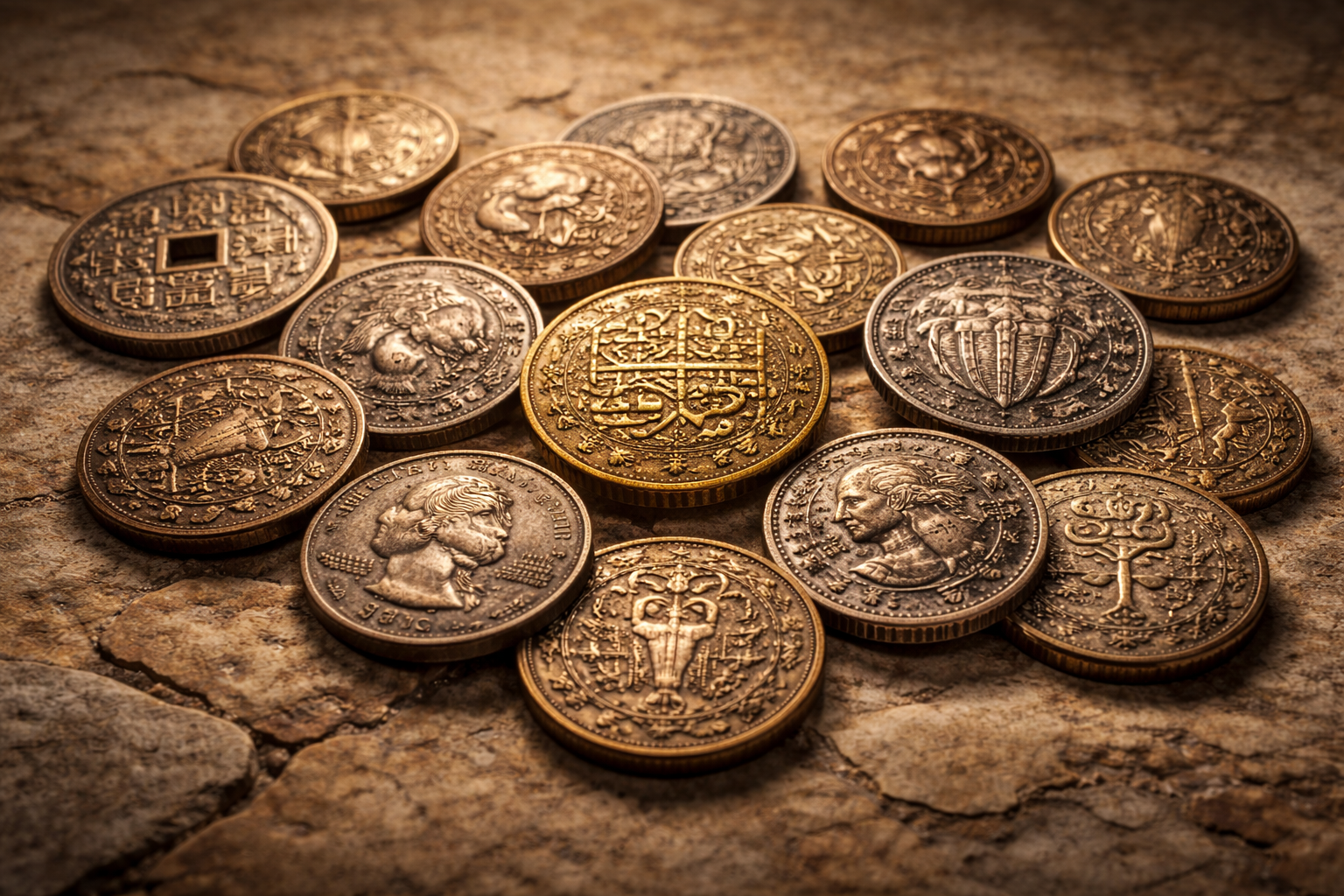
One of the clearest signs of ancient contact is mixed coinage. When coins from different regions appear together, it suggests real interaction: trade, migration, tribute, or military movement.
Mixed coin circulation reveals something deeper: people were willing to accept foreign money. That acceptance is cultural. It implies openness, necessity, or economic pressure.
Sometimes, foreign coins were accepted as-is. Sometimes they were cut, countermarked, or imitated. These adaptations show how societies negotiated trust.
When Coins Arrived Before Power
Sometimes, coins entered a region before the political system behind them did. This is one of the most fascinating dynamics of ancient history.
A community might handle imperial coins daily—without direct imperial presence. In that case, money becomes a kind of advance messenger. It introduces the identity of a distant power before the power itself arrives.
Coins can normalize authority before authority is physically present. That makes them more than economic tools. They become cultural ambassadors—sometimes even quiet warnings.
How Ordinary People Met the Wider World Through Money
Not everyone traveled, but everyone touched the evidence of travel. A coin might carry a portrait of a ruler you’ve never heard of. Or symbols from a culture you’ve never seen.
For ordinary people, coins were glimpses of a wider world. They were proof that other powers existed, other cities thrived, other systems operated beyond the horizon.
This matters because it changes perception. A person who never leaves home can still develop a sense of “outside.” Coins helped create that mental geography.
Coins as Signals of Safety and Connection
Coins also acted like signals. In many trade spaces, the presence of certain coins implied that a route was active, safe, and economically stable.
When coins disappear, it can signal disruption: war, piracy, collapse, political change. Money leaves traces of stability, and the absence leaves traces of fear.
That is why coins are so valuable to historians. Not only for what they show, but for where they appear—and where they stop appearing.
Key Takeaway
Coins were the ancient world’s most reliable travelers. They connected people who never met, carried symbols across cultures, and made distant worlds feel economically real.
Early Globalization and Modern Echoes
Today, global trade feels normal. But the ancient world had its own version of globalization: not as fast, not as universal, but surprisingly persistent.
Coins reveal that persistence. They show that connection is not a modern invention. It is a repeating human pattern—built whenever exchange becomes necessary.
Modern money moves digitally. Ancient money moved physically. But both do the same deeper work: they link strangers through systems of trust.
Final Verdict
Coins traveled before people did because they were built for movement. They carried trust into stranger-to-stranger exchange, spread symbols and influence quietly, and mapped ancient networks long before most individuals ever left home. To follow the coin is to follow the earliest footprints of connection.
Share and Reflect
If this article made ancient trade feel more human and connected, share it with someone who loves history beyond battles and kings.
Article link:
Coins That Traveled Before People Did
Reflection question: What “travels” farther today—people, money, or symbols?
About PastMint
PastMint
PastMint explores the hidden stories behind money, symbols, and everyday objects. We connect historical context with cultural meaning to reveal how small artifacts shaped entire civilizations—quietly, consistently, and often more effectively than words.