How Coins Became the First Mass Media
Estimated reading time: 22 minutes
When people imagine “media,” they think of paper, screens, broadcasts, and networks. But media is not defined by technology. Media is defined by repetition: a system that spreads messages to large populations again and again.
By that definition, the ancient world already had mass media. It wasn’t a newspaper. It wasn’t a public speech. It wasn’t a wall inscription. It was a coin.
The core idea
Coins became the first mass media because they circulated constantly. They carried a standardized message in a form people touched every day—making power feel familiar long before modern communication existed.
- What “Mass Media” Really Means
- Why Coins Were Perfect for Mass Messaging
- A Visual Language for Everyone
- Who Controlled the Message
- Messaging by Design: Portraits, Symbols, and Virtues
- Repetition as Power
- Markets as Distribution Networks
- Crisis Coinage and Public Reassurance
- What Coin Media Could Not Do
- Modern Echoes of Coin Messaging
- Share and Reflect
- About PastMint
What “Mass Media” Really Means
Mass media is a mechanism for reaching the many. Its power comes from distribution and repetition. A single message is weak. A repeated message becomes normal.
In the ancient world, distribution was difficult. Most messages were local. Speeches faded. Stone inscriptions stayed in one place. Written texts required literacy.
Coins solved these problems without effort. They were portable. They were durable. They were used constantly. They reached the poor and the powerful alike.
Why Coins Were Perfect for Mass Messaging
Coins were state-produced, standardized objects. That alone gave them authority. But their deeper advantage was daily exposure.
Even someone with no interest in politics would still see imperial imagery repeatedly—on wages, taxes, market purchases, and small daily exchange. Coins turned messaging into background reality.
They also traveled. A coin might cross regions and cultures. The message moved with it. That gave rulers a form of communication far beyond their physical reach.
A Visual Language for Everyone
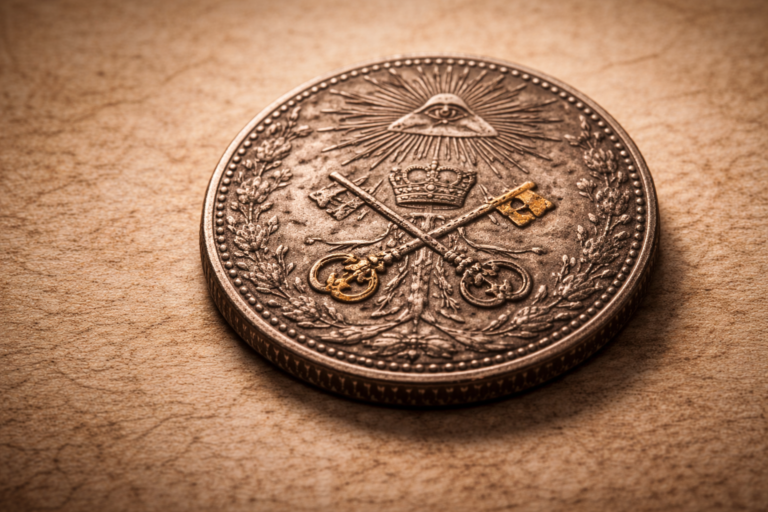
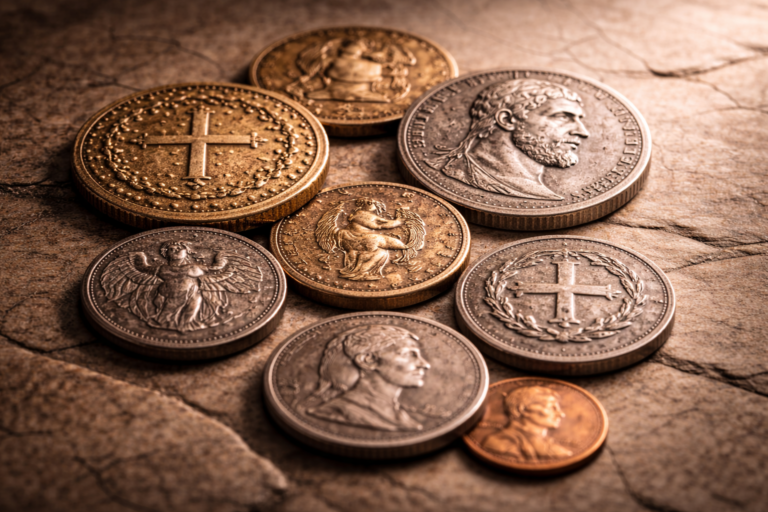
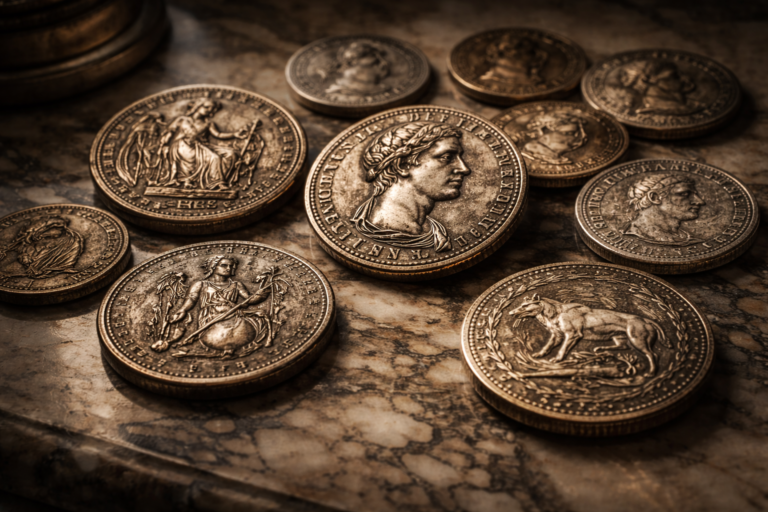
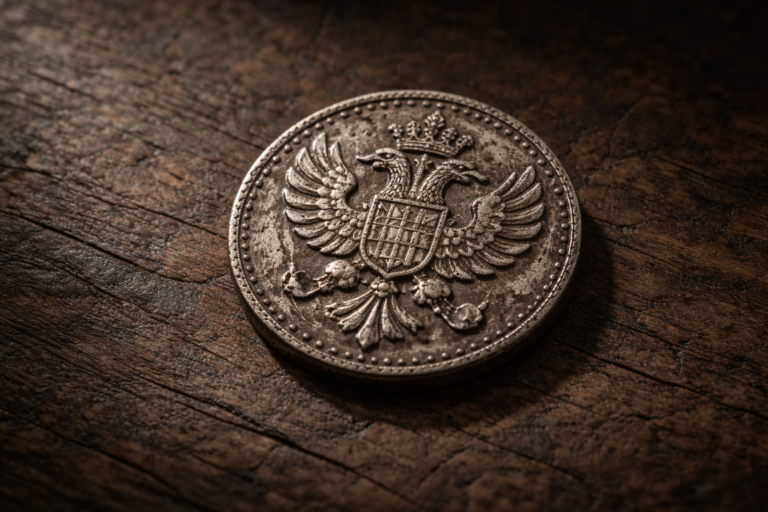
In societies with limited literacy, images were the fastest language. Coins relied on symbols that could be understood instantly: wreaths, gods, animals, tools, crowns, standards, ships, victory figures, and sacred motifs.
Even without reading, people could recognize the message: strength, legitimacy, prosperity, peace, continuity, divine favor.
Reality Check
Coin imagery did not need to convince everyone. It only needed to be familiar. Familiarity alone makes authority feel inevitable.
Who Controlled the Message
Coins were not personal art. They were official objects. That means their imagery was selected with care. Controlling the mint meant controlling what millions would see.
A ruler could shift coin designs to signal change: a new reign, a victory, a new policy, a restored order after instability.
Even when people disagreed privately, the coin’s message remained publicly visible—unchallenged in daily exchange.
Messaging by Design: Portraits, Symbols, and Virtues
Coin designs functioned like visual headlines. They had to work quickly. They had to be memorable. They had to deliver meaning without explanation.
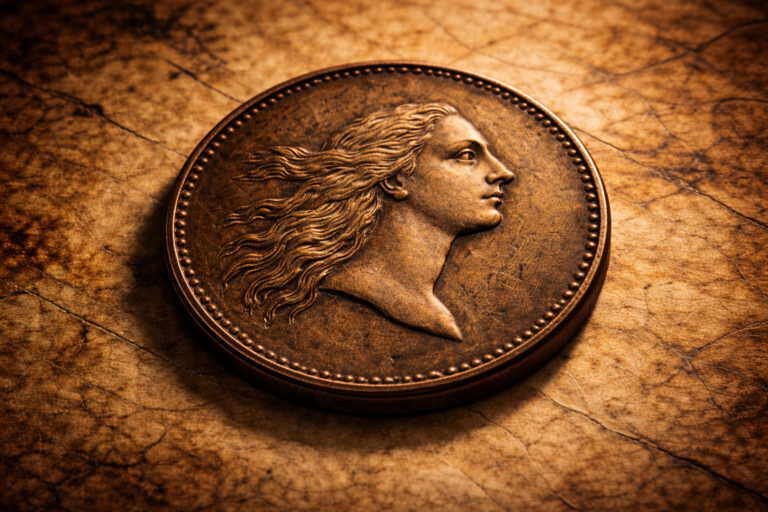
Portraits created familiarity. Symbols created emotional shortcuts. Virtues created moral framing: justice, harmony, stability, peace, victory, piety, strength.
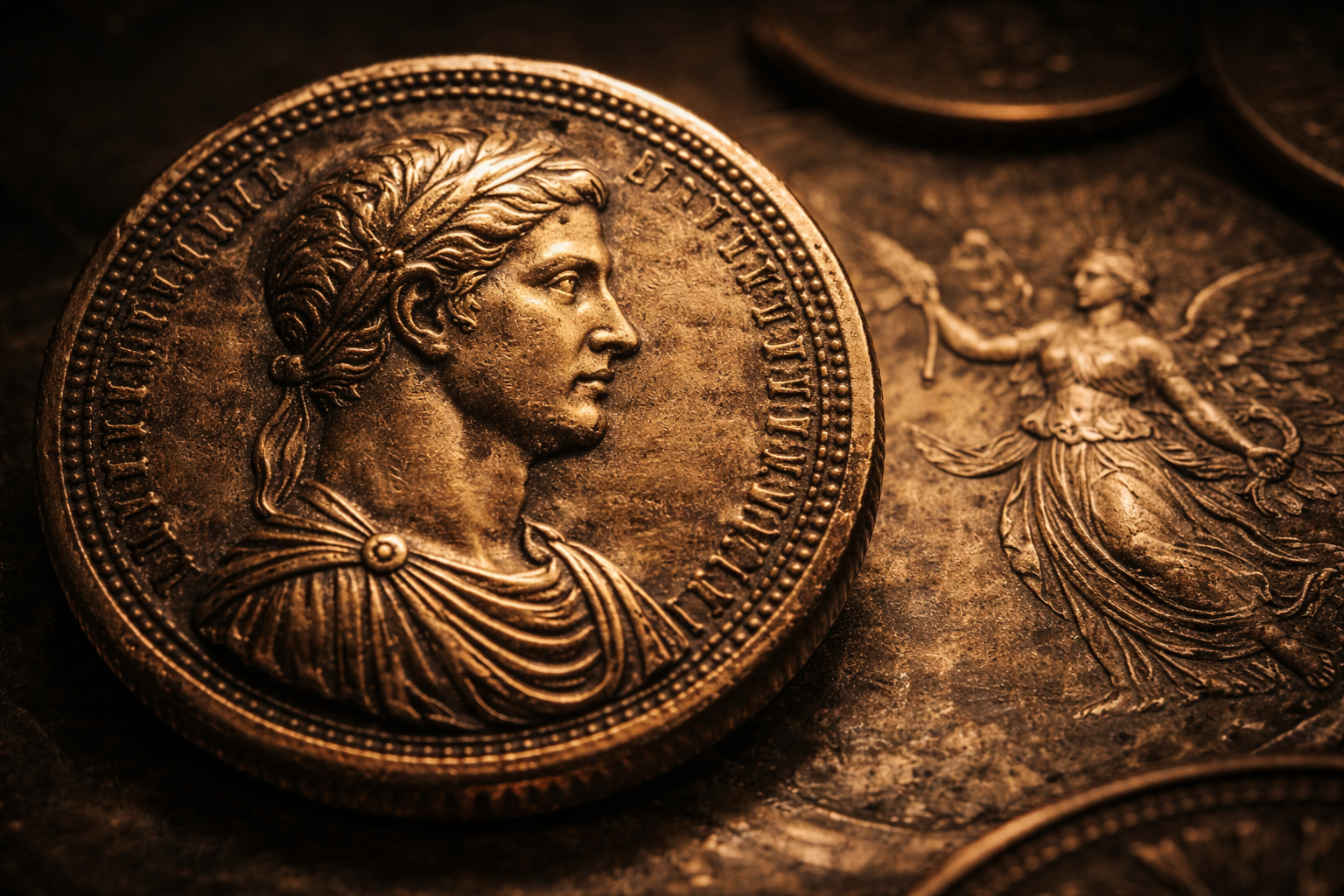
The genius of coin messaging is that it felt normal. It arrived as money, not as propaganda. That reduced resistance. It blended into routine.
Repetition as Power
Repetition is one of the oldest tools of persuasion. What you see daily becomes part of reality.
Coins repeated the same claims thousands of times in a single person’s life. A child might grow up seeing the same ruler’s portrait. A merchant might handle the same symbols every day. A soldier might receive pay stamped with the same message.
This repetition created a psychological environment: authority felt stable. Power felt inevitable. The empire felt present even in distant places.
Markets as Distribution Networks
Markets were the ancient world’s distribution networks. Coins moved through them like blood through an artery.
Each transaction was also a moment of exposure. Not dramatic. Not memorable. But constant. That is what makes it mass media.
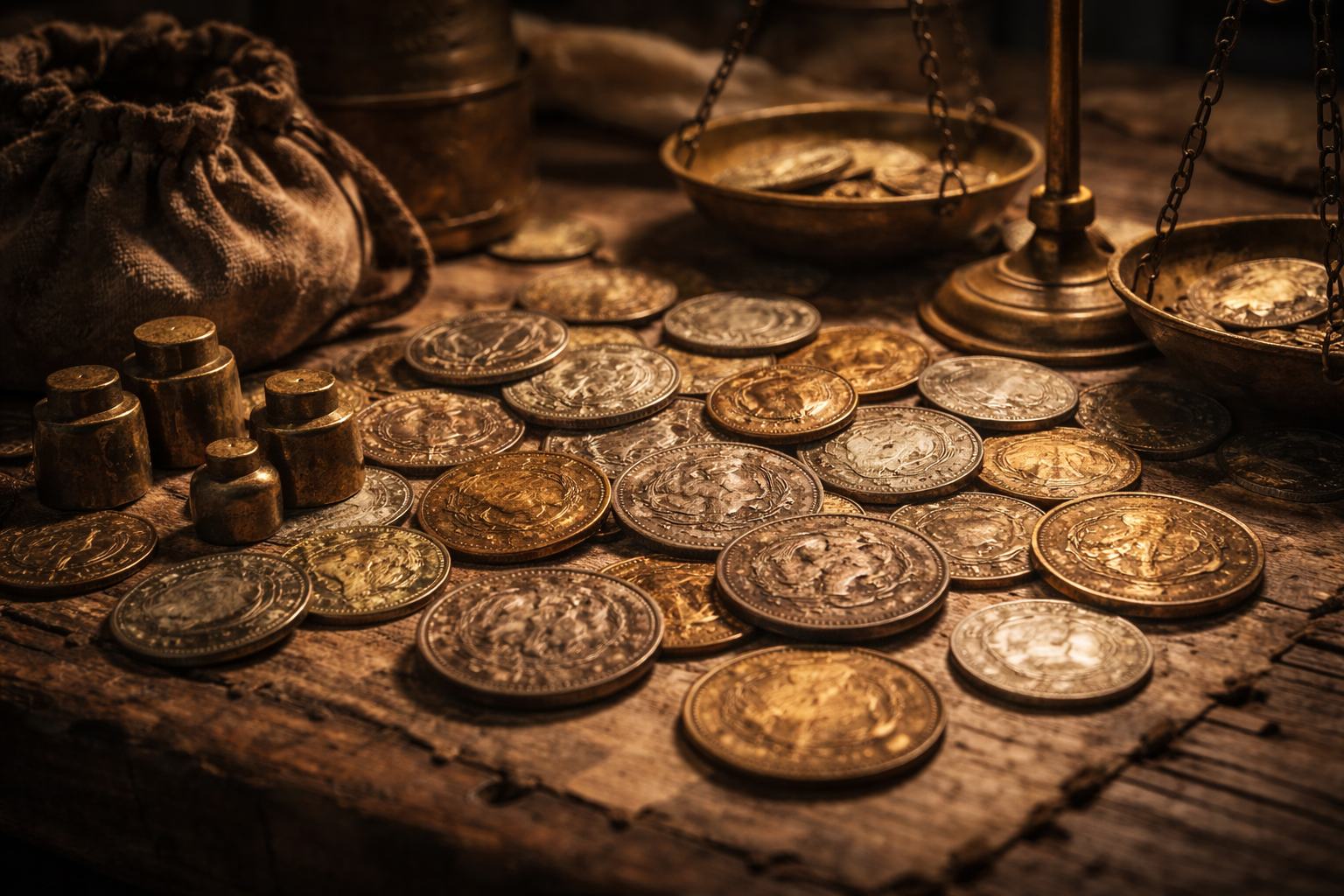
Even people far from political centers were part of this system. They might never hear a speech. But they would still “read” the coin.
Crisis Coinage and Public Reassurance
When societies are stable, coin messages can be subtle. When societies are anxious, coin messages become louder.
After civil unrest or succession conflict, coin imagery often shifts toward reassurance: unity, peace, restoration, harmony, the return of order.
These designs are not always descriptions of reality. They are attempts to manufacture it. Coins become a calming tool—repeating stability until it feels believable.
What Coin Media Could Not Do
Coin media had limits. It could not explain complex policy. It could not argue. It could not respond quickly to rumors the way modern media can.
But it didn’t need to. Its goal was not conversation. Its goal was environment—building an atmosphere where authority felt normal.
In that role, coins were unmatched.
Modern Echoes of Coin Messaging
We still place portraits on money. We still put national symbols on currency. We still use commemorative designs to tell public stories.
The medium evolved, but the logic remains: money is the object that moves through the most hands. That makes it an ideal carrier of identity and authority.
Key Takeaway
Coins were the first mass media because they were unavoidable and repeatable. They spread a standardized message across society through daily life—not by shouting, but by existing everywhere.
Final Verdict
Coins became the first mass media by turning political messaging into routine. They delivered a visual narrative to everyone—rich and poor, literate and illiterate—through constant circulation. If you want to understand how ancient power stayed psychologically present, follow the money.
Share and Reflect
If this made you see coins as communication rather than currency, share it with someone who loves hidden history.
Article link:
How Coins Became the First Mass Media
Reflection question: What daily object today shapes belief the way coins once did?
About PastMint
PastMint
PastMint explores the hidden stories behind money, symbols, and everyday objects. We connect historical context with cultural meaning to reveal how small artifacts shaped entire civilizations—quietly, consistently, and often more effectively than words.