How Coins Explained Authority Without Words

Estimated reading time: 18–20 minutes.
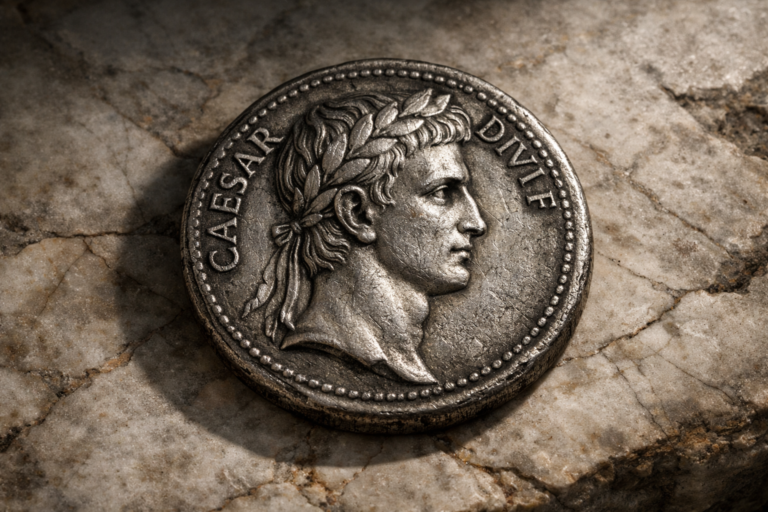
Authority does not always need a speech. Sometimes it only needs a symbol that repeats. For much of history, coins were that symbol. They traveled farther than rulers, reached more people than proclamations, and taught recognition in the quietest way possible.
This article explores how coins explained authority without words, and why a small object in the hand could shape how people understood legitimacy.
Quick Context
This article continues the Coin Meanings direction. If you want the broader foundation of how coins shaped power and belonging as a lived experience, start with What Coins Taught People About Power and Belonging. This piece builds on that idea and focuses on how authority became recognizable even when words could not carry the message.
Coins as a Visual Language
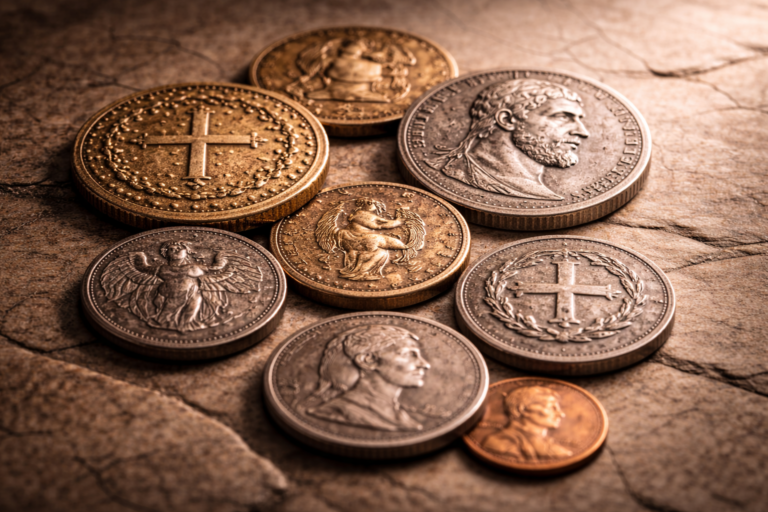
A coin is one of the smallest public objects a society produces. Yet it can function like a poster, a badge, and a signature all at once.
Coins speak through consistency. The same symbol appears again and again. The same layout repeats across transactions. The same familiar look travels from market to market.
Over time, people learn to read these objects even if they cannot name what they are reading. This is how visual language works. It begins with recognition. It becomes meaning later.
Coins did not teach politics through explanation. They taught politics through recognition.
Why Words Were Not Enough
In many historical settings, words had limits. Literacy was uneven. Dialects were varied. Communication was slow. Official messages could be heard once and forgotten.
Coins solved a different problem. They delivered the same signal repeatedly, without requiring a reader, a translator, or an audience gathered in one place.
A person might not understand the structure of government, but they could learn what belonged in the market. They could learn which symbols seemed legitimate. They could learn what kind of authority the community accepted.
Symbols That Made Authority Feel Real
Authority is partly psychological. It feels real when it is visible. It feels stable when it is consistent. Coins helped make authority feel both visible and consistent.
Different societies used different images, but the goal was often similar. Make legitimacy recognizable. Make power feel present. Make acceptance feel normal.
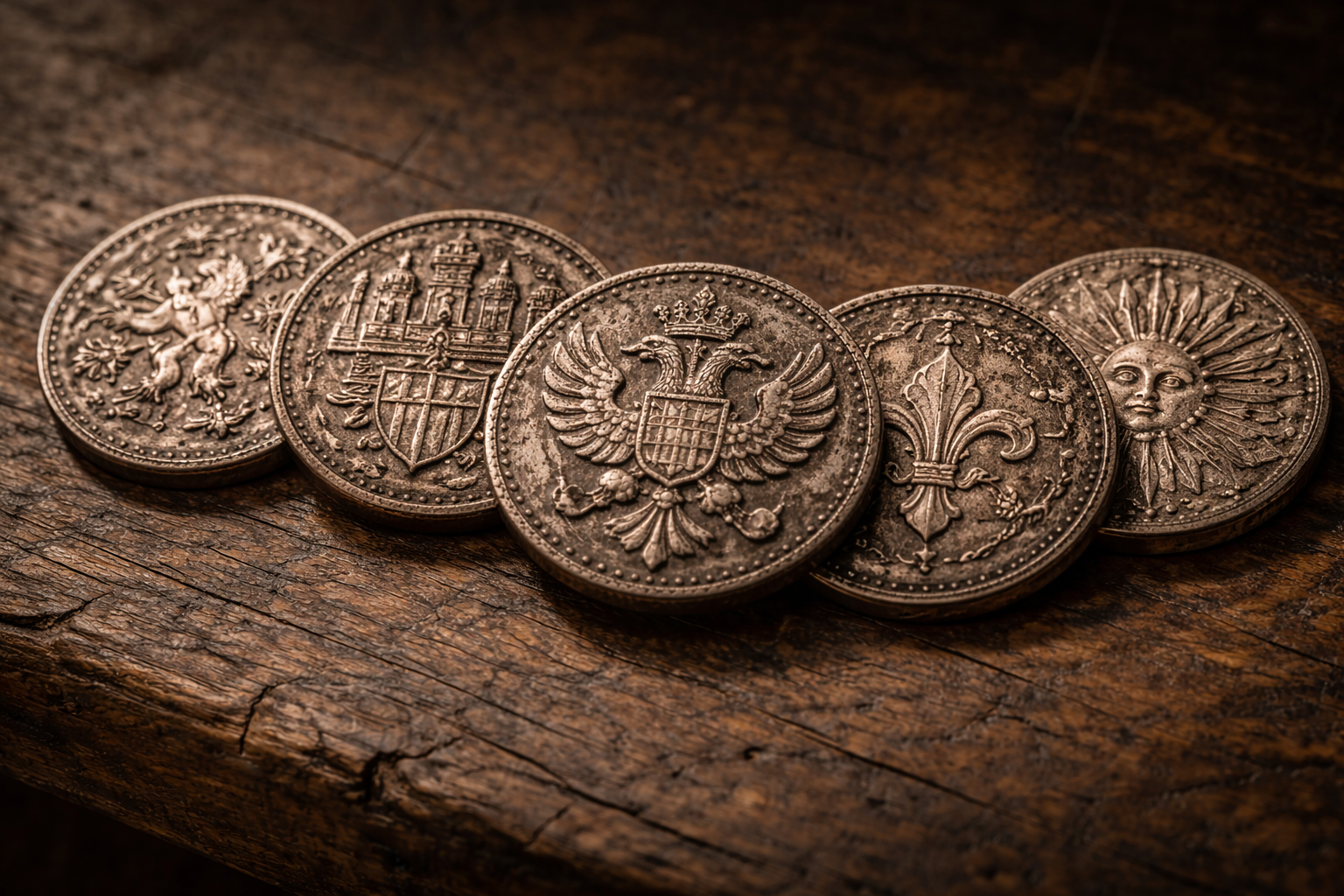
What matters here is not only what the symbol meant in official terms. What matters is what it did in daily life. It created a shortcut. It told people, this is accepted. This belongs. This carries the stamp of the system.
Recognition Before Understanding
Most people learn systems backward. They recognize something first. They understand it later, if they ever do.
Coins trained recognition. A child could recognize a common coin long before they could explain where it came from. A market worker could recognize a legitimate piece long before they could describe the authority behind it.
Recognition creates behavior. It shapes what people accept, what they reject, and what they question. It turns uncertainty into routine.
This is one reason coins were such powerful teachers. They did not need to explain. They only needed to repeat.
Authority in Everyday Life
Authority can feel distant when it lives only in law. Coins brought authority into everyday life.
Every wage payment repeated the message. Every market exchange repeated the message. Every small debt repayment repeated the message.
Over time, authority stopped feeling like a distant concept. It became an ordinary background presence. People lived inside it without needing to speak about it.
Reality Check
People often accept authority not because they fully agree with it, but because it becomes normal. Coins helped make authority feel normal through daily repetition.
Repetition as Silent Control
Repetition is one of the oldest tools of social control. Not always harsh control. Often quiet control.
A repeated image becomes familiar. Familiar becomes accepted. Accepted becomes automatic.
Coins supported this process. They did not demand attention, yet they were constantly present. They trained people to associate legitimacy with a certain look and feel.

Why Authority Needed Trust
Authority can declare. But markets still require trust.
If people doubt money too much, trade slows. If trade slows, the system weakens. This is why the meaning of authority on coins often worked together with the practical trust people needed in daily exchange.
In other words, authority on a coin was not only about symbolism. It was also a promise of stability, or at least a claim of stability. People might not analyze the claim, but they responded to its consistency.
This is also why the previous article matters here. It shows how coins taught people to recognize power and belonging as lived experience: What Coins Taught People About Power and Belonging.
How Coins Carried Borders
Coins also carried borders in a practical way. A familiar symbol signaled that you were inside a system. An unfamiliar symbol signaled that you might be outside it.
Travelers felt this quickly. Merchants felt it when acceptance hesitated. Even locals felt it when new coin types entered circulation.
In this way, coins taught people a map without paper. They taught them where legitimacy felt familiar and where it felt uncertain.
Final Verdict
Final Verdict
Coins explained authority without words by repeating visible signals of legitimacy in daily life. They trained recognition first, then meaning. Through consistent symbols and constant circulation, coins made authority feel present, familiar, and normal, even for people who never read official messages.
Frequently Asked Questions
How can a coin explain authority without words?
By repeating consistent symbols that people recognize in daily transactions. Recognition shapes acceptance and behavior even without written explanation.
Why were symbols on coins so effective historically?
Symbols worked across literacy levels and languages. They were easy to recognize quickly and were repeated constantly through circulation.
Did people need to understand politics to read coins?
Not necessarily. People often recognized legitimacy before they understood the deeper structure behind it.
Is this article safe for AdSense?
Yes. It is educational and historical and does not discuss pricing, valuation, or financial advice.