How Flemish Coins Built Trust Before Modern Banking
Estimated reading time: 20 minutes.
Modern banking taught us to trust numbers on screens. Medieval Flanders had to build trust another way. Not with apps or institutions, but with small pieces of metal that people could hold, recognize, and test. This is the story of how Flemish coins built a kind of everyday confidence that made trade possible long before modern banking existed.
Quick Context
This article continues the same Flemish trust theme explored in How Flemish Coins Shaped Everyday Trade and Trust, and connects to the wider network idea from How Money Connected the Ancient World. If you read those first, you will notice how the same human logic keeps repeating across centuries.
- Before Banking, Trust Had to Live in Objects
- Why Flanders Needed Strong Everyday Trust
- Familiarity as the First Layer of Trust
- Wear, Circulation, and the Quiet Proof of Use
- Verification Without Experts
- The Balance Scale as a Social Technology
- Simple Rules People Could Remember
- Market Life and the Daily Rehearsal of Trust
- Trust Across Cities and Trade Routes
- What Happened When Trust Broke
- What Modern Money Can Learn From Medieval Coins
- Final Verdict
- Share and Reflect
Before Banking, Trust Had to Live in Objects
In the modern world, trust is often invisible. You tap a card, a number changes, and you walk away with goods. The trust is not inside the plastic. It lives in banks, rules, networks, and enforcement.
Medieval Flanders did not have that kind of everyday infrastructure for most people. There were money changers, merchants with credit relationships, and city authorities that tried to regulate coinage. But for daily life, trust still had to be carried by something people could see and understand.
Flemish coins became that carrier. Not because they were perfect. Not because everyone fully agreed on their value every day. They worked because they were familiar, repeatedly used, and easy to test in simple ways. That simplicity mattered. It turned uncertainty into something manageable.
Trust is not a philosophical gift. In real markets, trust is usually a habit built through small repeated successes.
Why Flanders Needed Strong Everyday Trust
Flanders was not a quiet corner of Europe. It was a region of movement. Cloth production, port activity, merchant travel, and dense city markets created constant exchange. People were buying food, paying rent, hiring labor, trading textiles, and settling small debts.
In that environment, trade could not depend only on personal relationships. A market is full of strangers. A traveler cannot rely on family reputation in every town. Even locals need a stable way to deal with neighbors they do not fully know.
Coins helped create a shared language. They gave people a starting point for agreement. Even when negotiation was still part of the process, the coin offered a baseline. And a baseline is often enough to keep a market running.
Familiarity as the First Layer of Trust
When people think about trust in money, they often jump straight to authority. They imagine a ruler guaranteeing value. That matters, but daily life often runs on a simpler layer first. Familiarity.
A coin that you have seen a thousand times does not feel like a gamble. It feels like a tool. You know its weight in your hand. You recognize its look. You have watched other people accept it. That shared experience reduces fear.
Flemish coins became familiar through repetition. Even if a person could not read inscriptions, they could recognize patterns. A design, a shape, a certain size. Markets teach people what to trust, because markets reward what works.
This is one reason coin trust spread faster than written contracts for ordinary transactions. Literacy was limited, and written agreements were slow. Coins were immediate. Familiarity made them usable.
Wear, Circulation, and the Quiet Proof of Use
Here is a detail that feels small, but changes how we understand money. Wear can build trust.
A worn coin is not always a bad sign. Yes, wear can reduce sharp details. But it also signals something powerful. It says the coin has traveled. It has been accepted. It has passed through hands without causing trouble.
A new coin can feel uncertain. People may ask where it came from. They may suspect it. But a coin that looks like every other coin people use daily feels safer, even if it is imperfect.
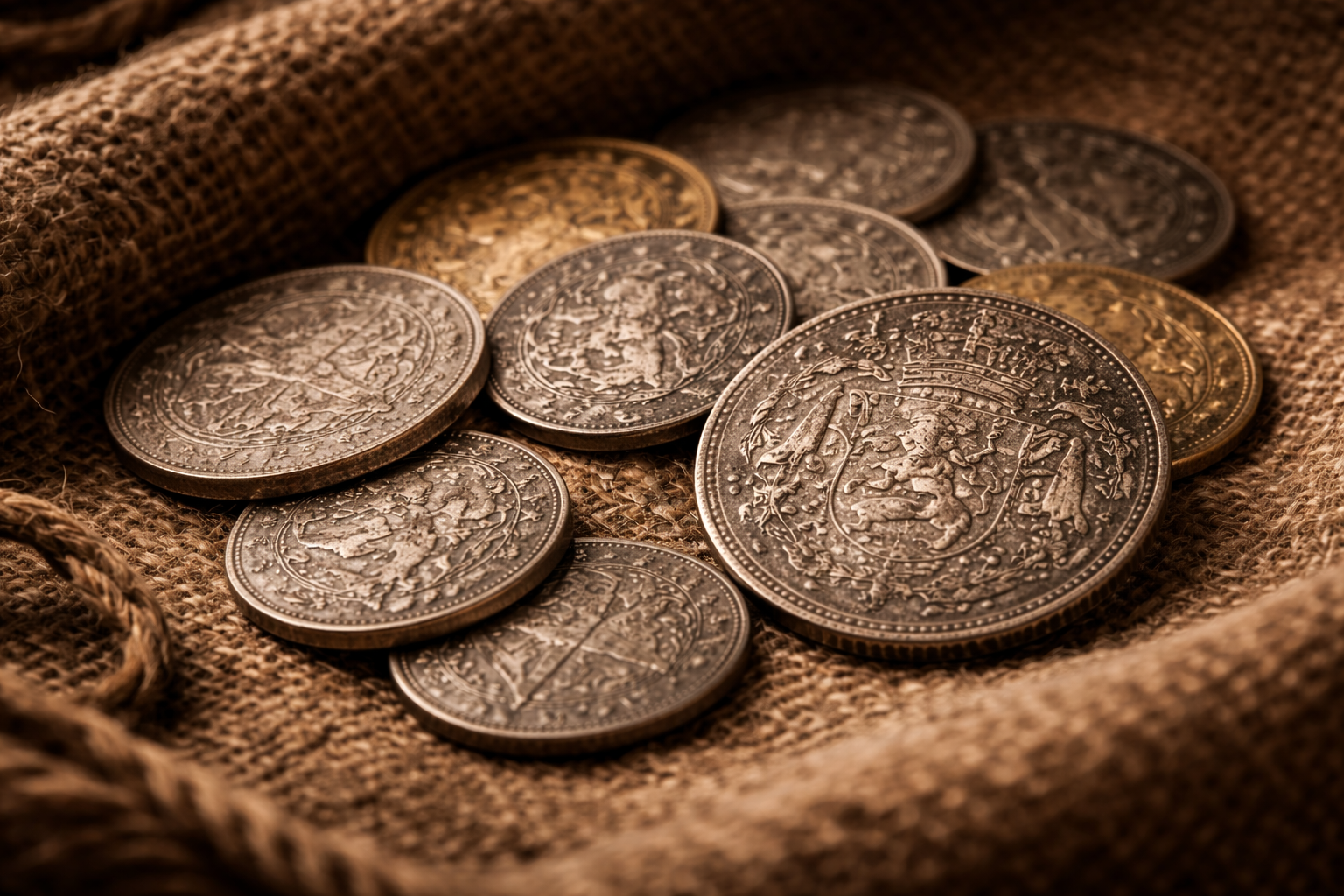
This kind of wear creates a visual continuity. People see it and think, this belongs to the normal flow of exchange. The coin becomes part of routine life, and routine is one of the strongest builders of trust.
In many ways, these coins acted like social passports. They were not just metal. They were objects that carried proof of belonging to a working economy.
Reality Check
Trust in money is rarely pure belief. It is usually practical confidence. People trust what they have seen work, and what they can test quickly when doubt appears.
Verification Without Experts
The most important challenge before modern banking was not only issuing coins. It was verifying them.
A modern banknote has advanced features, and a modern digital payment has layers of authentication. Medieval markets needed something that ordinary people could do. Not perfect verification. Practical verification.
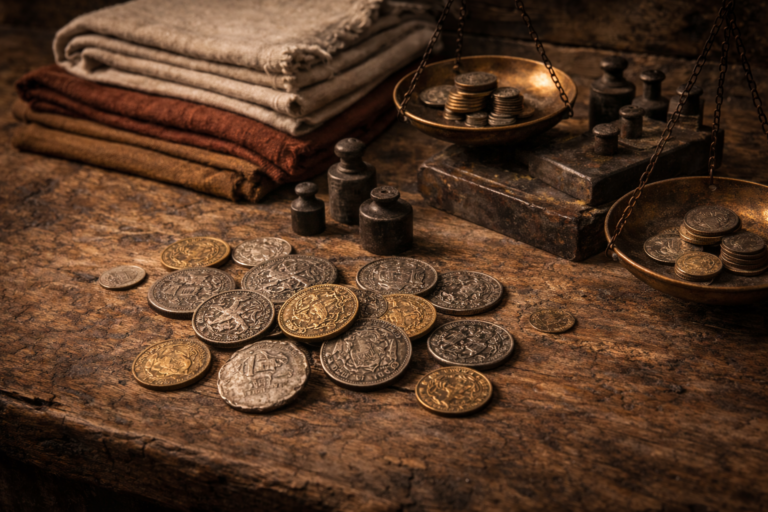
That is why simple methods mattered. Feeling weight. Comparing size. Listening to sound in some contexts. Looking for a familiar design. And in many cases, using a balance scale.
These methods did not eliminate fraud. But they reduced it enough to keep daily trade moving. The goal was not absolute certainty. The goal was workable confidence.
The Balance Scale as a Social Technology
A balance scale is not just a tool. In medieval trade, it was also a social signal. It said, we take trust seriously here. We are not relying only on claims. We are willing to check.
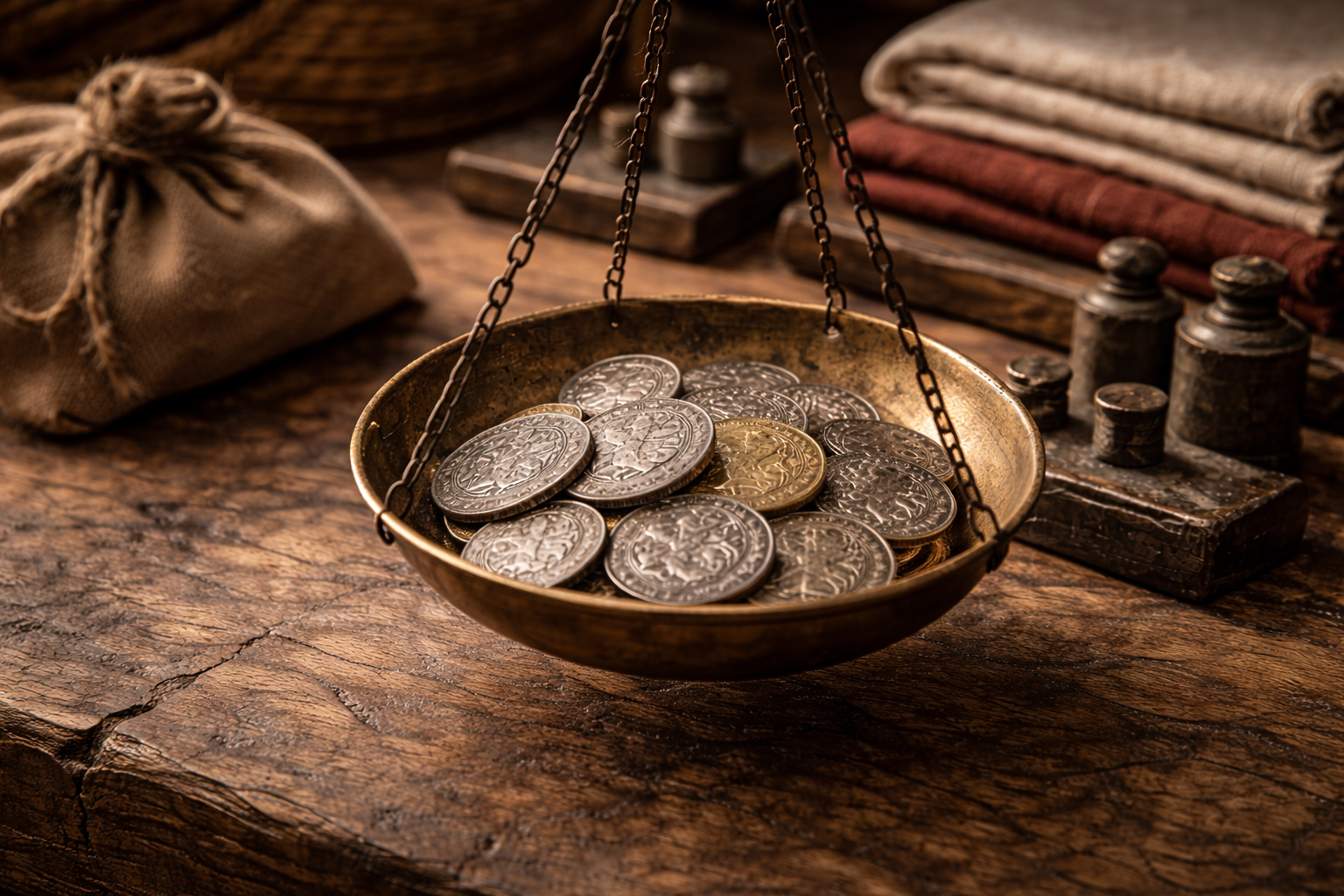
Think about what this meant in a crowded market. Verification was public. It was visible. That visibility mattered, because it created a shared expectation. If a trader tried to cheat, the act could be challenged. If a buyer felt uncertain, a tool existed to reduce the tension.
Even when the scale was not used, the fact that it could be used changed behavior. It encouraged honesty. It encouraged careful coin handling. It made trust more stable because it was supported by a routine practice.
Simple Rules People Could Remember
Everyday trust also depends on rules that are easy to carry in the mind. A complicated system belongs to specialists. A simple system belongs to the crowd.
Flemish markets leaned on simple checks. If a coin looked wrong, compare it. If it felt too light, weigh it. If a stranger offered unfamiliar coinage, demand explainable value, or ask for a more common type.
These are not written laws in most cases. They are market habits. Habits become rules when enough people follow them.
This is one of the most overlooked parts of pre banking money. The system was maintained not only by authority, but by repeated community behavior.
Market Life and the Daily Rehearsal of Trust
Trust is not built once. It has to be rehearsed. Markets provided that rehearsal every day.
A person buying bread would hand over coins. The seller would glance, maybe feel, maybe accept instantly. That micro moment repeated across thousands of transactions becomes a strong foundation.
And when a coin was questioned, that also taught the market something. It taught people what to watch for. It taught them when to use scales. It taught them which coins were treated as safe, and which coins were treated as uncertain.
In this way, trust was not a fragile idea. It was a living routine.
Related Reading
If you want the broader story of how coins shaped daily exchange itself, not just confidence, read How Flemish Coins Shaped Everyday Trade and Trust. If you want the long distance perspective about how money links societies across space, read How Money Connected the Ancient World.
Trust Across Cities and Trade Routes
Trust is easiest inside a familiar town. The real test begins when money has to travel.
Flanders was connected to wider European trade. Goods moved, merchants moved, and coins moved with them. When coins were accepted beyond their immediate local space, they carried a reputation.
That reputation was not created by slogans. It was created by repeated successful transactions. Each time a coin was accepted in a new place, it gained another layer of credibility.
This is why trust often spreads like a network effect. A few reliable exchanges produce more exchanges. More exchanges produce routine acceptance. Routine acceptance becomes stability.
In a pre banking world, that kind of stability was not just convenient. It was essential.
What Happened When Trust Broke
Trust is most visible when it fails. When coins were clipped, debased, or imitated, markets reacted.
The reaction was not always orderly. Sometimes people refused certain coins. Sometimes they demanded heavier pieces. Sometimes they raised prices, not because goods changed, but because confidence collapsed.
When that happened, the tools of verification became more important. Scales were used more. Comparisons became stricter. Merchants became cautious.
This is another reason these simple practices mattered. They offered a way to repair trust without inventing a whole new system. The market could tighten its habits and continue.
Reality Check
A trust based economy is not naive. It is adaptive. When risk rises, people do not stop trading. They change how they verify, how they price, and how they choose what to accept.
What Modern Money Can Learn From Medieval Coins
It might sound strange, but medieval coins can still teach modern readers something important. Trust is not only technical. Trust is psychological and social.
Modern banking reduces friction, but it can also make trust feel distant. People trust systems they do not understand. That works, until something breaks, then anxiety rises fast.
The Flemish example reminds us that trust grows best when people have at least one of these: familiarity, verification, and shared expectation.
Flemish coins offered all three. Familiarity through daily use. Verification through simple checks like weight and scales. Shared expectation through market routines.
That combination is powerful. It can support trade even when formal institutions are limited.
Final Verdict
Final Verdict
Flemish coins built trust before modern banking by becoming familiar objects people could recognize and test. Wear and circulation acted as quiet proof of acceptance, while simple balance scales gave markets a practical way to verify value. Together, these habits turned uncertainty into routine confidence, and routine confidence made everyday trade possible.
Share and Reflect
If this article helped you see how trust can exist before institutions, share it with someone who enjoys history at human scale.
Article link:
How Flemish Coins Built Trust Before Modern Banking
Frequently Asked Questions
Why were Flemish coins trusted before modern banks existed?
Flemish coins earned trust through familiarity and repeated use. People accepted them because they had already seen those coins circulate successfully in everyday markets, not because a distant institution guaranteed them.
Did medieval people really trust worn coins?
Yes. In many cases, wear was a sign of reliability. A worn coin suggested long circulation and repeated acceptance, which often felt safer than an unfamiliar, newly minted piece.
How did people verify coins without banks or technology?
Verification relied on simple, shared practices such as feeling weight, comparing size, recognizing familiar designs, and using balance scales. These methods did not create perfect certainty, but they reduced risk enough for daily trade.
Were Flemish coins trusted everywhere in Europe?
Trust depended on exposure. In regions connected to Flemish trade routes, the coins were more easily accepted because people had prior experience with them. Trust spread gradually through repeated successful exchanges.
What caused trust in coins to break down?
Trust weakened when coins were clipped, heavily debased, or imitated. When that happened, markets reacted by becoming more cautious, increasing verification, or refusing certain coins until confidence was restored.