How Money Connected the Ancient World
Estimated reading time: 21 minutes
The ancient world was not as isolated as it sometimes appears. People lived in different languages, worshiped different gods, and followed different rulers, yet markets still formed, goods still moved, and distant cultures still touched each other in surprisingly practical ways.
One of the strongest forces behind that connection was money. Not money as an abstract idea, but money as an everyday tool that allowed strangers to trade, negotiate, and trust each other—often without ever sharing a common identity.
Money as connection
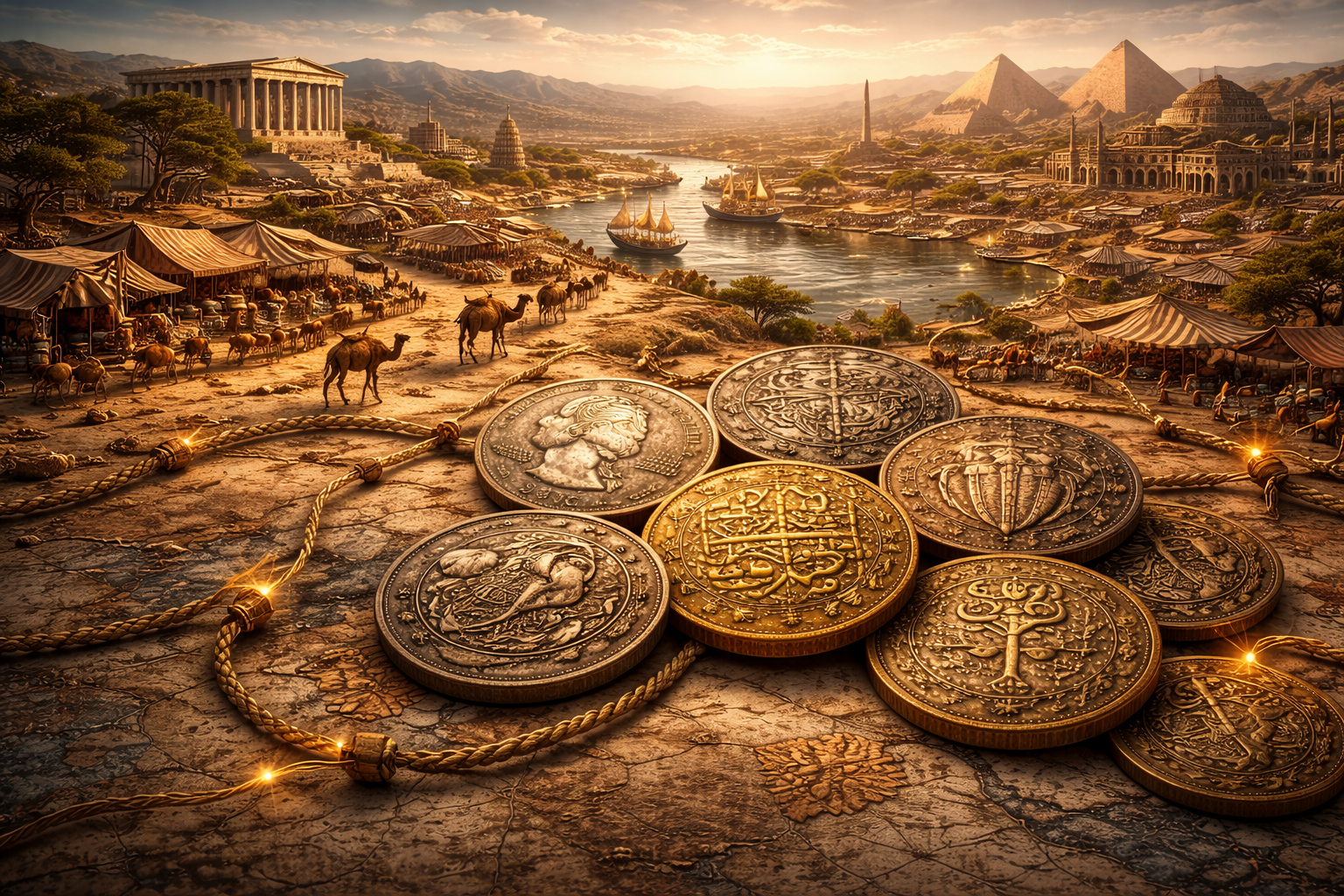
Money connected the ancient world by reducing friction between strangers. It made exchange predictable, made markets scalable, and made distant systems feel compatible—one transaction at a time.
- Money as Invisible Infrastructure
- Trading With Strangers
- Markets as Cultural Meeting Points
- Standards, Weight, and Shared Logic
- Trade Routes and Economic Gravity
- Money Beyond Markets: Diplomacy and Symbolic Exchange
- Identity, Trust, and Accepted Currency
- How Ordinary People Felt These Connections
- Modern Echoes of Ancient Connectivity
- Share and Reflect
- About PastMint
Money as Invisible Infrastructure
We often think of roads, ports, and ships as the infrastructure of the ancient world. But there was another kind of infrastructure that moved even faster: a shared logic of exchange.
Money created that logic. It made value measurable. It made trade repeatable. It allowed complex economies to function without constant negotiation over what something “should” be worth.
In this sense, money was not just a tool. It was a silent system that held networks together.
Trading With Strangers
Barter works best among people who know each other. But ancient trade often happened between strangers—people from different regions, cultures, and political worlds.
Money helped solve the stranger problem. A coin could be inspected, weighed, counted, and accepted. It reduced the need for personal trust by offering a standardized object that could stand in for trust.
Reality Check
Acceptance was never automatic. In many markets, coins were tested, weighed, or even rejected. But even that process shows money’s power: it created a shared method for deciding trust.
Markets as Cultural Meeting Points
Markets were not only places where goods moved. They were places where cultures touched.
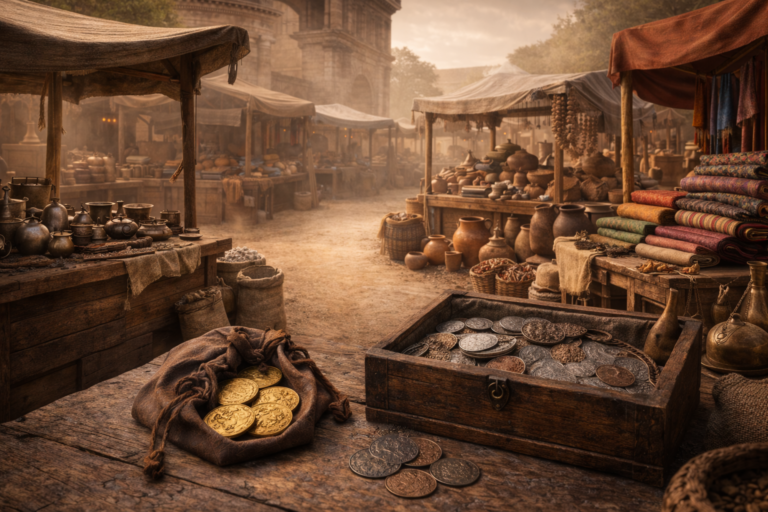
At a busy market crossroads, different coin types could circulate together. Different languages could be heard in the same space. Different habits of trade and negotiation could collide and blend.
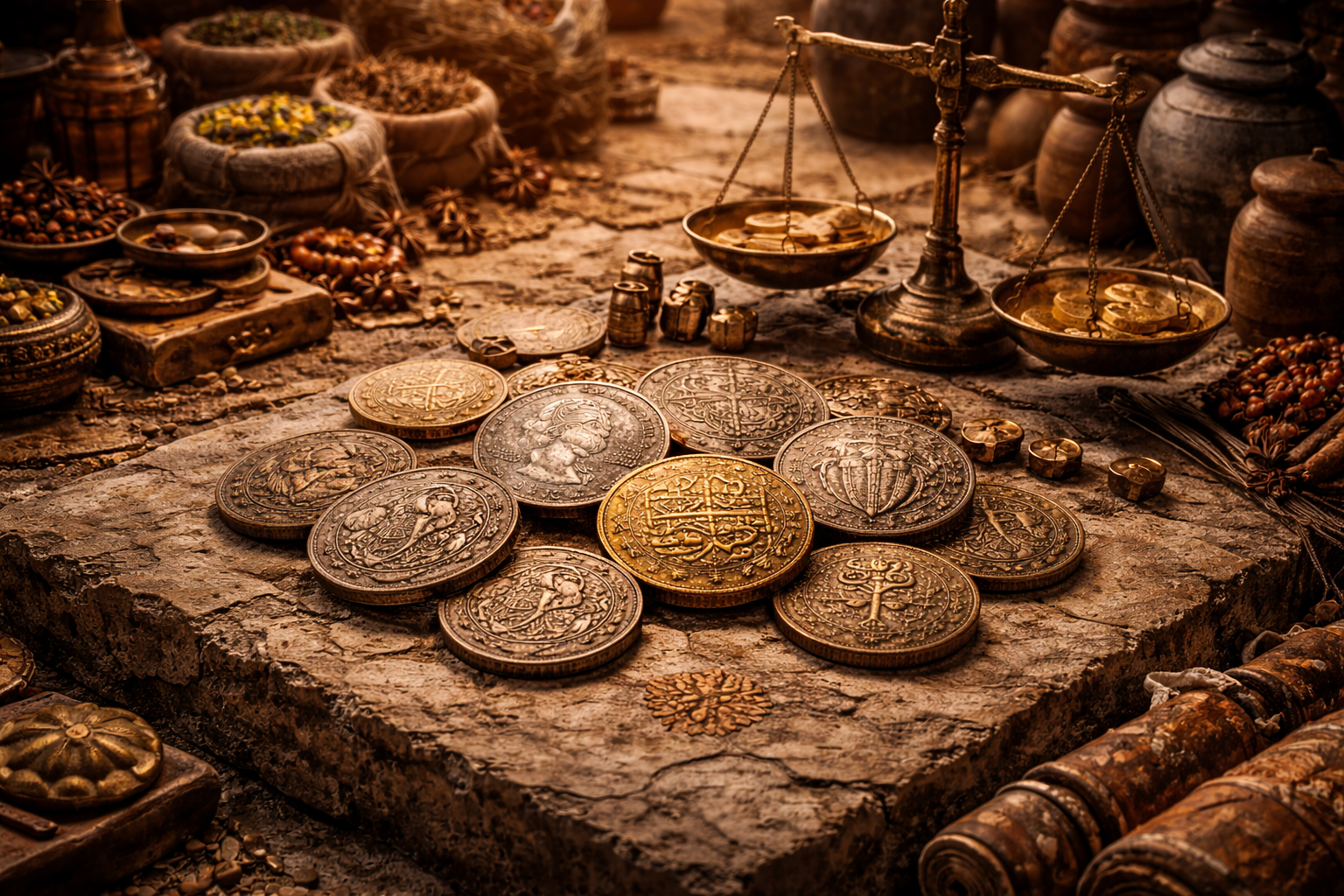
Money made those interactions easier because it offered a shared language. Not a spoken language, but a practical one: weight, metal, and recognizability.
Standards, Weight, and Shared Logic
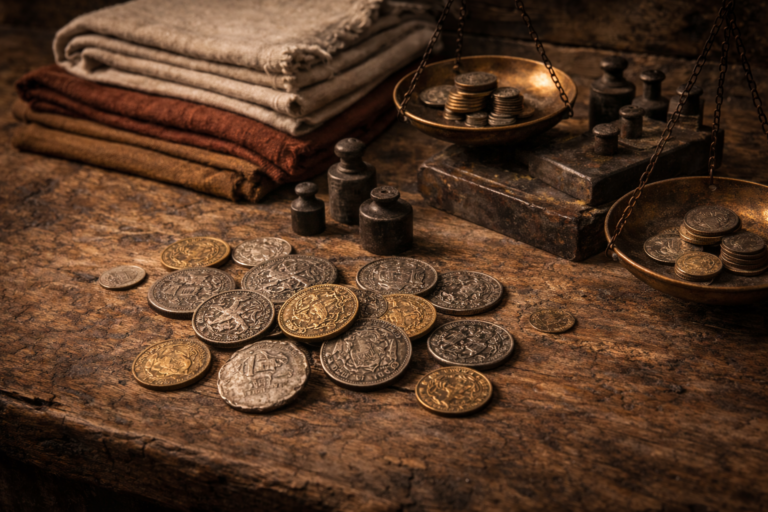
Ancient money systems were not perfectly unified, but they often shared underlying standards. Weights mattered. Metal purity mattered. Familiar designs mattered.
Even when coin types differed, merchants learned how to translate value across systems. That translation created a kind of economic bilingualism.
The more frequently systems interacted, the more stable those translations became. In time, money helped produce economic zones—regions connected more by trade than by borders.
Trade Routes and Economic Gravity
Trade routes created economic gravity. Certain cities became hubs. Certain ports became gateways. Certain markets became magnets for goods and currency.
Money flowed toward opportunity. It followed demand. It followed safety. It followed stability.
And because money was always moving, it carried connection with it—quietly strengthening the bonds between distant places.
Money Beyond Markets: Diplomacy and Symbolic Exchange
Money did not only connect people through trade. It also connected powers through diplomacy.
Tribute payments, gifts, and symbolic offerings often used coinage or precious metal. These exchanges were not only economic. They were political statements: recognition, alliance, warning, or negotiation.
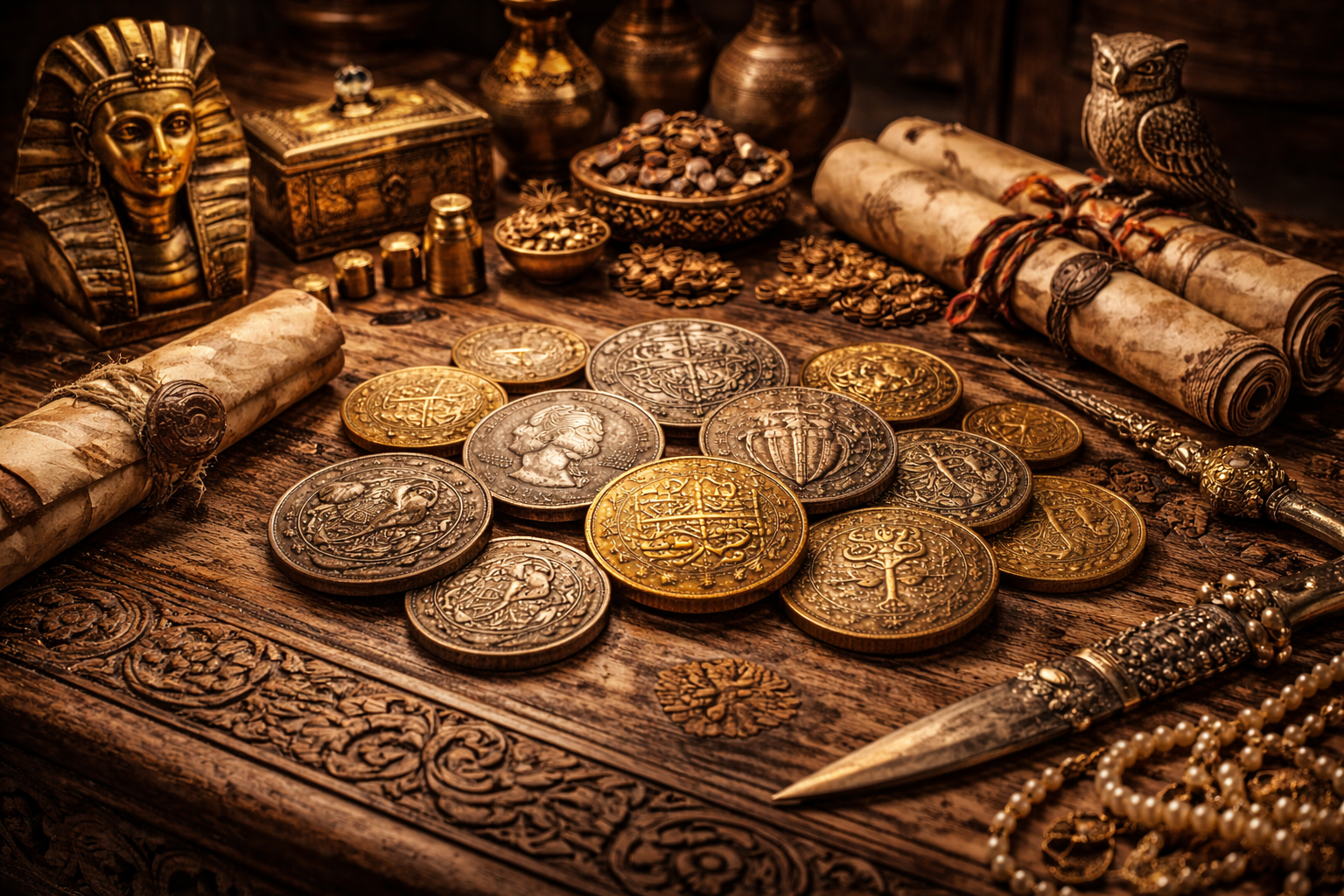
In diplomacy, money worked as a language of respect and power. The quantity mattered, but the symbolism mattered too. A gift of coinage could signal stability. It could signal wealth. It could signal seriousness.
Identity, Trust, and Accepted Currency
Currency acceptance is never purely economic. It reflects identity and trust. When people accept a foreign coin, they accept something about the system behind it.
Sometimes acceptance came from necessity. Sometimes from admiration. Sometimes from fear. And sometimes from simple habit—because the coin kept appearing.
Over time, accepted money can reshape identity. It can make distant powers feel present. It can make outside systems feel normal.
Key Takeaway
Money connected the ancient world by creating repeatable exchange between strangers. It formed shared logic across cultures, turned markets into meeting points, and even played a role in diplomacy and recognition.
How Ordinary People Felt These Connections
Most people did not travel far. But most people still touched evidence of distance. A foreign coin in your hand is proof of a wider world.
Money quietly expanded mental geography. It made “outside” feel economically real. It brought distant powers and distant cultures into everyday life.
That is one of the deepest ways money connects worlds: it changes what people imagine is possible.
Modern Echoes of Ancient Connectivity
Modern global trade is faster and larger, but the underlying logic is ancient. Money still reduces friction. It still creates shared standards. It still links strangers through systems of trust.
The ancient world was connected not by accident, but by necessity. Where trade becomes essential, connection follows. And where connection forms, money becomes the silent infrastructure.
Final Verdict
Money connected the ancient world by building a practical bridge between strangers. It unified markets through shared logic, strengthened trade routes through repeatable exchange, and even shaped diplomacy through symbolic giving. In the end, money did not just move goods. It moved relationships.
Share and Reflect
If this article made ancient trade feel more connected and human, share it with someone who loves history through everyday systems.
Article link:
How Money Connected the Ancient World
Reflection question: What creates connection faster—roads, language, or shared money?
About PastMint
PastMint
PastMint explores the hidden stories behind money, symbols, and everyday objects. We connect historical context with cultural meaning to reveal how small artifacts shaped entire civilizations—quietly, consistently, and often more effectively than words.