The Denarius and Trust in Roman Trade
Estimated reading time: 15 minutes.
In a Roman trade deal, the hardest part was not finding goods. It was trusting the payment. A merchant could accept a promise from a stranger only once. After that, the market remembered. Rome needed a coin that felt dependable before a single word was spoken.
The denarius became that quiet answer. Silver that looked familiar. Weight that felt consistent. A coin that could cross regions and still be welcomed. It did not make trade dramatic. It made trade possible.
What this article explains
This article explains how the denarius built trust inside Roman trade by giving merchants a shared silver standard that could be recognized and accepted across distance. It is written for history and daily life context, not modern pricing.
- What the denarius was
- Why merchants trusted it
- How people checked a coin in real life
- How it traveled through trade routes
- How it shaped deals in markets
- Where it fit inside Roman coinage
- Denarius Trust Table
- Related Roman Coins
- Sources and historical references
- Final Verdict
- Frequently Asked Questions
What the denarius was
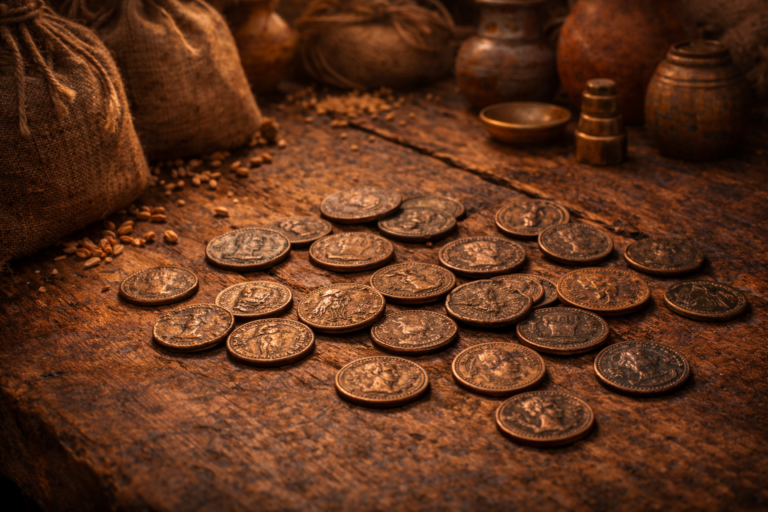
The denarius was a silver coin that became one of the most familiar standards across the Roman world. Its value mattered, but its feeling mattered too. When a coin feels consistent, people stop arguing with it. They move on to the real work of trade, which is comparing goods, deciding quality, and setting terms.
In a busy economy, speed is not only about walking faster. It is about removing doubt. The denarius reduced doubt by being easy to recognize and easy to accept. A merchant did not need to explain it. A buyer did not need to convince a seller. The coin did the introduction.
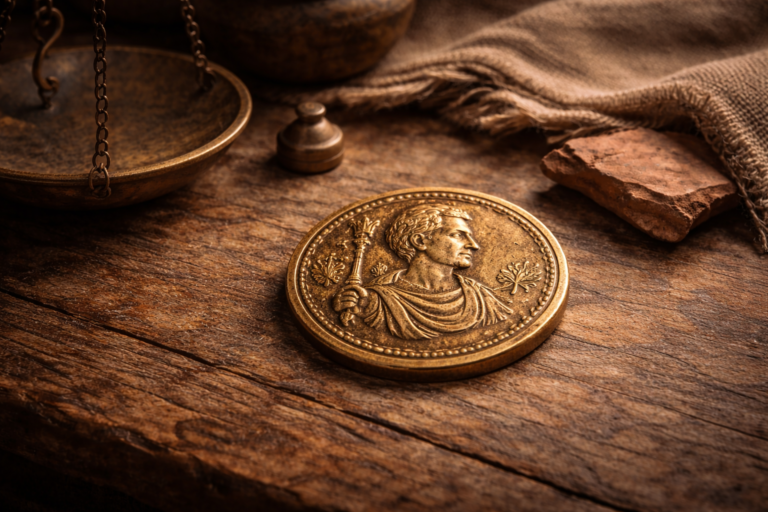
Silver held a special position in daily life. It was more practical than gold for many serious transactions, but more prestigious than bronze. Bronze could handle small daily purchases and street level exchange. Gold represented concentrated power and rare wealth. Silver sat between them, where trust needed to be strong and payments needed to be manageable.
That middle position helped the denarius become a coin of trade. If a coin is too small, large deals become tiring and slow. If a coin is too large, ordinary exchange becomes awkward. The denarius fit the rhythm of real commerce. It was a coin that could be counted, carried, and used without turning the act of payment into a ceremony.
Why merchants trusted it
Trust in money is built the same way trust between people is built. Through repetition. A coin is accepted today. It is accepted again tomorrow. Then one day, it becomes normal. Normal is the strongest form of trust because it does not need constant proof.
The denarius earned that normal feeling. Merchants could count it without endless checking. Buyers could pay without long explanations. The coin itself did most of the talking. And in trade, anything that reduces talking reduces the chance of conflict.
Another part of trust is expectation. A merchant accepts a denarius not only because it looks right, but because the merchant expects another merchant will accept it next. That chain of expectation creates stability. It creates a shared agreement across strangers. It turns a network of separate markets into something that feels connected.
This matters even more when trade crosses distance. A local bronze coin may be recognized in one town but questioned in another. A silver standard that appears in many places becomes a tool of confidence. It does not remove all risk, but it reduces the risk enough for commerce to keep moving.
Reality Check
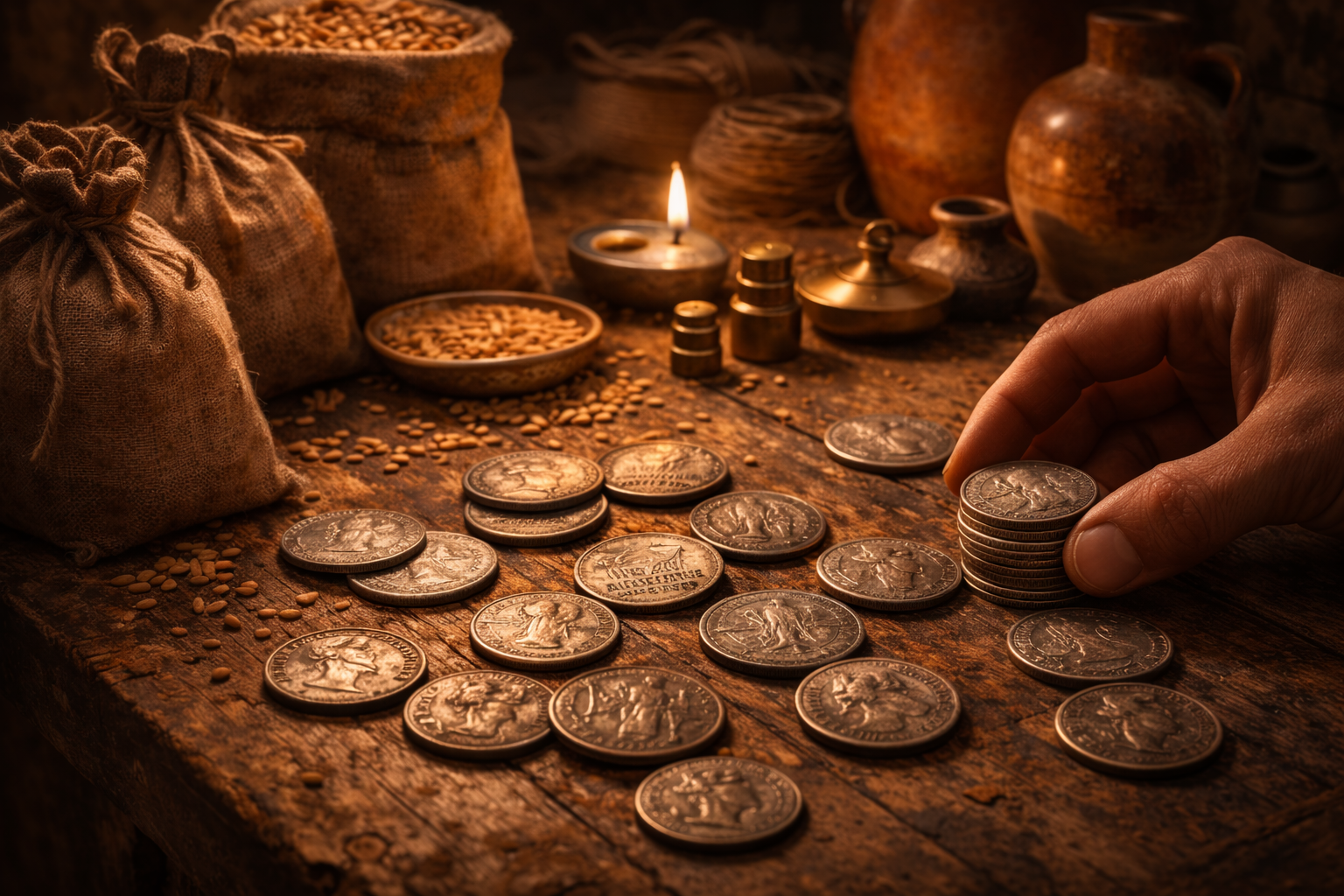
Trust does not come from metal alone. It comes from the daily habit of acceptance. The denarius mattered because people believed others would take it next. That shared expectation is what kept trade moving.
How people checked a coin in real life
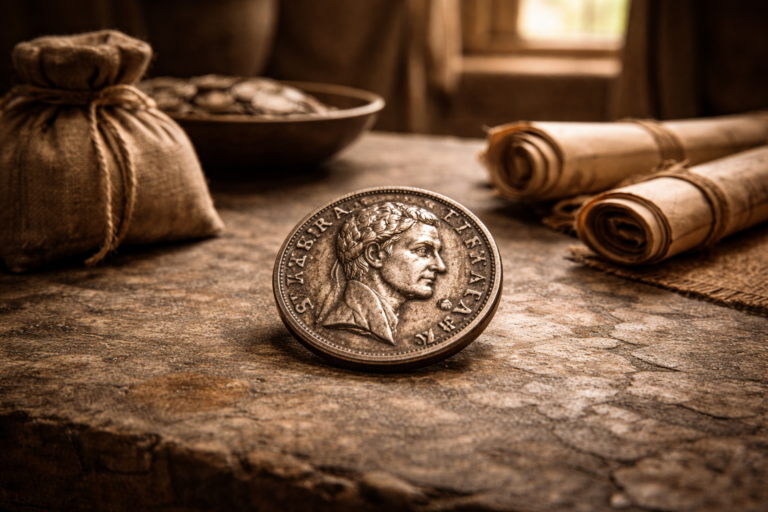
Even trusted coins were not accepted blindly. Roman trade was practical, and practical people develop simple habits for safety. A merchant might glance at the portrait and lettering. The goal was not artistic appreciation. The goal was quick recognition. Familiar design cues helped confirm that the coin belonged to the expected system.
Weight and feel mattered too. You can learn a coin by handling it often. Once a coin becomes part of routine, your hands notice when something feels wrong. A piece that feels too light, too soft, or oddly shaped creates suspicion. It does not prove anything by itself, but it triggers caution.
Sound was also a quiet test. Silver behaves differently than base metal. When coins are tapped, dropped, or lightly struck against another piece, they can produce a different ring. Merchants did not need scientific certainty. They needed a quick signal that the coin was likely safe to accept.
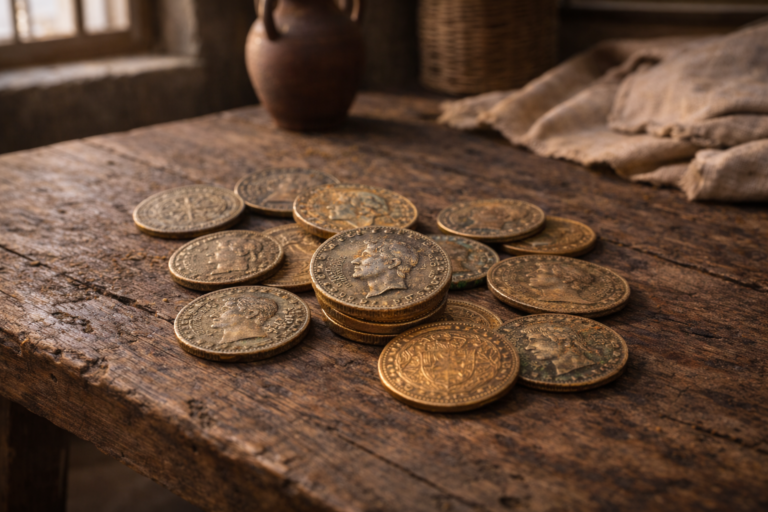
The most important check, however, was social. If a coin has circulated widely in a region, people have seen it before. They have accepted it before. They have used it before. That social memory is stronger than any single inspection. The denarius benefited from that memory. It became a coin that felt known, which is why it could move with confidence.
How it traveled through trade routes
Roman trade did not stay in one city. Goods moved between ports, roads, and provincial markets. Olive oil, wine, grain, pottery, metals, textiles, and tools traveled across the empire. The denarius moved with them. It passed through hands that never shared the same hometown.
A coin that travels needs more than value. It needs recognition. When the denarius appeared in a new place, it felt familiar enough to accept. That familiarity turned distance into something manageable. It helped merchants think in terms of routes, not just neighborhoods.
Distance increases risk. A merchant traveling far from home cannot rely on local relationships. The merchant needs tools that replace personal trust. A widely accepted silver coin becomes part of that replacement. It is not perfect. But it reduces uncertainty enough that trade becomes rational.
Ports are a good example. Ports bring strangers together. They gather people from different cities, different languages, and different habits. In a port, trust must be fast. The denarius helped make that speed possible. Its familiar presence smoothed transactions between people who might never meet again.
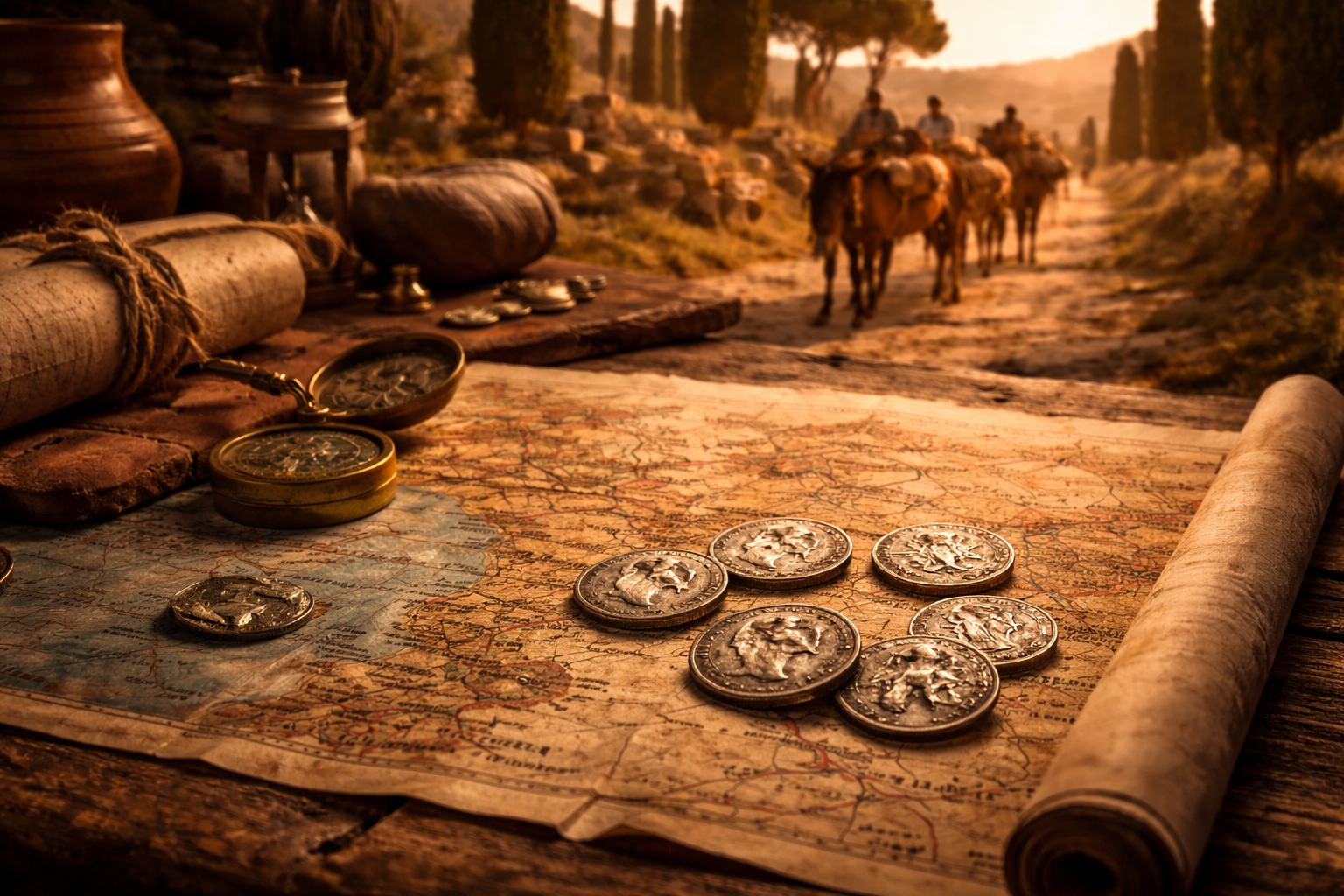
Over time, trade routes become habits. Merchants learn where to buy, where to sell, and what forms of payment keep deals smooth. A coin that works on many routes becomes more than a payment tool. It becomes an economic shortcut. It reduces the mental work of trading, which allows people to trade more often and more confidently.
How it shaped deals in markets
In markets, confidence is visible. A buyer reaches for a coin. A seller accepts it without hesitation. That moment is small, but it changes the rhythm of the entire street. When acceptance is quick, lines move. When lines move, more trade happens. When more trade happens, markets become livelier and more dependable.
The denarius helped medium and heavier purchases feel clean and fair. It reduced awkward pauses in bargaining. It made agreements feel more stable, especially when strangers met for the first time. It also helped merchants price goods in a way that felt shared, rather than local. That shared feeling is another layer of trust.
The denarius did not eliminate negotiation. Romans still bargained. But bargaining becomes easier when payment feels solid. If the payment is uncertain, every price discussion turns into a debate about money itself. If the payment is trusted, the debate stays focused on goods. That difference is the difference between a functional market and a tense market.
This is part of the wider story told in the pillar guide on how Roman coins built an empire through trade power and daily life . The denarius did not work alone. It worked as a trusted piece inside a larger system.
You can think of it like a bridge. A bridge does not create the river. A bridge does not create the city. But without a bridge, movement becomes difficult. The denarius served a similar function. It allowed value to cross space with less fear.
Where it fit inside Roman coinage
Roman coinage worked like a practical ladder. Smaller coins handled everyday exchange. Silver helped with heavier trade and wages. The denarius sat in a place where trust mattered most. It had to feel reliable, because it often carried the weight of real decisions.
Daily life still needed small bronze coins. People bought food. People paid for small services. People needed change. That is why bronze remained essential. But when transactions became larger or when distance entered the story, silver became more useful. It had enough value to matter and enough familiarity to feel safe.
Coins also carried more than economic purpose. They carried messages. If you want to see how that worked, explore Roman coins as everyday political media . And if you want the daily life side of authority, read how Roman coins shaped everyday authority .
In other words, the denarius belonged to an ecosystem. Bronze supported daily rhythm. Silver supported trusted trade. Gold supported symbolic power and concentrated payments. Each level helped the others function. Remove one, and the system becomes less smooth.
Denarius Trust Table
This table shows the practical reasons the denarius felt trustworthy in Roman trade and why it reduced friction in real transactions. It is not about modern valuation. It is about human behavior, recognition, and the everyday mechanics of exchange.
Denarius Trust Table
| Trust factor | What merchants noticed | What it reduced | Result in real life |
|---|---|---|---|
| Recognizable silver standard | The coin felt familiar across regions | Uncertainty | Faster acceptance in trade |
| Consistent everyday circulation | People expected others to take it next | Hesitation | Smoother market rhythm |
| Useful middle weight for deals | It fit many common trade exchanges | Awkward bargaining gaps | Cleaner agreements |
| Portable and countable | Easy to carry, easy to count | Slow handling | More efficient travel trade |
| Backed by shared authority | The coin signaled a wider system behind it | Disputes | More predictable exchange |
Related Roman Coins
Sources and historical references
Sources and historical references
- Roman Imperial Coinage (RIC) reference volumes
- British Museum, Roman Coins collection and catalogs
- Cambridge Ancient History, Roman economy and trade chapters
- Archaeological studies on Roman markets, ports, and circulation patterns
Final Verdict
Final Verdict
The denarius mattered because it made trade feel safe. It gave merchants a shared silver standard that worked across distance. It reduced hesitation, reduced friction, and turned unfamiliar markets into places where deals could happen calmly. In the Roman economy, the denarius was a quiet bridge built from recognition, habit, and shared expectation.
Frequently Asked Questions
What made the denarius trusted in Roman trade
It was widely recognized and repeatedly accepted, so merchants expected others to take it next. That expectation reduced fear and made transactions feel predictable across many markets.
Did the denarius help long distance trade
Yes. The denarius could move through ports and roads and still feel familiar enough to accept. That familiarity reduced the risk of distance and helped merchants trade beyond their home region.
How does the denarius connect to the wider Roman coin system
Bronze coins supported daily low value exchange, while the denarius supported heavier payments and trade where trust mattered. Together they formed a practical ladder that made the Roman economy smoother for ordinary life and wider commerce.