The Hidden Meaning Behind Roman Coin Inscriptions
Estimated reading time: 14 minutes.
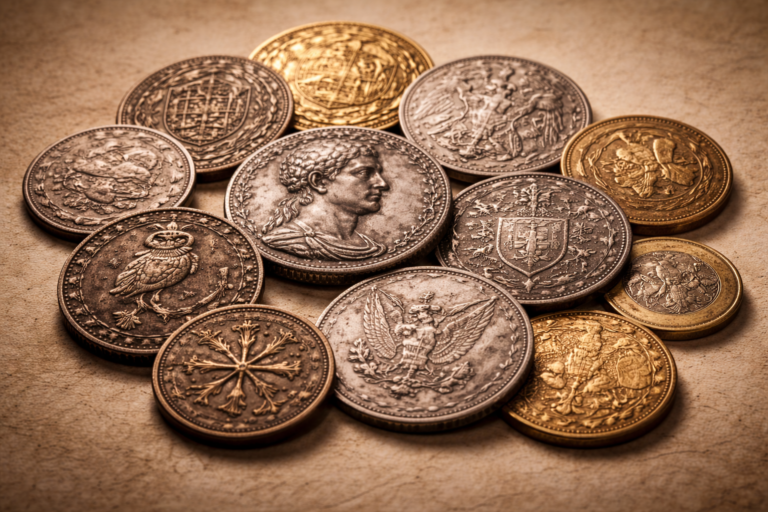
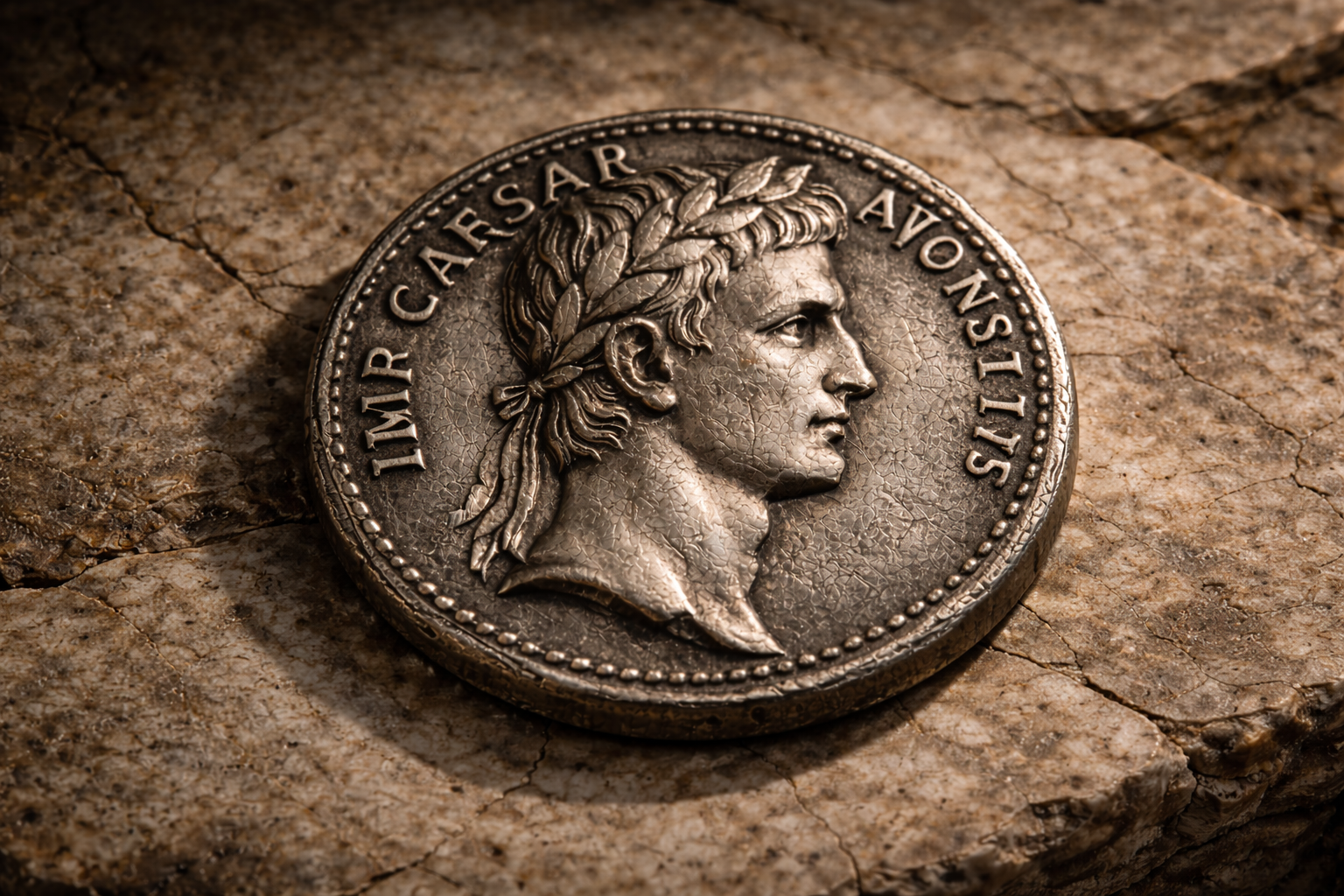
Roman coins often appear simple at first glance. A portrait of an emperor sits at the center while short Latin words form a circle around the edge. To modern readers these letters can look confusing. They are often shortened, written in unfamiliar language, and packed tightly around the image.
Yet for people living in the Roman Empire these inscriptions were easy to understand. They told a clear story about power, authority, and leadership. Every coin carried information about the emperor who issued it and the titles he held. These small pieces of metal were not only money. They were also messages that traveled across the empire.
What this article explains
This article explores the meaning behind Roman coin inscriptions. It explains why the Romans used abbreviations, what common titles such as IMP, AVG, and COS meant, and how these inscriptions helped spread political authority across the Roman world.
- Why inscriptions appeared on Roman coins
- The importance of Latin abbreviations
- Understanding imperial titles
- How inscriptions helped identify rulers
- Why coins acted as political communication
- How historians read Roman coin text today
- Table of common Roman coin inscriptions
- Related Roman Coins
- Final Verdict
- FAQ
Why inscriptions appeared on Roman coins
Coins were one of the most widely circulated objects in the Roman world. They moved through markets, traveled with soldiers, and passed between merchants along trade routes. Because coins were handled by so many people, they became an ideal place to display information about the ruler.
The Roman government realized that every coin could serve as a tiny public announcement. When someone paid for goods or received wages, they also saw the image and titles of the emperor.
Unlike statues or official buildings, coins traveled constantly. A coin minted in Rome might eventually appear in a distant province many hundreds of miles away. This made coinage one of the most effective ways to spread imperial identity.
The importance of Latin abbreviations
Roman coins rarely spelled out full titles. Instead they used abbreviations. This was partly practical. The space around the edge of a coin was small, and long words would not fit easily.
By shortening titles into familiar letters, the Romans could communicate a great deal of information within a limited space.
These abbreviations became widely recognized. People who handled coins regularly would quickly learn what each group of letters represented.
For example, the title Imperator might appear simply as IMP. The title Augustus might appear as AVG. These short forms saved space while still delivering a clear message.
Understanding imperial titles
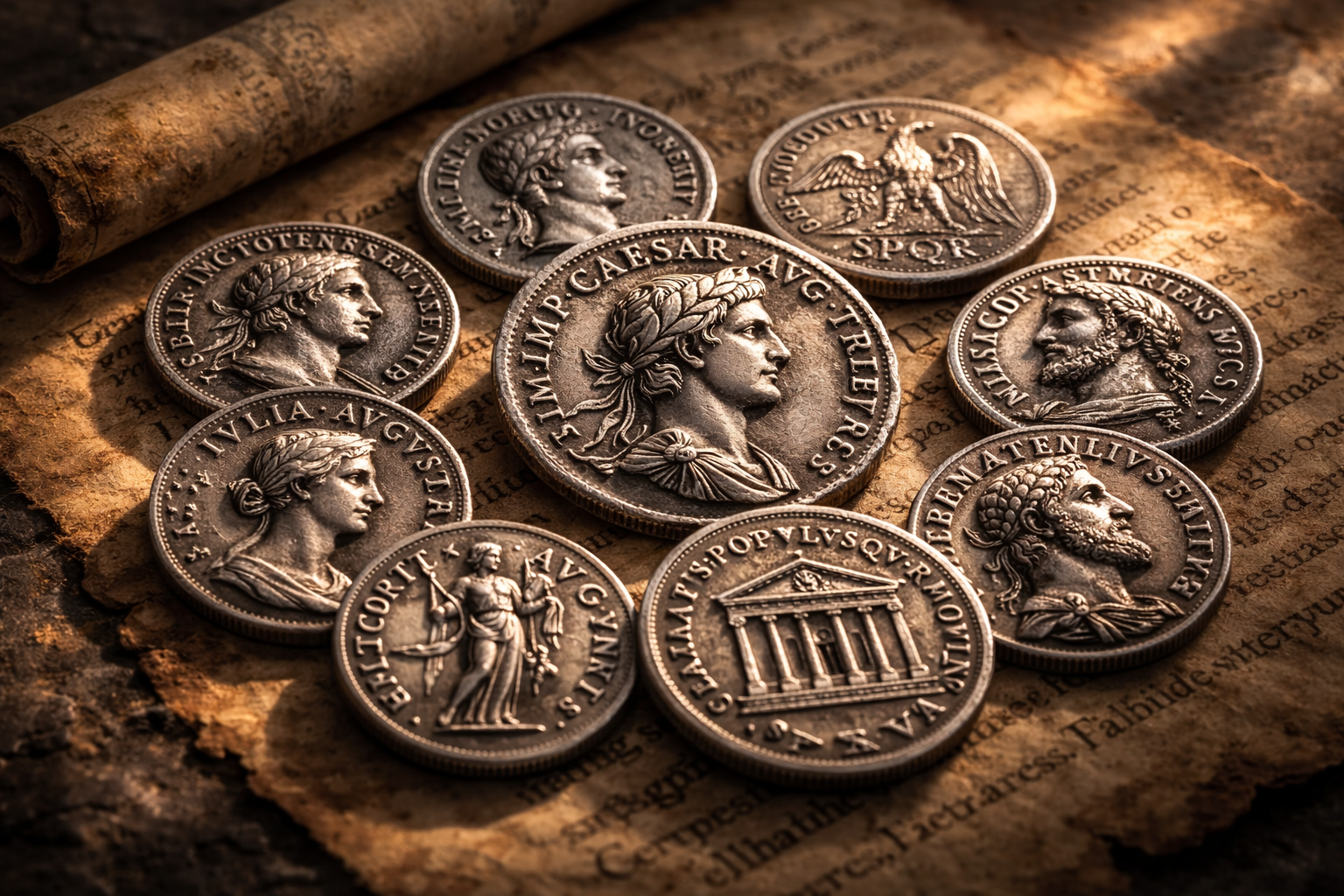
Several titles appear repeatedly across Roman coins. Each one highlights a different aspect of imperial authority.
IMP stands for Imperator. Originally this word referred to a victorious military commander. During the imperial period it became closely associated with the emperor himself.
AVG stands for Augustus. This title signified supreme authority within the Roman Empire and was used by many emperors after the reign of Augustus.
CAES stands for Caesar. Over time it became a title associated with the imperial family and often indicated the heir to the throne.
P M represents Pontifex Maximus, the chief priest of Roman religion. This title reminded viewers that the emperor also held religious authority.
COS stands for Consul, one of the highest offices in Roman government. Even during the imperial period the title retained prestige and legitimacy.
How inscriptions helped identify rulers
Roman coin inscriptions often included both the emperor’s name and his titles. By combining these elements, the coin provided a clear identification of the ruler.
For example, a coin might display the inscription IMP CAES TRAIAN AVG. To Roman citizens this would identify the emperor as Trajan while also highlighting his authority.
Because emperors sometimes updated their titles after military victories or political achievements, inscriptions can also help historians determine when a coin was minted.
This makes Roman coins valuable historical documents. The text surrounding the portrait often contains important clues about the political situation at the time of minting.
Why coins acted as political communication
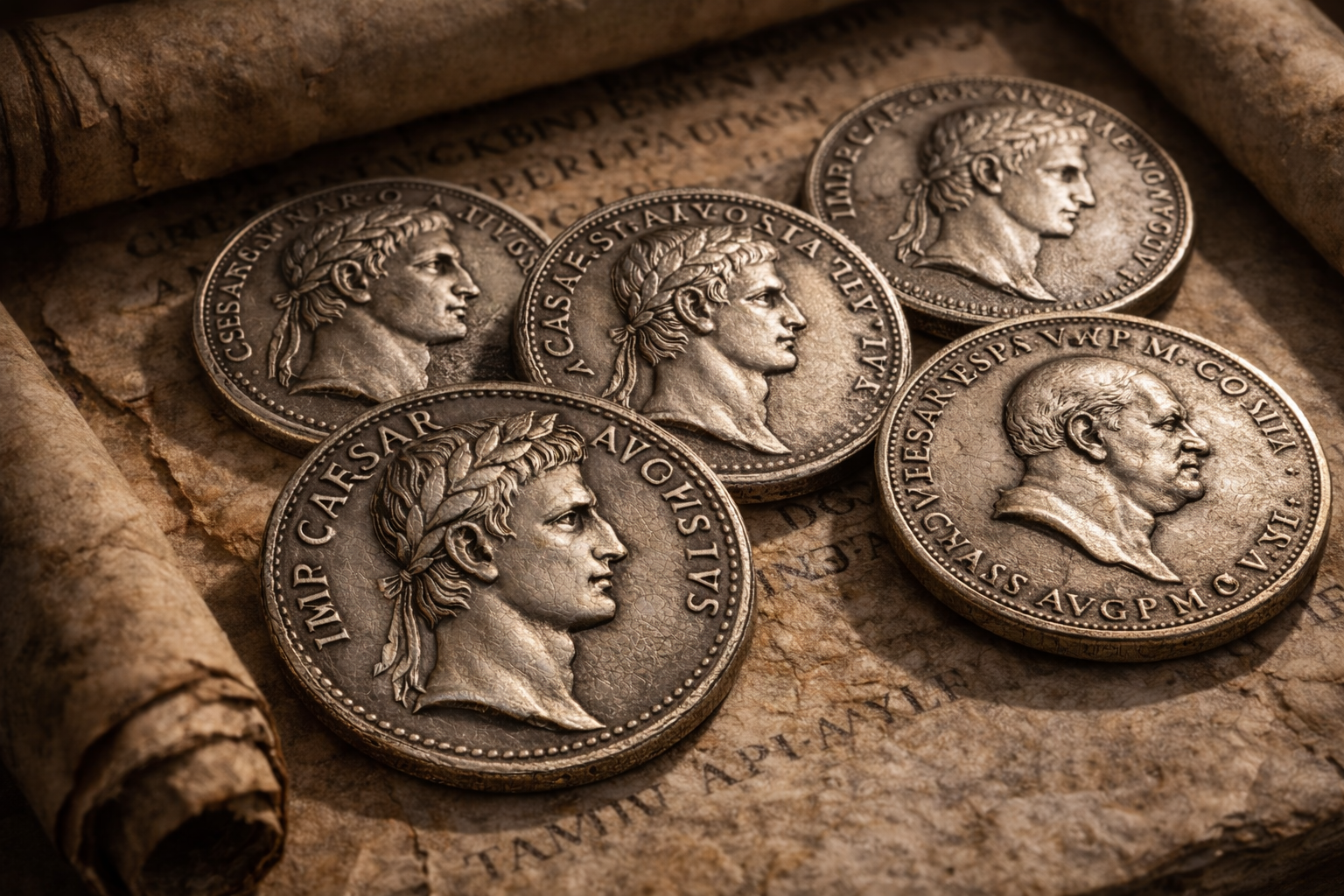
Coins served as an early form of mass communication. Because they circulated widely, they allowed the Roman state to share symbols and messages across a vast territory.
Every time a coin changed hands, the portrait and inscription reminded the viewer who ruled the empire. The repetition of these images helped reinforce loyalty and recognition.
This system worked particularly well because coins reached every level of society. Wealthy merchants, farmers, soldiers, and travelers all handled the same currency.
In this way the Roman government used coinage not only for economic exchange but also for political messaging.
How historians read Roman coin text today
Modern historians and numismatists study coin inscriptions carefully. By analyzing the titles and abbreviations they can often determine the exact period when a coin was minted.
In some cases the sequence of titles can even narrow the date to a specific year of an emperor’s reign.
This makes Roman coins valuable historical evidence. They offer insights into how rulers wanted to present themselves and how authority was communicated across the empire.
Table of common Roman coin inscriptions
| Inscription | Full Title | Meaning | Role |
|---|---|---|---|
| IMP | Imperator | Military commander | Imperial authority |
| AVG | Augustus | Supreme ruler | Imperial title |
| CAES | Caesar | Imperial family title | Dynastic legitimacy |
| P M | Pontifex Maximus | Chief priest | Religious authority |
| COS | Consul | High political office | Political prestige |
Related Roman Coins
Final Verdict
Roman coin inscriptions may appear short and cryptic today, but they were once powerful statements of authority. Each abbreviation represented a title, a role, or a claim to leadership.
Through millions of coins circulating across the empire, these short inscriptions helped reinforce the identity of Roman rule. They reminded people who governed, who commanded the army, and who held religious authority.
In the end, these small lines of Latin text transformed everyday currency into a tool of communication and power.
FAQ
What does IMP mean on Roman coins
IMP is an abbreviation of Imperator. It originally referred to a victorious military commander and later became closely associated with the emperor.
Why were Roman coin inscriptions abbreviated
Because the space on coins was limited. Abbreviations allowed long official titles to fit around the edge of the coin.
Why are Roman coin inscriptions important today
They help historians identify rulers, understand political messages, and sometimes determine when a coin was minted.