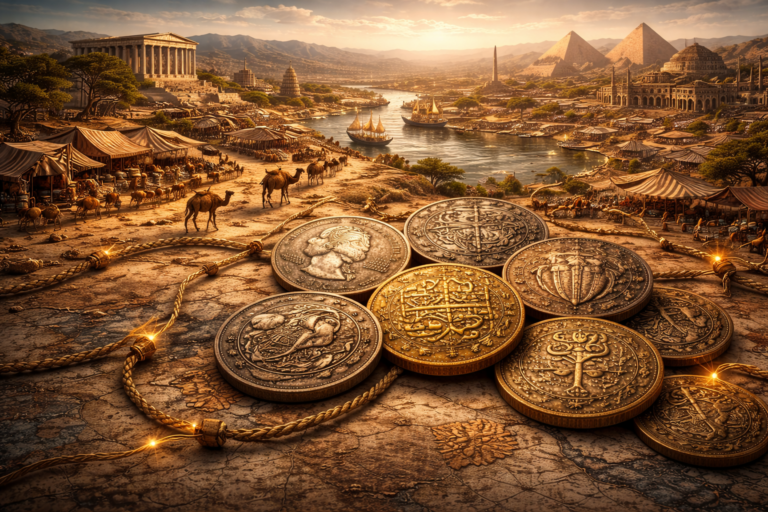
The Lion Symbol on Lydian Coins – Power and Authority in the First Money
Estimated reading time: 11 minutes.
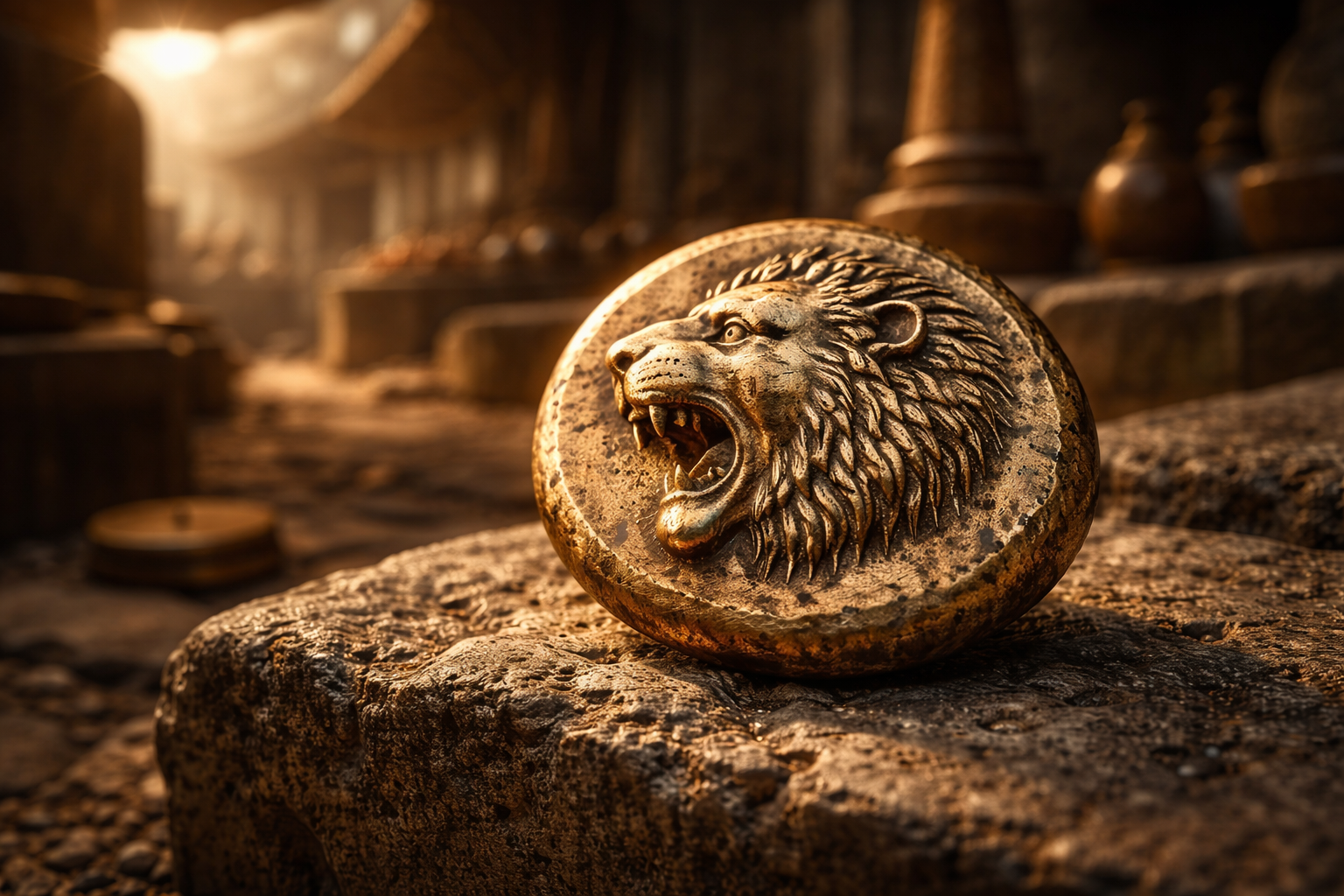
When historians look at the earliest coins ever created, one symbol appears again and again. Long before detailed portraits and complex designs appeared on coins, the first currency used a simple but powerful image — the lion.
This symbol appeared on some of the earliest coins produced in the kingdom of Lydia. These coins were among the first coins in history, and the lion emblem played an important role in making them recognizable and trustworthy in ancient markets.
What this article explains
This article explores the meaning of the lion symbol found on early Lydian coins. It explains why the symbol was chosen, how it helped establish trust in early currency, and how symbols played an important role in the development of coinage.
- The first appearance of the lion symbol
- Why the lion represented royal power
- How symbols created trust in early money
- The role of coin symbols in ancient trade
- The lion emblem and Lydian identity
- How symbols helped coins spread across markets
- Table | Symbols in early coinage
- Reality Check
- Final Verdict
- FAQ
The first appearance of the lion symbol
Some of the earliest coins discovered by archaeologists feature the head of a lion. These coins were produced in the ancient kingdom of Lydia, a powerful state located in western Anatolia.
The lion design was not random decoration. It was a carefully chosen emblem connected to the authority of the ruling dynasty.
Historians widely associate these early coins with the Lydian kings who ruled during the seventh century BCE. At this time, Lydia controlled important trade routes connecting the Mediterranean world with the interior of Anatolia.
For readers interested in the broader history of this region, the ancient kingdom itself is described in more detail on the Wikipedia page about Lydia, which explains its role as an important political and economic power in the ancient world.
Why the lion represented royal power
In many ancient cultures the lion symbolized strength, authority, and dominance. For the rulers of Lydia, the lion became a visual representation of royal power.
By stamping the lion symbol onto coins, the state communicated a clear message. The coin was backed by the authority of the ruling power.
This connection between coin imagery and political authority would later appear in many other civilizations.
How symbols created trust in early money
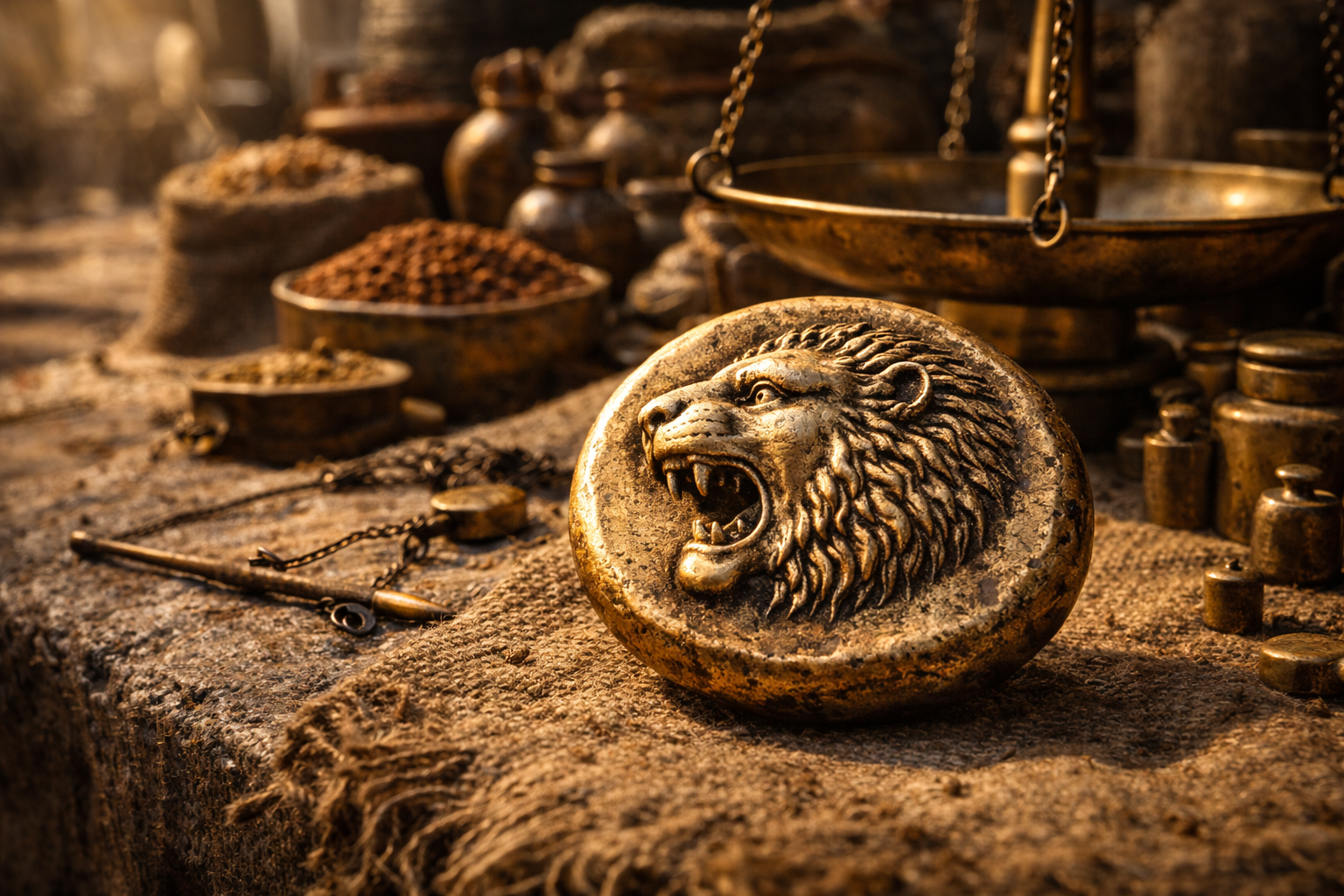
Before coins existed, merchants relied heavily on weighing precious metals during trade. This process was slow and required careful measurement.
Stamped coins simplified this process. The symbol placed on the coin guaranteed that the metal had been measured and approved by the minting authority.
Because the lion symbol represented royal authority, merchants quickly learned to trust coins that carried the emblem.
The role of coin symbols in ancient trade
Symbols played an important role in early monetary systems because many people in the ancient world could not read written language. Visual symbols allowed coins to be recognized quickly in markets.
When merchants saw the lion symbol, they understood that the coin had official backing.
This recognition made transactions faster and more reliable.
The lion emblem and Lydian identity
Over time the lion symbol became closely associated with Lydia itself. The emblem appeared not only on coins but also in various artistic representations connected with the royal court.
By placing this symbol on coins, the rulers reinforced their political identity and authority across their territory.
How symbols helped coins spread across markets
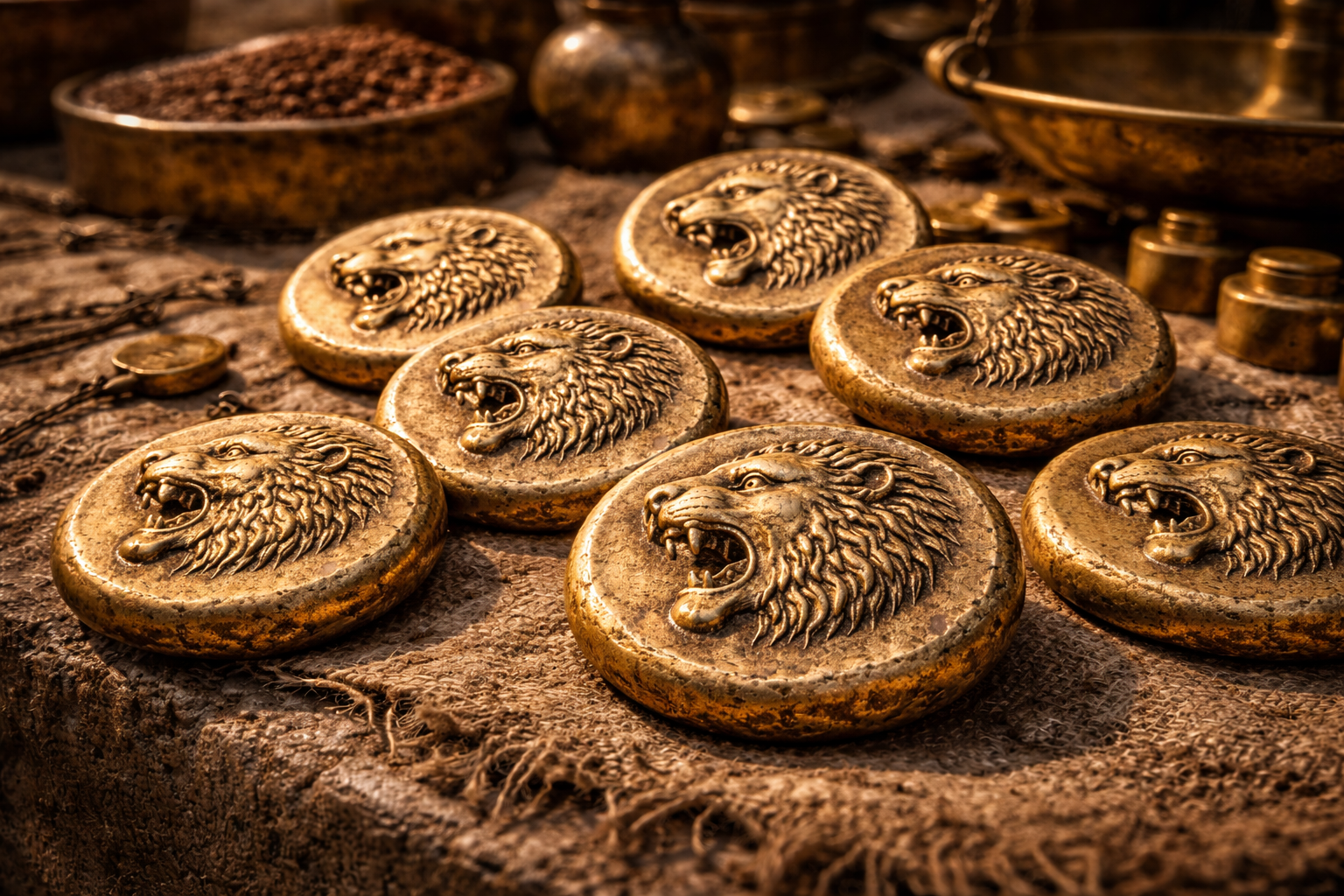
Symbols also helped coins circulate beyond the borders of Lydia. Traders traveling between regions could recognize official currency by its emblem.
This helped coins move through wider trade networks and encouraged economic exchange between different cultures.
Table | Symbols in early coinage
| Symbol | Civilization | Meaning | Purpose |
|---|---|---|---|
| Lion | Lydia | Royal power | Authority behind currency |
| Owl | Athens | Wisdom and Athena | City identity |
| Eagle | Greek states | Strength | Political symbolism |
| Portrait | Rome | Imperial identity | Political authority |
Reality Check
Symbols alone did not create trust in early currency. The weight of the metal and the authority of the issuing state were equally important. However, recognizable symbols helped coins circulate quickly in ancient markets.
Final Verdict
The lion symbol on Lydian coins represents one of the earliest examples of political imagery used on money. By combining valuable metal with a recognizable symbol of power, the rulers of Lydia created a currency that merchants could trust.
This simple design helped establish the credibility of early coinage and played a key role in the spread of monetary systems across the ancient world.
Even today, the lion emblem remains one of the most recognizable symbols connected to the birth of coinage.
FAQ
Why is there a lion on Lydian coins
The lion symbol represented royal authority and served as an official mark guaranteeing the authenticity of the coin.
Were Lydian lion coins the first coins
Many historians consider Lydian electrum coins featuring lion symbols to be among the earliest coins ever produced.
Did other ancient coins use symbols
Yes. Greek and Roman coins later used animals, gods, and portraits to represent political authority and identity.