What a Laurel Wreath on Roman Coins Really Meant
Estimated reading time: 12 minutes.
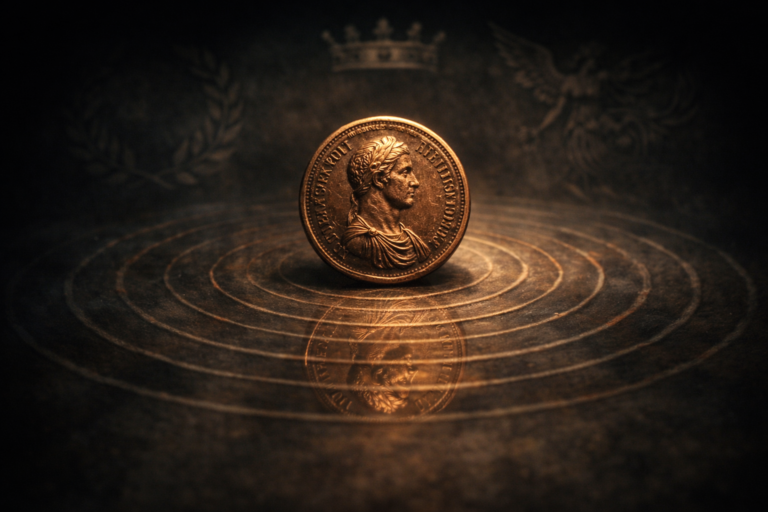
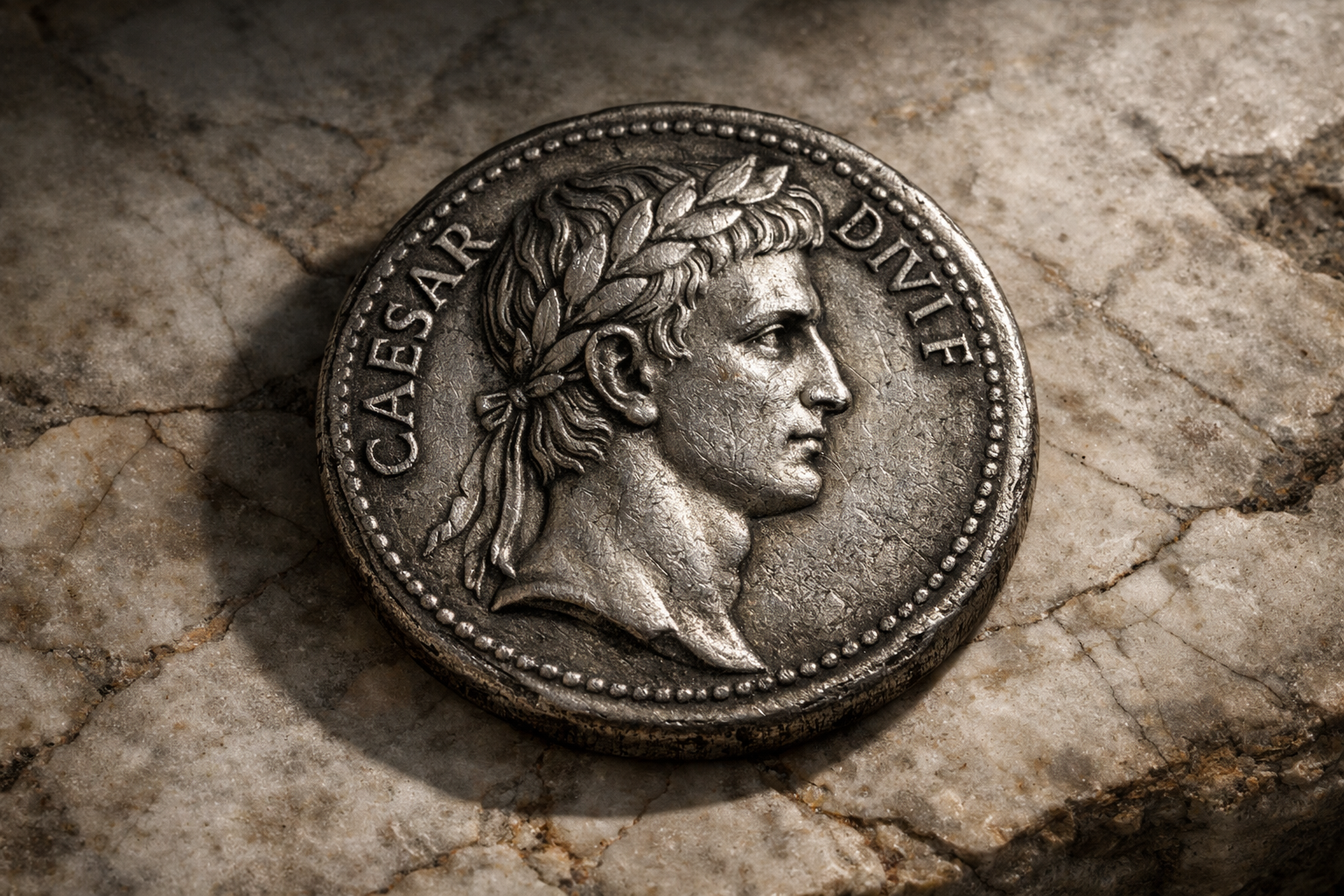
Many Roman coins look similar at first glance. A portrait of an emperor. A few Latin words. And often a crown made of leaves resting quietly on the ruler’s head.
That crown is the laurel wreath. And although it appears simple, it carried one of the strongest messages in the entire Roman world. Understanding that symbol helps us understand how Rome communicated power across an enormous empire.
What this article explains
This article explores the meaning of the laurel wreath on Roman coins. It explains how the symbol began in ancient Greek culture, how the Romans adopted it, and why emperors used it to communicate victory, legitimacy, and authority across the empire.
- The Greek origin of the laurel wreath
- How Rome adopted the symbol
- Why emperors used it on coins
- Coins as tools of imperial communication
- The power of repeating symbols
- How coins carried imperial identity across the empire
- Symbolism table
- Related Roman Coins
- Final Verdict
- FAQ
The Greek origin of the laurel wreath
The story of the laurel wreath begins long before the Roman Empire. Its roots lie in ancient Greek culture where the laurel tree was connected to the god Apollo.
According to myth, Apollo pursued a nymph named Daphne. To escape him she was transformed into a laurel tree. Apollo then declared the laurel sacred and wore its leaves as a crown.
From that moment the plant became associated with achievement and honor. Victors in athletic competitions were crowned with wreaths made from laurel leaves. These wreaths symbolized excellence.
The symbolism spread widely across the Greek world. Anyone who saw the wreath understood what it meant. It represented victory earned through effort and success recognized by society.
How Rome adopted the symbol
Roman culture absorbed many elements from Greece. Art, literature, philosophy, and symbolism all crossed into Roman life. The laurel wreath was one of the symbols that the Romans adopted and adapted.
In Roman ceremonies the wreath became strongly connected to military triumph. A victorious general might celebrate his success with a grand parade through the streets of Rome. These triumphs were spectacular events filled with soldiers, captives, and displays of wealth taken from conquered lands.
During these celebrations the victorious commander often wore a laurel wreath. It was a visual sign that he had achieved something extraordinary.
Over time the wreath became more than a reward for a single victory. It turned into a lasting symbol associated with leadership itself.

Why emperors used it on coins
Roman coins served many purposes. They facilitated trade and payments. They moved between markets and military camps. But they also carried images chosen carefully by the state.
In a world without newspapers or broadcast media, coins became an ideal way to spread visual messages. Every person who handled a coin saw its imagery.
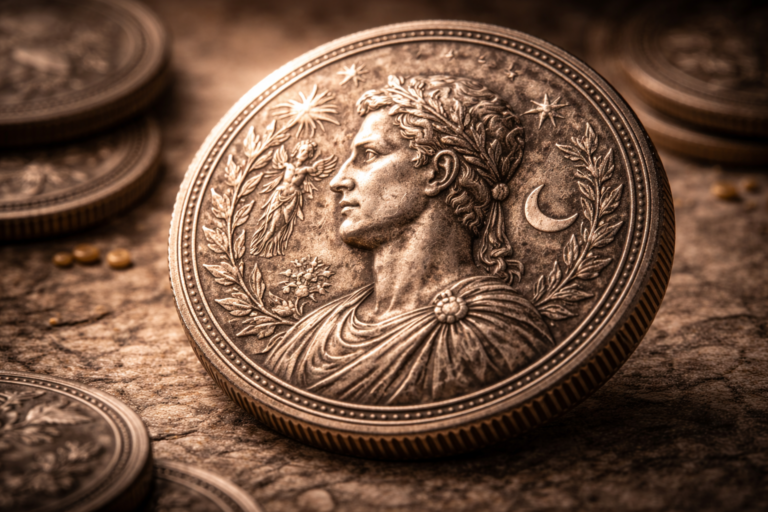
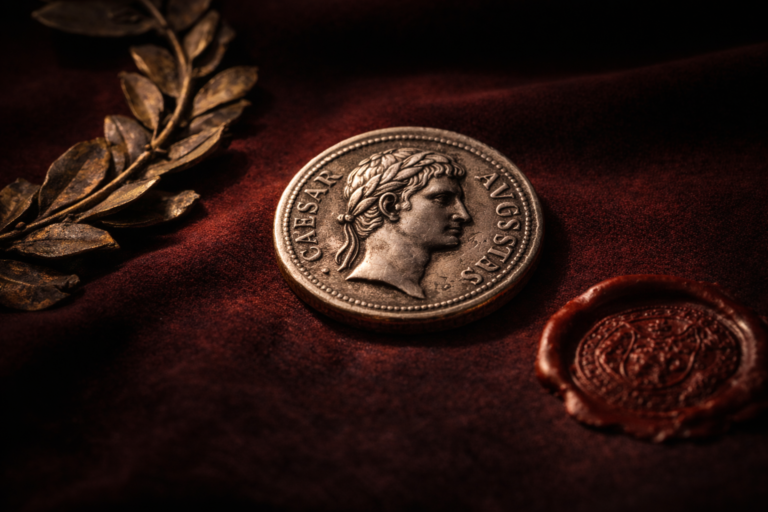
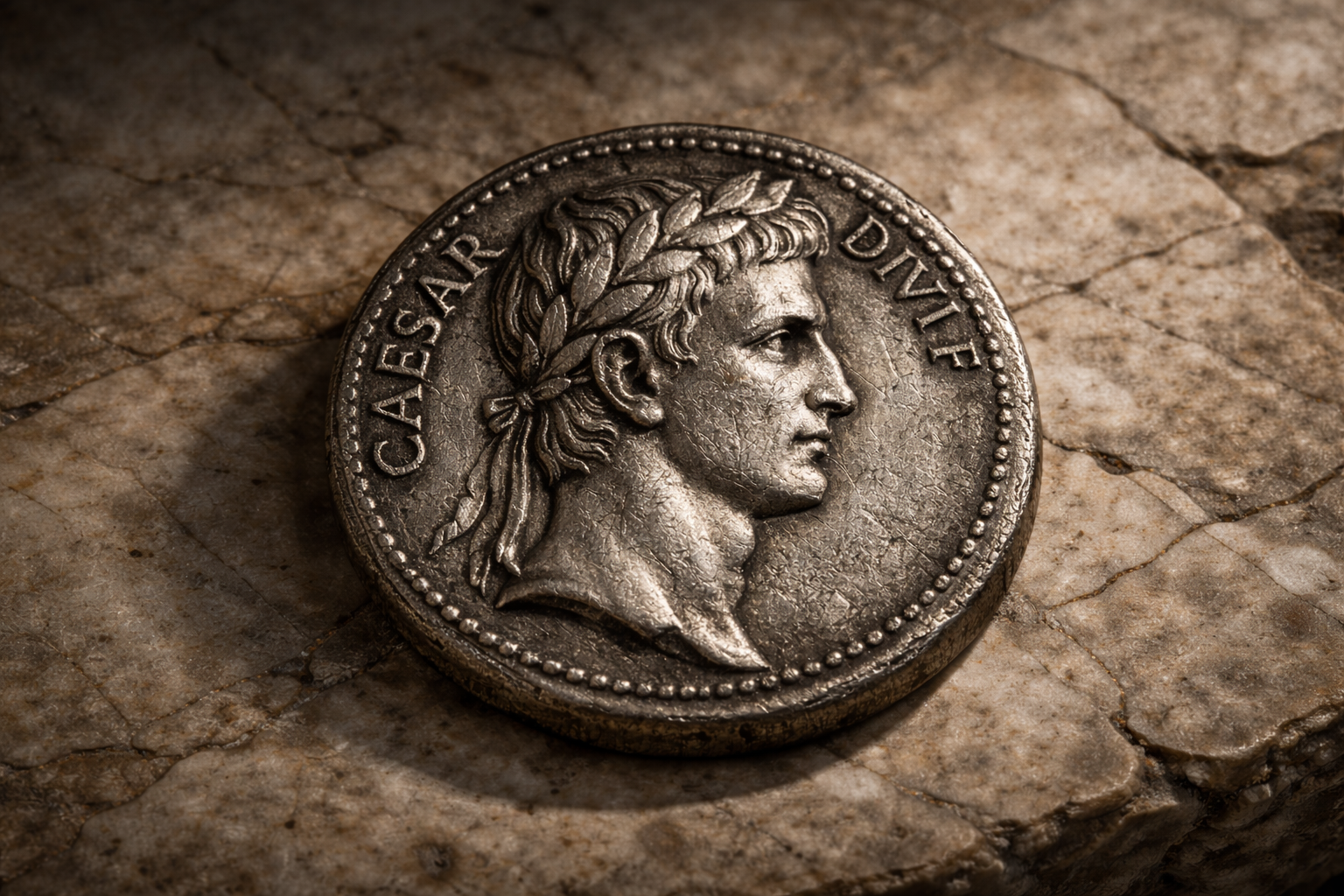
When emperors appeared wearing the laurel wreath, the message was clear. It suggested triumph. It suggested legitimacy. It suggested that the ruler had earned the right to lead.
This symbolism worked quietly. Most people did not analyze the image consciously. But repeated exposure to the same symbol reinforced the idea that the emperor represented victory and stability.
Coins as tools of imperial communication
Coins traveled constantly throughout the Roman world. Merchants carried them across long trade routes. Soldiers received them as payment. Farmers used them in local markets.
Because of this movement, coins spread imperial imagery faster than almost any other object. Statues stayed in one place. Coins moved everywhere.
A citizen living far from Rome might never see the emperor. Yet that person might still hold a coin bearing the emperor’s portrait. Through that coin the ruler became visible even in distant provinces.
The power of repeating symbols
Symbols become powerful through repetition. The more often people encounter them, the more familiar they become. Familiarity builds trust and recognition.
Roman authorities understood this psychological effect. They repeated specific images across millions of coins. Portraits. Titles. Symbols of victory.
The laurel wreath was one of the most recognizable elements. Over time it became inseparable from the image of Roman leadership.
How coins carried imperial identity across the empire
The Roman Empire covered enormous distances. Languages varied widely. Cultures differed from region to region.
Yet coins provided a shared visual language. Anyone who handled Roman currency could recognize imperial symbols.
In that sense coins helped create a sense of unity across the empire. They reminded people that they were part of the same political structure.
Symbolism Table
| Symbol | Meaning | Roman Message | Impact |
|---|---|---|---|
| Laurel wreath | Victory | Military success | Authority |
| Imperial portrait | Leadership | Legitimacy | Recognition |
| Coin circulation | Wide distribution | Political messaging | Empire unity |
Related Roman Coins
Final Verdict
The laurel wreath on Roman coins represented far more than decoration. It was a visual declaration of victory, authority, and legitimacy.
By placing the symbol on their coins, Roman emperors ensured that their image traveled throughout the empire. Every transaction carried a quiet reminder of imperial power.
Through millions of coins, a simple crown of leaves helped reinforce the identity of Roman rule.
FAQ
What did the laurel wreath mean in ancient Rome
It symbolized victory, honor, and achievement. Roman generals and later emperors used it to represent success and authority.
Why do Roman coins show emperors wearing laurel wreaths
The symbol reinforced the idea that the emperor was a victorious and legitimate ruler.
Was the laurel wreath a political symbol
Yes. On Roman coins it functioned as a visual message that communicated imperial power across the empire.