Why Roman Emperors Appeared on Coins
Estimated reading time: 12–14 minutes.
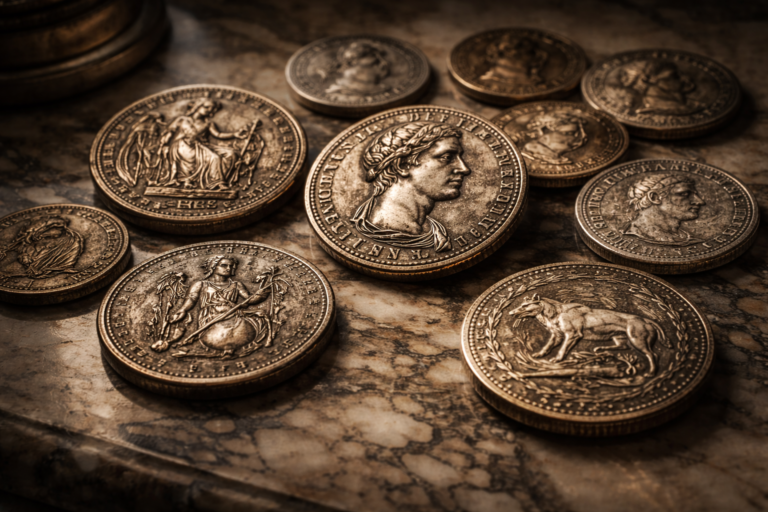
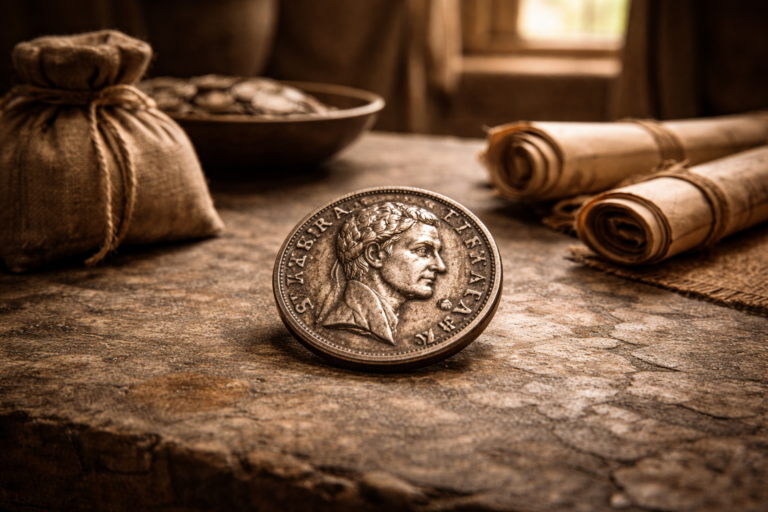
A Roman coin did more than move value. It carried a face. That face was not placed there by accident. In an empire built on distance, identity, and control, portraits became one of the fastest ways to make authority feel real.
This article explains why Roman emperors appeared on coins, how portraits created legitimacy through recognition, and why the human face became one of the most powerful signals in Roman money.
Quick Context
This article continues the Roman Coins direction of Coin Meanings. If you want the foundation of why Roman coin designs emphasized authority, start with Why Roman Coins Focused on Power and Authority. For the broader framework on power and belonging through repeated imagery, read What Coins Taught People About Power and Belonging. And for the decision layer behind coin imagery, see Who Decided What Appears on Coins.
- Why Visibility Mattered in a Vast Empire
- Recognition is Faster Than Explanation
- Portraits as Legitimacy Signals
- Continuity, Succession, and Public Calm
- What Portrait Coins Quietly Communicated
- The Face in Daily Life
- Why Portraits Changed Over Time
- The Limits of a Face on Money
- Final Verdict
- Frequently Asked Questions
Why Visibility Mattered in a Vast Empire
Rome ruled a world that could not be managed by paper alone. Messages traveled slowly. Literacy was uneven. Local languages were everywhere.
Coins solved part of that problem because they traveled automatically. They moved with soldiers, merchants, and taxes. When authority needed to be seen in distant places, the most reliable object to carry that signal was money.
A portrait on a coin made power visible without requiring a speech. It made the empire feel present even when Rome was far away.
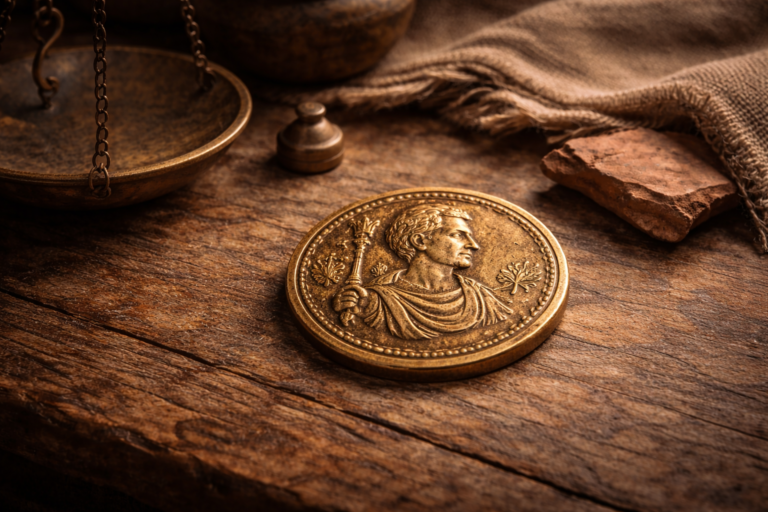
In Rome, a portrait on a coin was not a decoration. It was a portable presence.
Recognition is Faster Than Explanation
People do not decide trust slowly in a busy market. They recognize. They relax. Then they accept.
A face is one of the fastest things humans recognize. Even when you do not know someone personally, the brain processes faces quickly. Rome used this advantage.
The portrait worked like a shortcut. This coin belongs to the central system. This coin carries official legitimacy. This coin is part of the order you live under.
Portraits as Legitimacy Signals
A coin is a promise. It promises acceptance. It promises stability. It promises that others will recognize it too.
When an emperor’s portrait appeared on coins, it reinforced that promise. It attached money to a visible authority figure. Not because every person loved the emperor, but because the system needed a clear reference point.
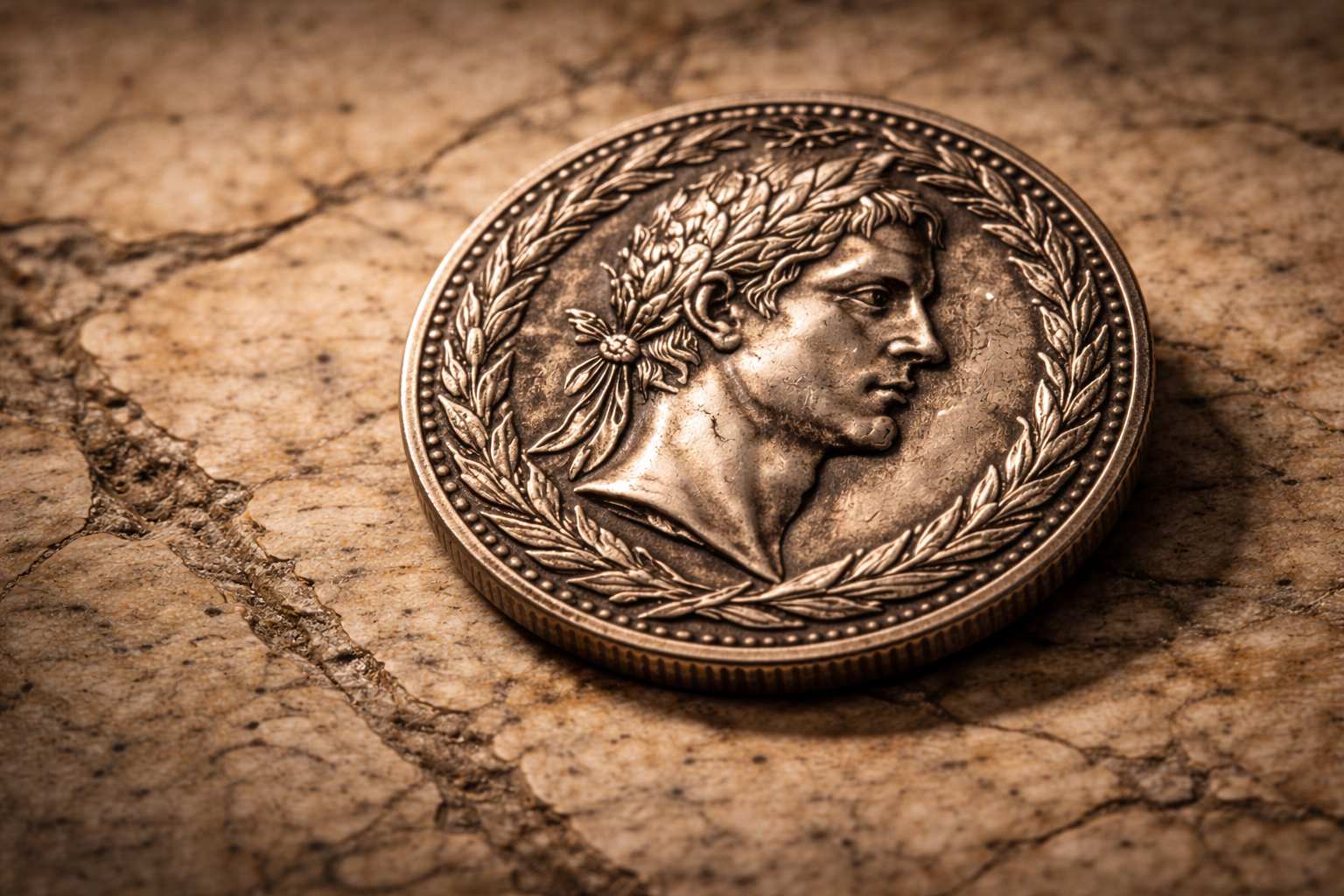
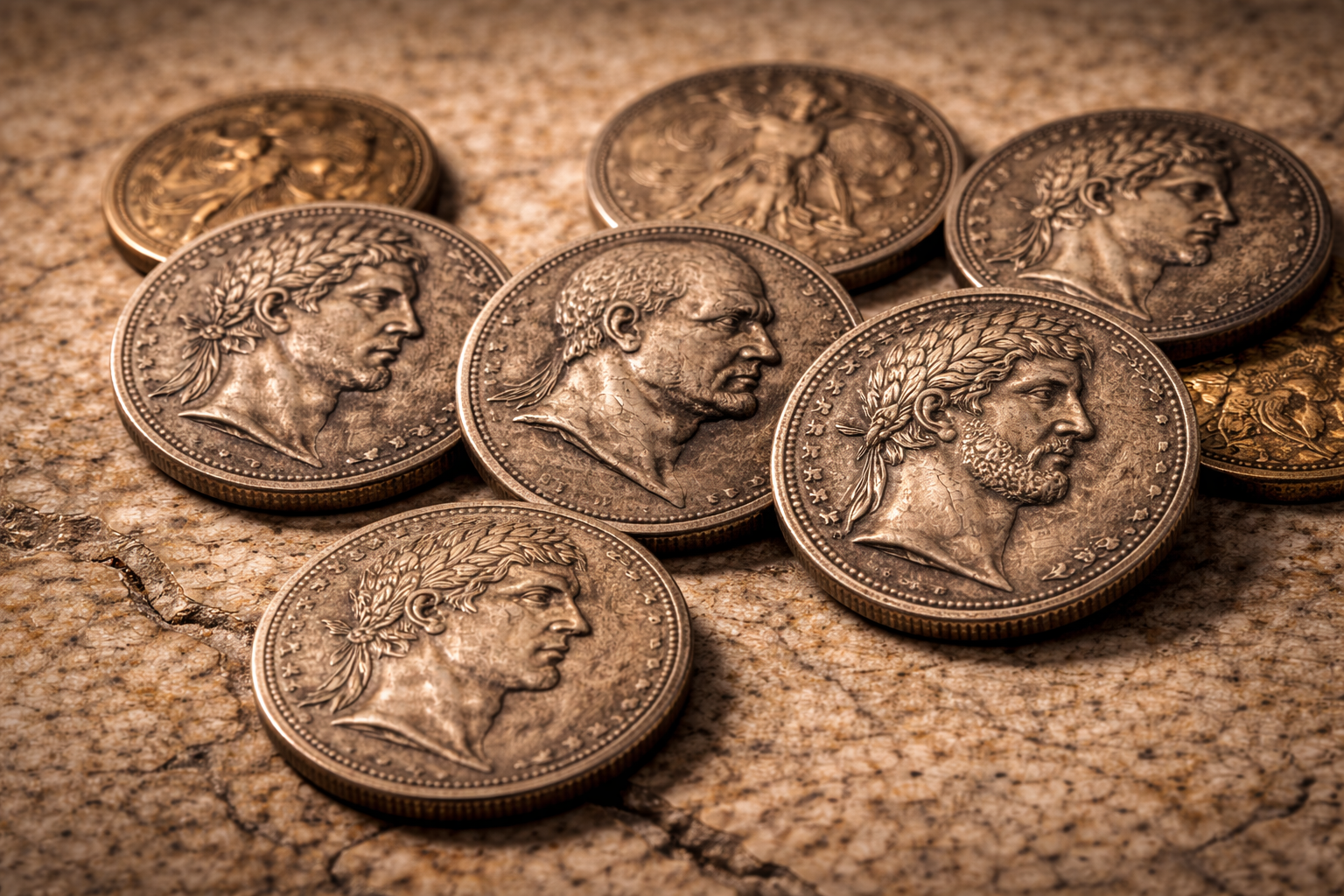
This is also why portraits were often paired with authority symbols. Laurel wreaths, victory motifs, and official titles made the face feel backed by power.
Continuity, Succession, and Public Calm
Empires fear uncertainty. Uncertainty slows markets, changes behavior, and creates rumors. Succession is one of the most dangerous moments for stability.
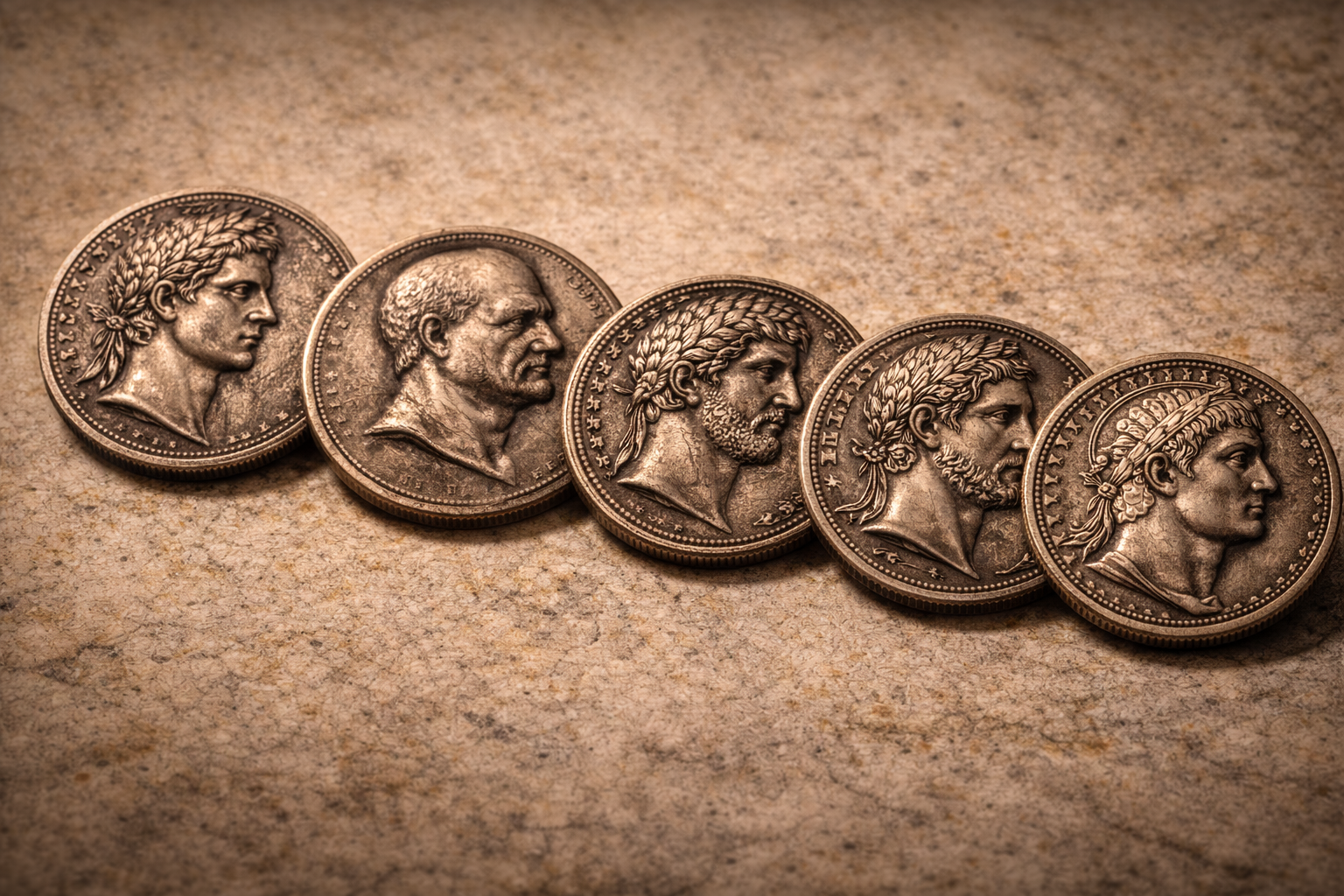
Coins helped manage that risk. When a new portrait entered circulation, it quietly taught the public that leadership had changed. No announcement was needed in every street. Money carried the update.
This made portraits useful beyond personal glorification. They became a mechanism of continuity. A way to keep daily exchange calm while politics shifted.
Reality Check
Most people did not need to understand the details of succession. They needed to feel that the system remained predictable. Coins helped maintain that feeling.
What Portrait Coins Quietly Communicated
Roman portrait coins communicated several ideas at once. First, the coin belongs to a recognized issuing power. Second, authority is centralized and visible. Third, order continues even across distance.
Many reverses supported the same message through symbolism. Victory suggested strength. Virtues suggested legitimacy. Military motifs suggested control.
The face was the anchor. The symbols were the supporting language. Together, they created a design system that traveled across the empire.
The Face in Daily Life
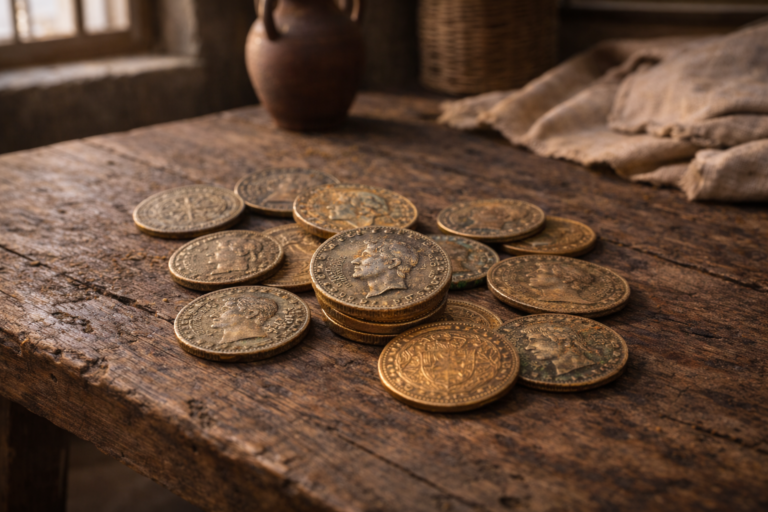
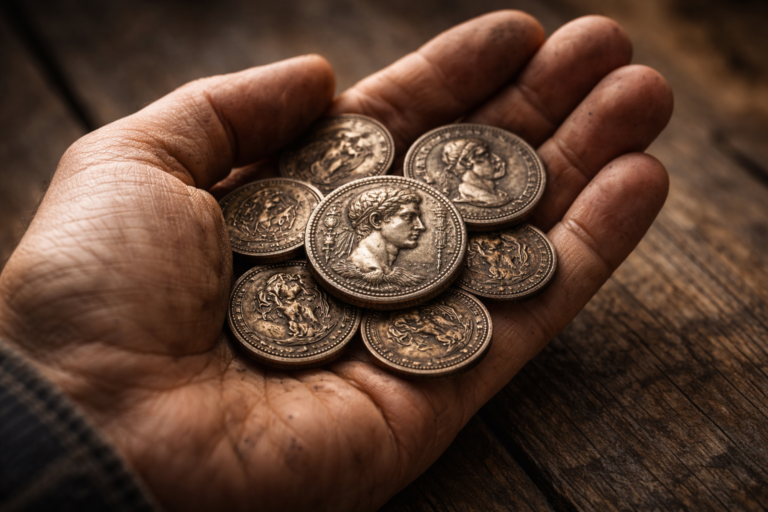
Portrait coins were not rare posters. They were handled daily. They appeared in wages, taxes, and trade. This repetition matters.
The more often people handled the same face, the more normal it became. Normality is powerful. It makes authority feel like the natural background of life.
In that way, a portrait coin could shape mood without forcing belief. It did not persuade through argument. It persuaded through presence.
Why Portraits Changed Over Time
Portraits changed because emperors changed. But they also changed because messaging needs changed. Sometimes portraits emphasized youth and renewal. Sometimes they emphasized maturity and strength.
The design did not only depict a person. It depicted a role. It suggested competence, stability, and legitimacy.
Over long periods, the portrait style also reflected the mint’s technical habits. What could be engraved clearly at small scale shaped how faces appeared.
The Limits of a Face on Money
A portrait could not solve every trust problem. If a coin was debased, clipped, or inconsistent, trust could still suffer. Imagery works best when the system supports it.
Still, portraits remained one of Rome’s most effective tools because they aligned with human psychology. Faces trigger recognition. Recognition reduces hesitation. Reduced hesitation keeps markets moving.
That is why the portrait strategy endured. It was simple, repeatable, and socially powerful.
Final Verdict
Final Verdict
Roman emperors appeared on coins because faces are fast signals of authority. In a vast empire, portraits made power visible, updated the public during succession, and reinforced legitimacy through daily repetition. The coin carried a face, and that face helped the empire feel present everywhere money traveled.
Frequently Asked Questions
Were Roman portrait coins meant as propaganda?
Sometimes, but their daily function mattered more. Portraits made authority visible and recognizable across distance, which helped markets and administration feel stable.
Did everyone know who the emperor was?
Not in the modern sense. But the face itself worked as a legitimacy signal. People could recognize the coin as official even without knowing personal details.
Why were portraits still effective when coins became worn?
Because faces and bold outlines remain recognizable even with wear. Recognition is the key mechanism that made portrait coins effective.
Is this content safe for AdSense?
Yes. It is educational and historical, and it contains no pricing, valuation, or financial advice.