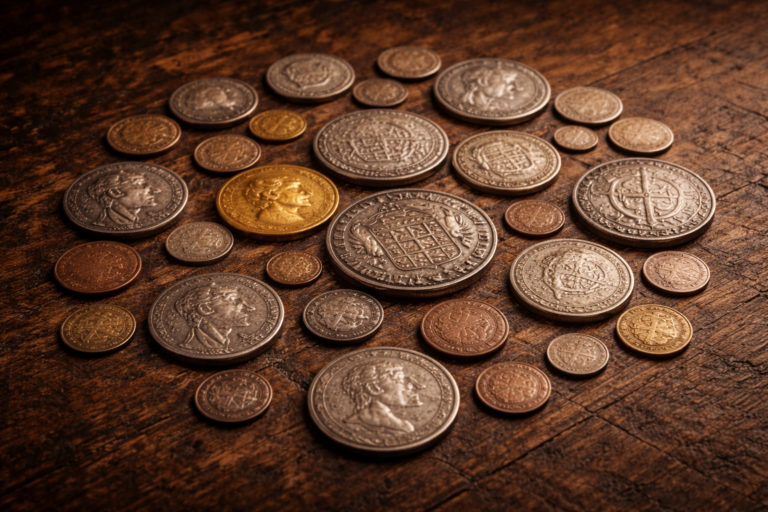
How Everyday Coins Quietly Shaped Daily Life Through History
Estimated reading time: 10 minutes.
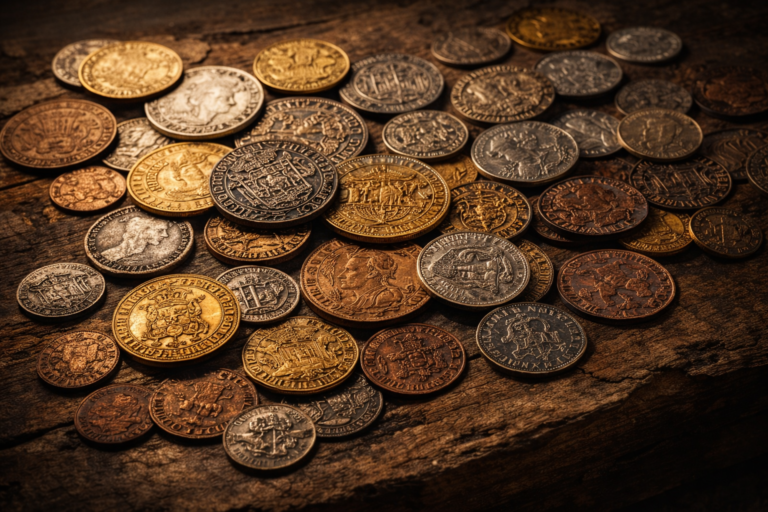
Everyday coins rarely get attention. They feel ordinary, almost invisible. Yet they quietly shaped daily life by teaching people routines, trust, and the rhythm of small trade.
When you follow everyday money, you stop chasing dramatic events and start seeing the real engine of history. Repeated actions. Shared habits. Small exchanges that held communities together day after day.
What this article explains
Everyday coins shaped daily life by making exchange predictable. They taught what felt fair, reduced hesitation, and helped markets and homes run smoothly.
Why Everyday Coins Worked Quietly
Everyday coins were built for repetition. Their mission was not to impress. Their mission was to disappear into routine and keep life moving. That is why they often feel invisible in history.
But invisibility is the point. When money works, people stop thinking about money. That silence is a sign of stability. It allows markets to focus on goods and services instead of constant arguments about legitimacy.
The strongest money is the money people stop noticing, because it fits perfectly into daily life.
Markets and the Habit of Fast Trust
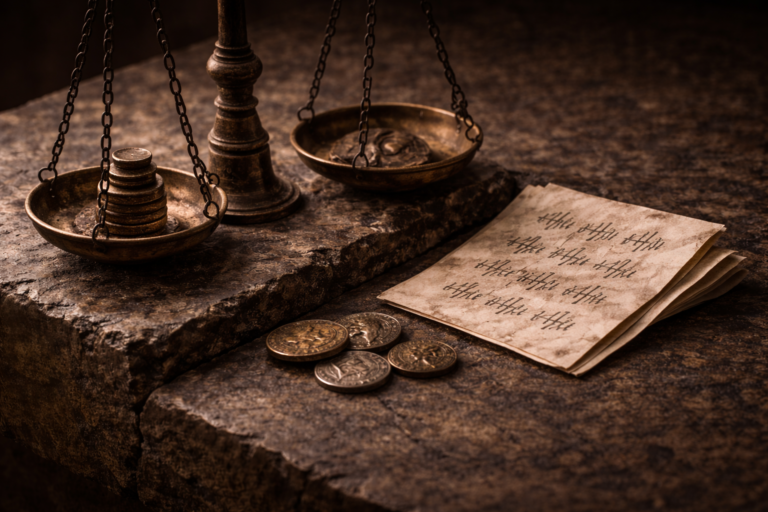
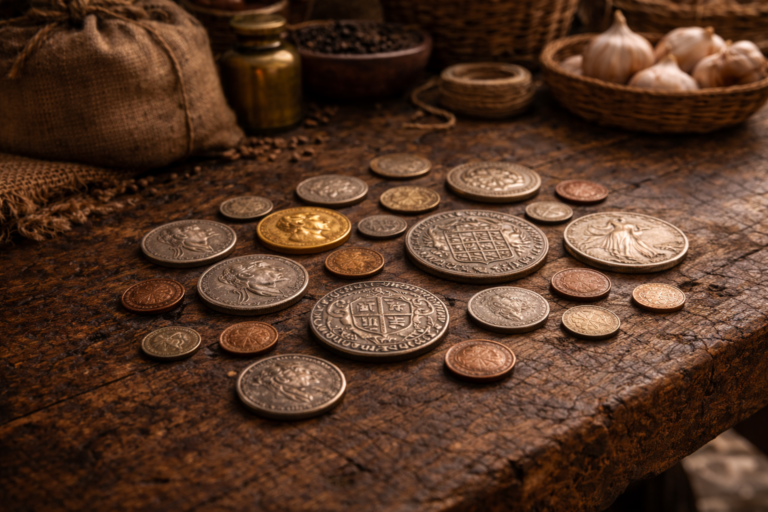
In crowded markets, speed matters. Buyers and sellers needed a quick decision, not a long debate. Familiar coins created fast trust. A known size and weight reduced hesitation.
This is one reason daily coins can explain real life. They show how communities solved practical problems. People learned what was accepted, what was normal, and what was fair through repeated exchange.
Home Routines Built on Small Change
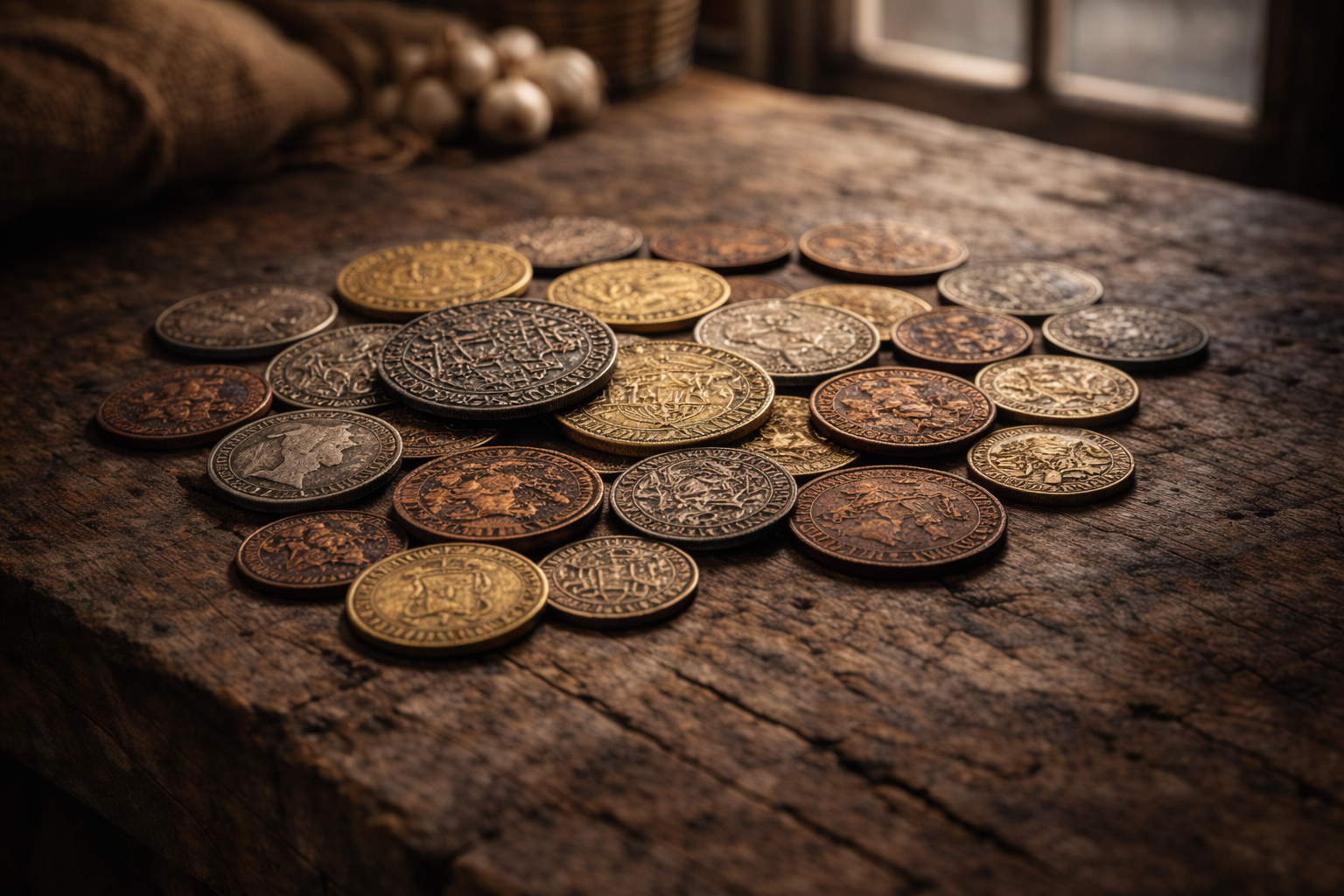
Everyday coins also shaped life at home. They were used for simple planning. Saving small change. Splitting costs. Handling small household needs without stress.
Over time, small coins shaped decision making. They made certain choices feel safe. They made other choices feel risky. This is how money trains behavior quietly.
Reality Check
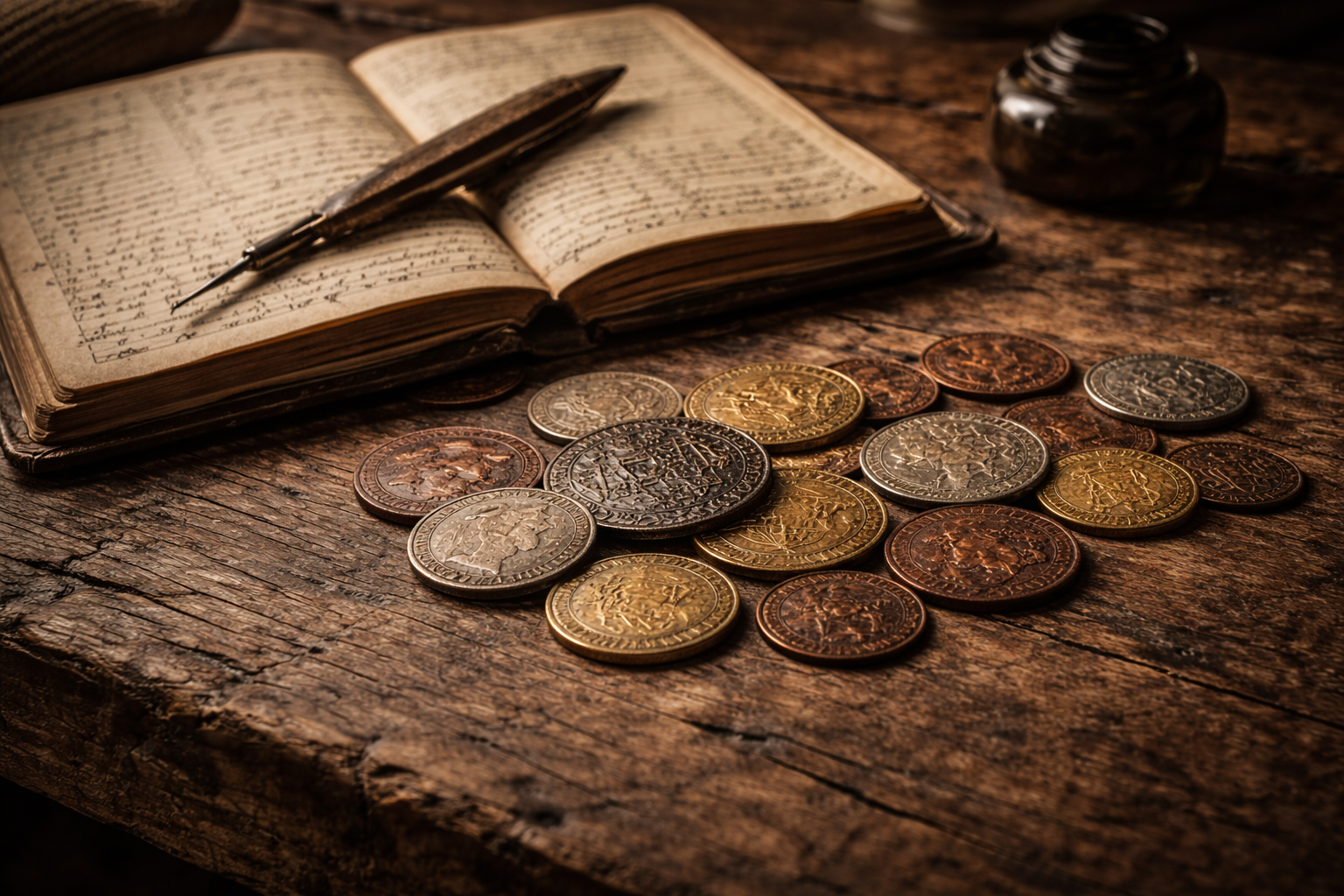
Everyday money shaped behavior because it was repeated. Most people did not learn economics. They learned routines, and routines became trust.
Design Signals People Learned by Repetition
Many everyday coins kept simple designs. Not because rulers lacked imagination, but because stable signals reduce friction. Familiar symbols, consistent lettering, and predictable size made acceptance easier.
These signals worked like a daily language. People did not need to read official notices. They learned the coin by touch, sight, and repetition.
Wear That Proves a Coin Lived a Real Life
Wear is not only damage. Wear is evidence. A heavily used coin shows how often it moved through real life. It shows repeated trust. It shows constant exchange.
If you want to see the hidden stories behind daily exchange, follow the coins that look tired. They usually did the hardest work.
Where Everyday Coins Did Their Work
Everyday coin function table
This table focuses on daily function, not pricing, because function is what shaped routines.
| Daily space | What coins supported | What people learned | What it reveals about life |
|---|---|---|---|
| Markets | Fast trade and simple bargaining | Trust through familiarity | What people bought most often |
| Homes | Small planning and daily saving | Routine decision making | What people feared and prepared for |
| Workplaces | Routine payments and local services | What feels fair in exchange | How communities kept stability |
| Streets | Small costs that kept movement possible | Shared expectations | How daily life stayed smooth |
Related PastMint stories
If you want connected context, these two articles continue the same Everyday Money theme.
Final Verdict
Final Verdict
Everyday coins shaped daily life because they made routines predictable. They reduced friction, built quiet trust, and trained habits through repetition. If you want to understand real life in the past, follow the smallest coins. They carried the largest share of daily history.
Frequently Asked Questions
Why are everyday coins important for understanding history
They show how ordinary people lived. Everyday coins reveal routines, trust, and repeated exchange that shaped society quietly.
Do simple coin designs have a purpose
Yes. Stable designs reduce hesitation and make recognition easy during fast daily trade.
What does coin wear reveal about daily life
Wear shows movement. A worn coin suggests constant exchange and repeated acceptance in routine life.
Is this article safe for AdSense
Yes. It is educational and historical, and it avoids pricing, valuation, and financial advice.