Everyday Money as a Mirror of Daily Life in History
Estimated reading time: 10 minutes.
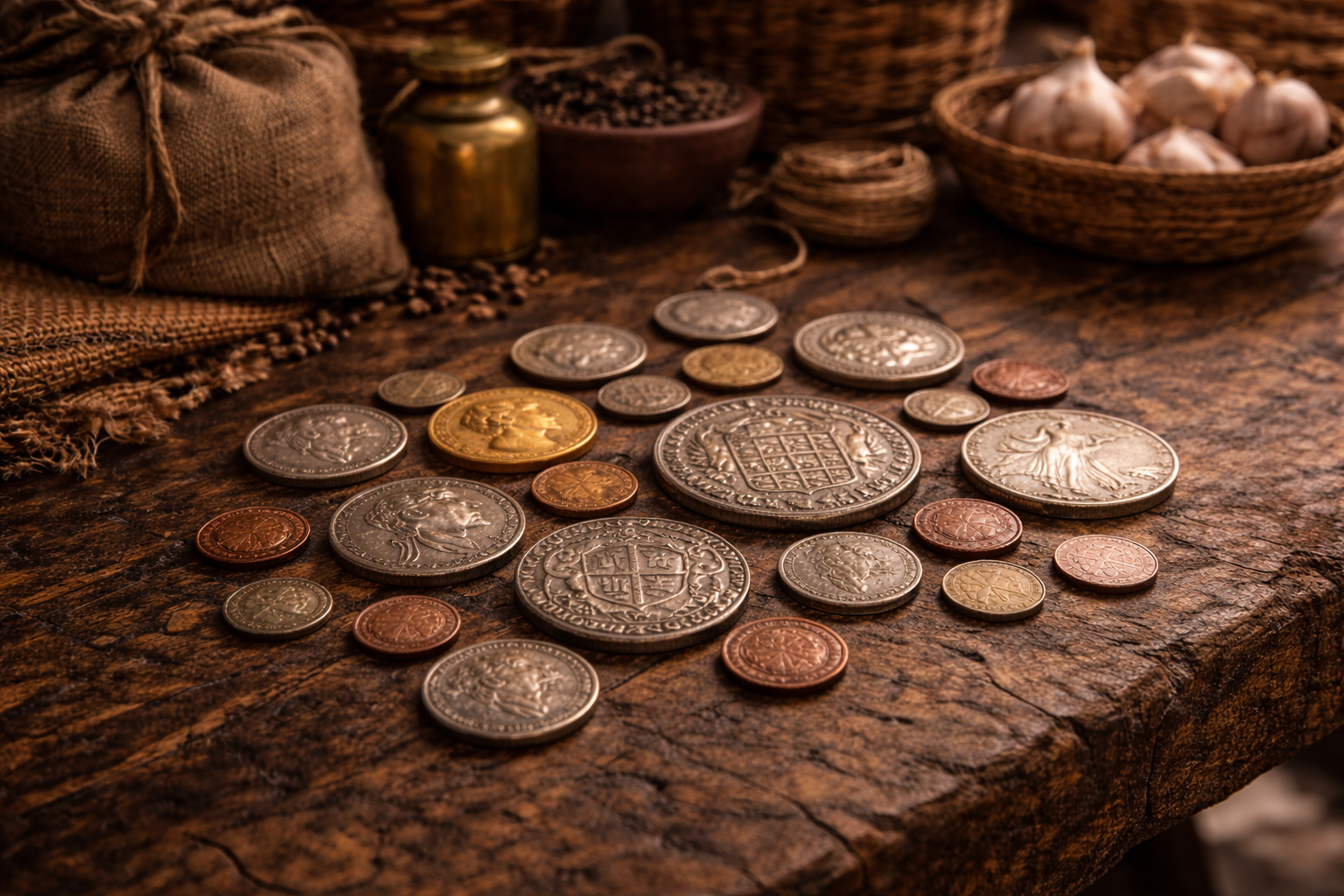
Everyday money is not just a tool for buying things. It is a mirror that reflects what people needed, what they trusted, and how they moved through ordinary life. The smallest payments often reveal the biggest patterns.
When you study daily coins and everyday currency, you see history at street level. Not grand speeches. Not rare treasures. You see routines, priorities, and the quiet rules that shaped real life across generations.
What this article shows
Everyday money mirrors daily life by reflecting routines, trust, and priorities. We focus on behavior and historical meaning, not pricing, valuation, or investment advice.
Why Everyday Money Works Like a Mirror
A mirror does not create reality. It reflects it. Everyday money works the same way. The coins and small payments that circulate daily reveal the shape of ordinary life. What people needed most often. What problems they tried to avoid. What felt normal.
When daily money is stable, routines become smoother. When daily money is confusing, life becomes slower. This is why everyday currency is such a useful historical source. It reflects behavior with almost no effort from the people using it.
The past is not only in big events. It is also in small payments repeated so often they became habit.
Daily Routines Hidden Inside Small Payments
Daily life is built from repeated choices. Food. Transport. Tools. Small services. Everyday money touched all of it. That is why it can mirror routines better than rare objects ever could.
The simplest coins often traveled the most. They passed through pockets, jars, counters, and hands that never appear in formal records. Yet these small movements show the rhythm of a society.
Markets Where Needs Become Visible
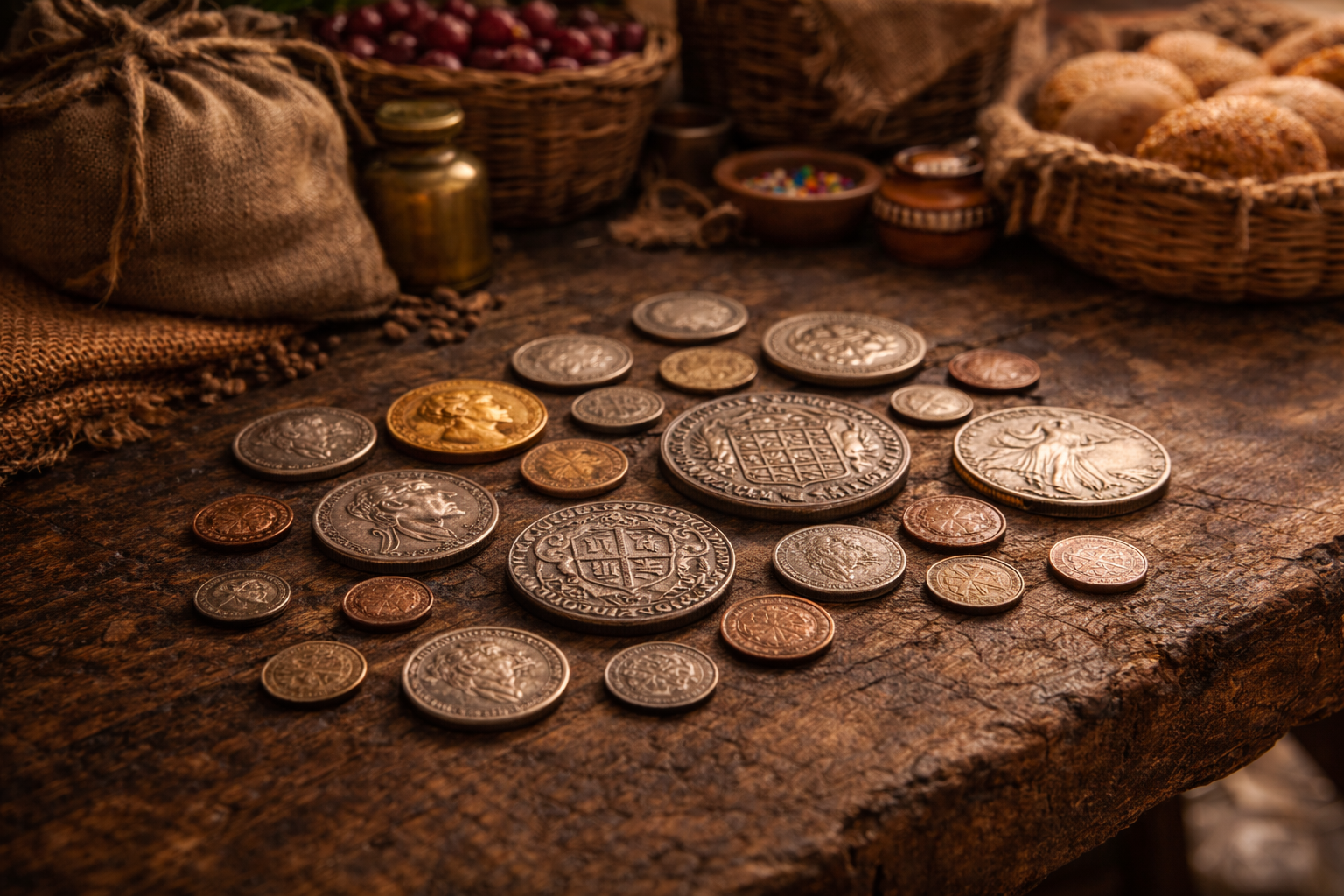
Markets reveal what people truly needed. Not what they admired from a distance, but what they actually bought and used. Everyday money made those choices visible by repeating them again and again.
If a society depends heavily on small change, it often means daily trade is fast and frequent. It means ordinary life involves constant small exchanges that keep communities connected.
Households Where Priorities Become Clear
Home is where money becomes personal. In a household, everyday coins shaped planning. Small saving habits. Shared costs. Daily choices that decided what could happen next.
Even a small amount of everyday money could represent independence. It allowed people to solve small problems quickly without waiting for help. That kind of freedom leaves a quiet signature in history.
Reality Check
Everyday money does not reflect what people wanted to display. It reflects what they actually did. That is why it is one of the most honest mirrors of daily life.
Trust and the Quiet Rules of Exchange
Trust is the hidden engine of daily money. People rarely want to inspect every coin or argue about every payment. They want recognition. Familiar signals that reduce hesitation.
Over time, repeated use builds shared rules. This coin is accepted. This amount feels fair. This exchange can happen quickly. These rules may be invisible, but they shape everyday life with surprising power.
What Everyday Money Usually Reflects
Everyday money mirror table
This table focuses on daily meaning and behavior. It avoids pricing and valuation and stays educational for AdSense safety.
| What money reflects | Where you see it | What it suggests | What it reveals about life |
|---|---|---|---|
| Daily needs | Market payments | Frequent small exchange | What people relied on most often |
| Household priorities | Saving and small planning | Routine decisions | How families managed uncertainty |
| Social trust | Public acceptance | Shared recognition | How communities reduced conflict |
| Life rhythm | Constant circulation | Repeat behavior | How fast or slow daily life moved |
Related PastMint stories
These two articles continue the Everyday Money theme and connect directly to the same street level view of history.
Final Verdict
Final Verdict
Everyday money mirrors daily life because it follows routine, not ceremony. It reflects needs, habits, trust, and priorities through constant use. If you want to understand how people truly lived in the past, follow the smallest payments. They often show the clearest reflection.
Frequently Asked Questions
Why does everyday money reflect daily life better than rare money
Because it is used constantly. Frequent use captures routine behavior, which is where daily life actually happens.
What does it mean to call money a mirror
It means everyday money reflects habits and priorities. It shows what people needed, trusted, and repeated day after day.
Is this article safe for AdSense
Yes. It is educational and historical, and it avoids pricing, valuation, and financial advice.