Why the U.S. Still Uses Pennies

Estimated reading time: 15 minutes.
If the penny feels outdated, the obvious question is why it still exists, especially in a world where digital payments dominate and small coins seem to have lost their purpose.
Despite all the pressure pushing it toward disappearance, the U.S. penny remains part of the system, quietly continuing its role even as many people stop noticing it.
Understanding this requires looking beyond simple economics and exploring how systems, habits, and history interact.
What this article explains
This article explains why the U.S. still uses pennies and how tradition, pricing systems, behavior, and policy debates keep the coin in circulation despite its declining relevance.
- The contradiction of the penny
- Why pricing still depends on cents
- The power of habit in money
- Tradition and national identity
- Why systems change slowly
- The ongoing policy debate
- Table of survival factors
- Reality Check
- Final Verdict
- FAQ
The contradiction of the penny
At first glance, the situation seems contradictory, because the same coin that is losing relevance is still being produced and used within the official system.
This creates a tension between logic and reality, where economic arguments suggest removal, but practical systems continue to support its existence.
As explained in why the U.S. penny is slowly disappearing , many factors are pushing the coin toward decline, yet those forces have not been strong enough to remove it completely.
Why pricing still depends on cents
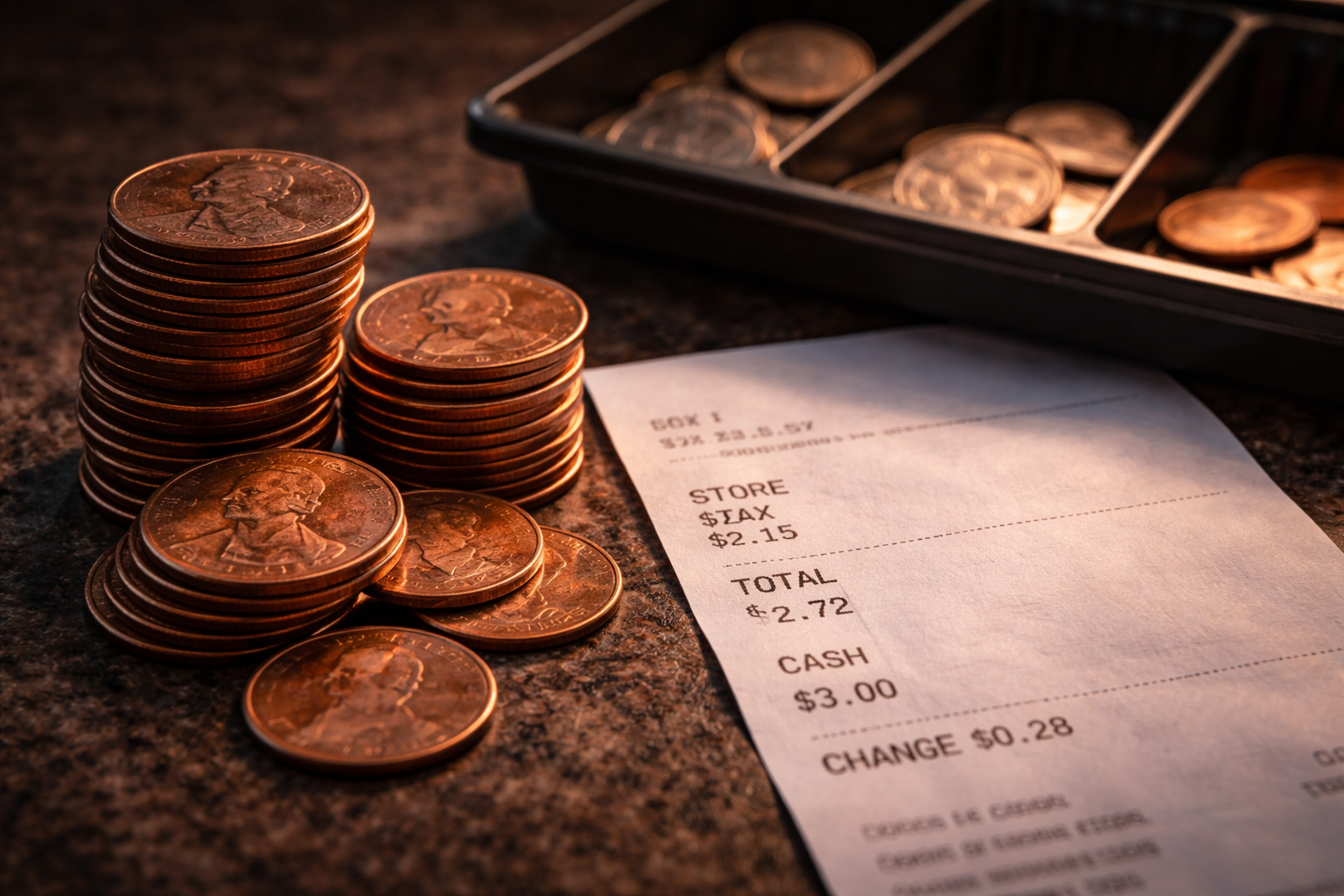
One of the strongest reasons the penny still exists is the pricing system itself, which continues to rely on exact cent values in everyday transactions.
Retail pricing often ends in small increments, and removing the penny would require adjustments to how totals are calculated, which introduces complexity that many systems are not ready to handle.
As long as pricing depends on precise values, the penny continues to have a functional role, even if that role is minimal.
The power of habit in money
Money is not only a system of value but also a system of behavior, and people tend to continue using familiar tools even when their usefulness declines.
The penny is deeply embedded in everyday habits, and changing those habits requires time, awareness, and often resistance to overcome.
This behavioral inertia helps explain why the coin continues to circulate, even when many individuals no longer actively rely on it.
Tradition and national identity
The penny is not just a unit of currency, but also a symbol, and symbols tend to last longer than purely practical tools.
It carries historical continuity, familiar design, and a sense of national identity that makes its removal more sensitive than it might appear at first.
For many people, the penny represents more than value, which adds another layer to the debate around its future.

Why systems change slowly
Large systems rarely change quickly, especially when they are deeply integrated into everyday life, and the monetary system is one of the most complex structures in any society.
Removing even a small part of that system requires coordination, policy adjustments, and public acceptance, which naturally slows down the process.
This explains why the penny remains, not because it is essential, but because change itself takes time.
The ongoing policy debate
The future of the penny continues to be discussed, with arguments on both sides focusing on cost, efficiency, and practicality.
Some support removing it due to economic inefficiency, while others support keeping it due to tradition and system stability.
You can explore this discussion further in why pennies are being discontinued .
As long as this debate remains unresolved, the penny will likely continue to exist.
Table of survival factors
| Factor | Why It Matters | Effect |
|---|---|---|
| Pricing System | Relies on exact cents | Keeps penny relevant |
| Habit | People resist change | Slows removal |
| Tradition | Symbolic value | Emotional resistance |
| System Inertia | Large systems change slowly | Delays decisions |
| Policy Debate | No agreement | Continued circulation |
Reality Check
The penny remains in circulation not because it is essential, but because systems, habits, and decisions take time to change.
“The penny survives not because it is needed, but because change has not fully replaced it yet.”
Final Verdict
The U.S. penny continues to exist because it is supported by a combination of habit, structure, and tradition, even as its practical value continues to decline.
Its presence shows that money does not disappear instantly, but instead fades gradually as the systems around it evolve.
FAQ
Why does the U.S. still use pennies
Because pricing systems, habits, and policy debates still support their existence.
Are pennies still useful
Their practical use is limited, but they still function within the system.
Will the penny be removed
It is possible, but no final decision has been made yet.