Why Experts Care More About Original Surfaces Than Shine
Estimated Reading Time: 15 minutes
A bright coin can be difficult to ignore. It catches the light immediately, looks clean in photographs, and may appear newer than another coin of the same date. For many beginners, that brightness feels like proof of quality. A coin that shines must be better preserved, more valuable, or closer to the way it looked when it left the mint.
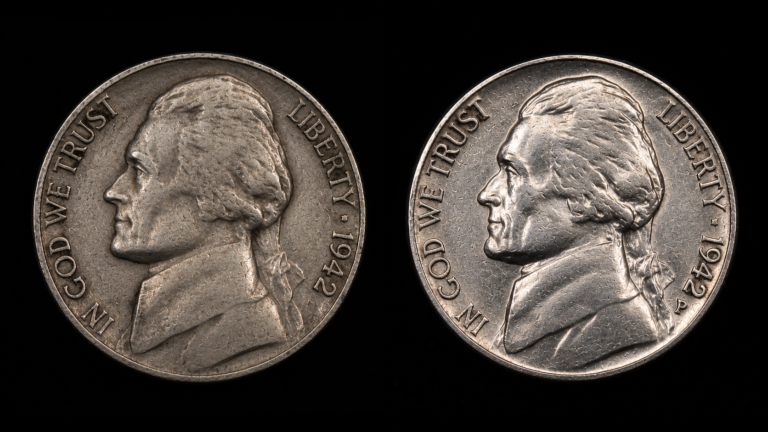
Experienced collectors know that brightness alone proves almost nothing. A coin may look brilliant because its original mint luster remains intact, but it may also look bright because someone polished, rubbed, dipped, or chemically treated the surface. Both coins can reflect light, yet only one may still preserve the microscopic texture created during the minting process.
This is why experts care more about original surfaces than shine. Originality preserves evidence. It shows how the metal flowed during striking, how the coin aged, where genuine wear developed, and whether the surface has remained largely undisturbed. Artificial brightness may make a coin look cleaner, but it can erase the very characteristics collectors need in order to understand it accurately.
What This Article Explains
- What collectors mean when they describe a coin as original.
- Why an original surface does not have to look perfect or bright.
- The difference between natural mint luster and artificial shine.
- How cleaning, polishing, and rubbing change metal surfaces.
- Why natural color and toning can be signs of preservation.
- How experts use movement and directional light to judge originality.
Table of Contents
What Collectors Mean by Original Surfaces
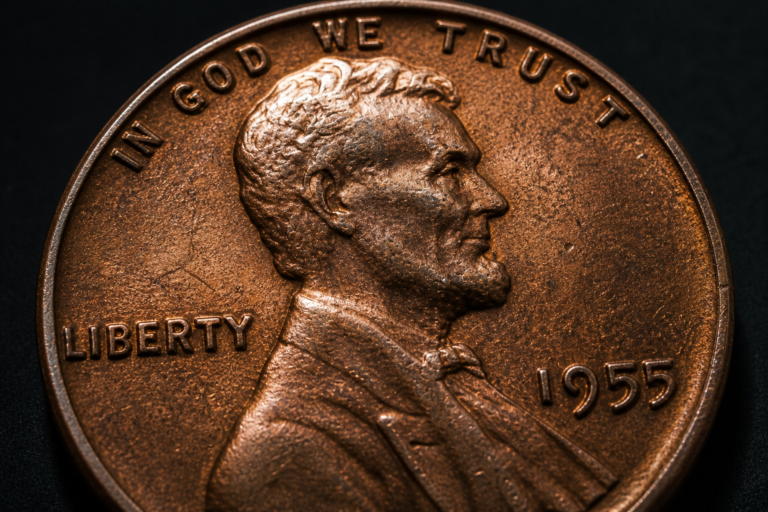
When experienced collectors describe a coin as having original surfaces, they are not claiming that the coin has remained untouched by time. Originality does not mean the coin is flawless, uncirculated, perfectly colored, or free from every mark. It means the surface has not been deliberately or severely altered after minting.
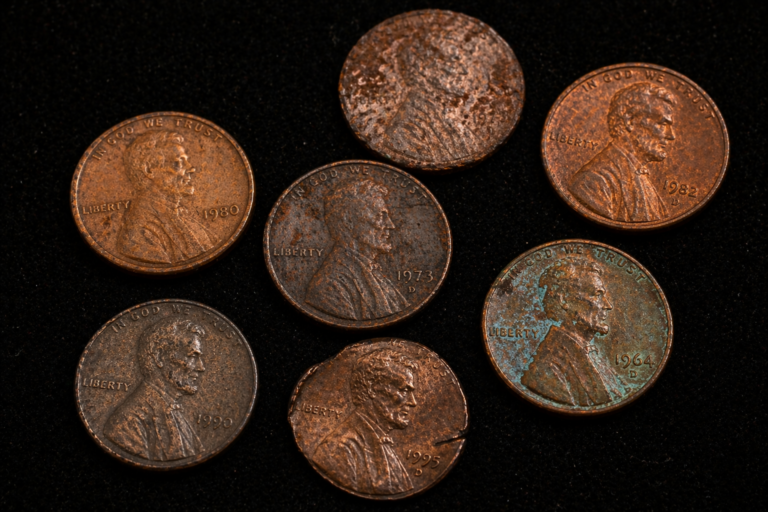
An original coin may have contact marks from other coins. It may show natural circulation wear. It may have darker areas, uneven color, or toning that developed during storage. Copper may turn from bright red to reddish brown or deep brown. Silver may develop grey, gold, blue, or darker tones. These changes can occur naturally without destroying the underlying surface.
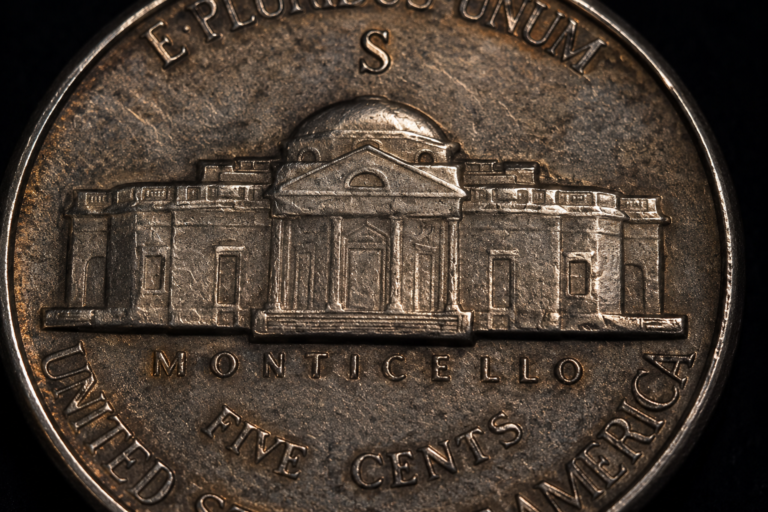
What collectors want to preserve is the metal texture created when the dies struck the planchet. That texture contains microscopic flow lines, subtle contours, and reflective patterns that are difficult or impossible to restore after they have been removed.
This concept connects directly with how tiny surface changes reveal a coin’s history. The surface is not simply a background for the design. It is part of the evidence. Every reflection, texture change, worn area, and color transition helps explain what happened to the coin after it was made.
Original Does Not Mean Perfect
Beginners sometimes reject original coins because they expect originality to look fresh and untouched. They may see a naturally toned cent and assume it is dirty. They may notice a few small marks and conclude that a brighter coin must be superior.
Experts separate originality from perfection.
A coin can be completely original and still have circulated for decades. It can retain honest wear while showing no signs of cleaning. Another coin can have sharper detail and brighter color but still be less desirable because polishing disturbed the surface.
This distinction is important because collectors are not only judging appearance. They are judging authenticity of preservation. A coin with honest wear tells a consistent story. The high points, fields, lettering, color, and luster all fit together. A heavily cleaned coin may tell a confusing story: bright fields beside worn design elements, unnatural color in protected areas, or sharp reflections interrupted by fine hairlines.
The goal is not to find a coin that looks new at any cost. The goal is to find a coin whose appearance remains believable for its age, grade, metal, and history.
Why Bright Does Not Always Mean Better
Brightness is one of the easiest visual qualities to create artificially. A cloth, abrasive paste, chemical dip, eraser, brush, or household cleaner can make metal look brighter within minutes. The result may be attractive to someone who expects old coins to look polished, but numismatically the surface may now be less informative and less desirable.
The problem is not simply that the color changed. Cleaning can remove metal, flatten microscopic flow lines, create hairlines, and alter the way light travels across the surface. A polished coin may become extremely reflective, but the reflection is often harsh, flat, or disconnected from the original design.
Experts therefore ask a different question. They do not ask only, “How bright is this coin?” They ask, “Why is it bright?”
Does the brightness come from intact mint luster? Is it limited to protected areas? Does it move in a natural pattern as the coin rotates? Does the color make sense for the metal and age? Or does the entire surface reflect light with the uniform appearance of recently polished metal?
This habit is similar to why experts look for missing detail instead of damage. Beginners often respond to the most obvious feature. Experts investigate what produced that feature.
Original Luster vs Artificial Shine
Luster and shine are often treated as if they mean the same thing, but experienced collectors use them very differently.
Mint luster is created when the dies strike the coin under pressure. During that moment, metal flows outward and fills the recessed parts of the dies. This movement creates extremely fine lines and patterns across the surface. When light reaches those microscopic structures, it produces a flowing reflection that changes as the coin rotates.
On many uncirculated coins, this movement creates the familiar cartwheel effect. Bands of light appear to travel around the surface rather than remaining fixed in one place.
Artificial shine is usually more superficial. Polishing may smooth the metal until it reflects light strongly, but the original flow pattern can become weakened or erased. The surface may look bright from every angle while lacking the controlled movement associated with mint luster.
This difference cannot always be understood from a single photograph. A polished coin may look spectacular in a carefully lit image. Only rotation reveals whether the brightness moves naturally or remains flat and mirror-like.
Why Movement Under Light Matters More Than Brightness
A still coin gives limited information. Its brightness depends heavily on the position of the lamp, camera, and viewer. A coin can look dark from one angle and brilliant from another without changing in any meaningful way.
Movement solves this problem.
When an expert tilts a coin slowly beneath a single directional light, the reflections begin revealing the structure of the surface. Original luster usually travels across the fields and around the design. Areas of wear may interrupt that movement. Cleaning lines may flash briefly. Polished regions may reflect light too evenly or too harshly.
This is why experts rotate coins under light rather than judging them from a fixed position. They are not simply trying to see more brightness. They are studying how the brightness behaves.
The path of the light matters. Healthy luster often follows the shape of the coin and changes continuously as the viewing angle changes. Artificial shine may produce a broad reflection that sits on top of the surface without revealing the same depth or texture.
Experts also watch for consistency. Does the light move similarly across the portrait and the fields? Are protected areas near letters and devices different from exposed areas? Does one section look unusually bright while the rest appears natural?
These differences can indicate localized rubbing, wiping, spot cleaning, or uneven chemical treatment. They may be invisible when the coin is held still.
Why Cleaning Changes a Coin Permanently
Cleaning is often described as though it removes something unwanted while leaving the coin unchanged. In reality, many cleaning methods alter both the contamination and the metal beneath it.
Abrasive cleaning is especially destructive. Rubbing with cloth, paste, brushes, erasers, or powders can cut thousands of fine lines into the surface. These hairlines may be difficult to see under soft light, but they become obvious when the coin is tilted.
Polishing can be even more dramatic. It smooths the surface, rounds tiny design edges, and creates a reflective finish that never existed at the mint. The coin may appear more attractive to a non-collector, yet much of its original character has been removed.
Chemical treatment can also alter the surface. Some dips remove toning and brighten silver, but overuse can leave the coin dull, washed out, or lifeless. Copper is particularly sensitive because its color and surface chemistry can change quickly after treatment.
Once the original microscopic texture has been disturbed, it cannot be placed back onto the coin. New toning may develop later, but toning cannot recreate lost mint flow lines. A cleaned coin may age again, yet its surface remains altered beneath the color.
This permanent change explains why experts are cautious even when cleaning seems visually successful. They understand that the improvement in brightness may have been purchased by removing evidence that can never be recovered.
A Lincoln Cent Example
Lincoln cents make the difference between originality and shine especially easy to study because copper reacts visibly to both age and handling.
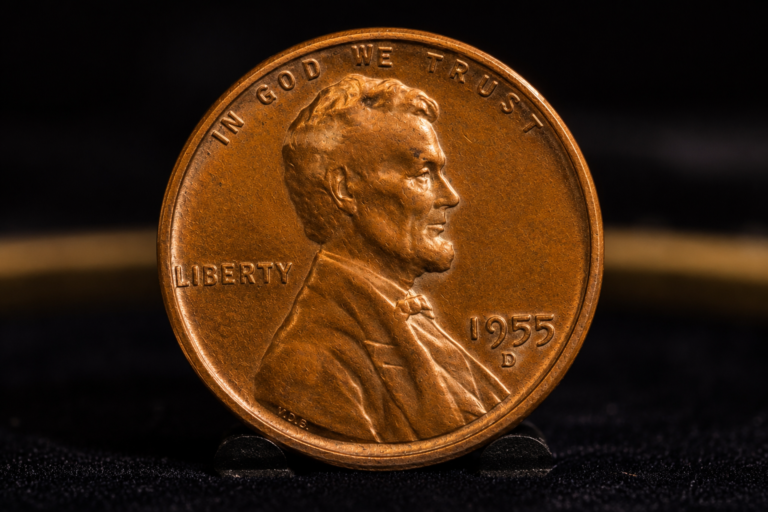
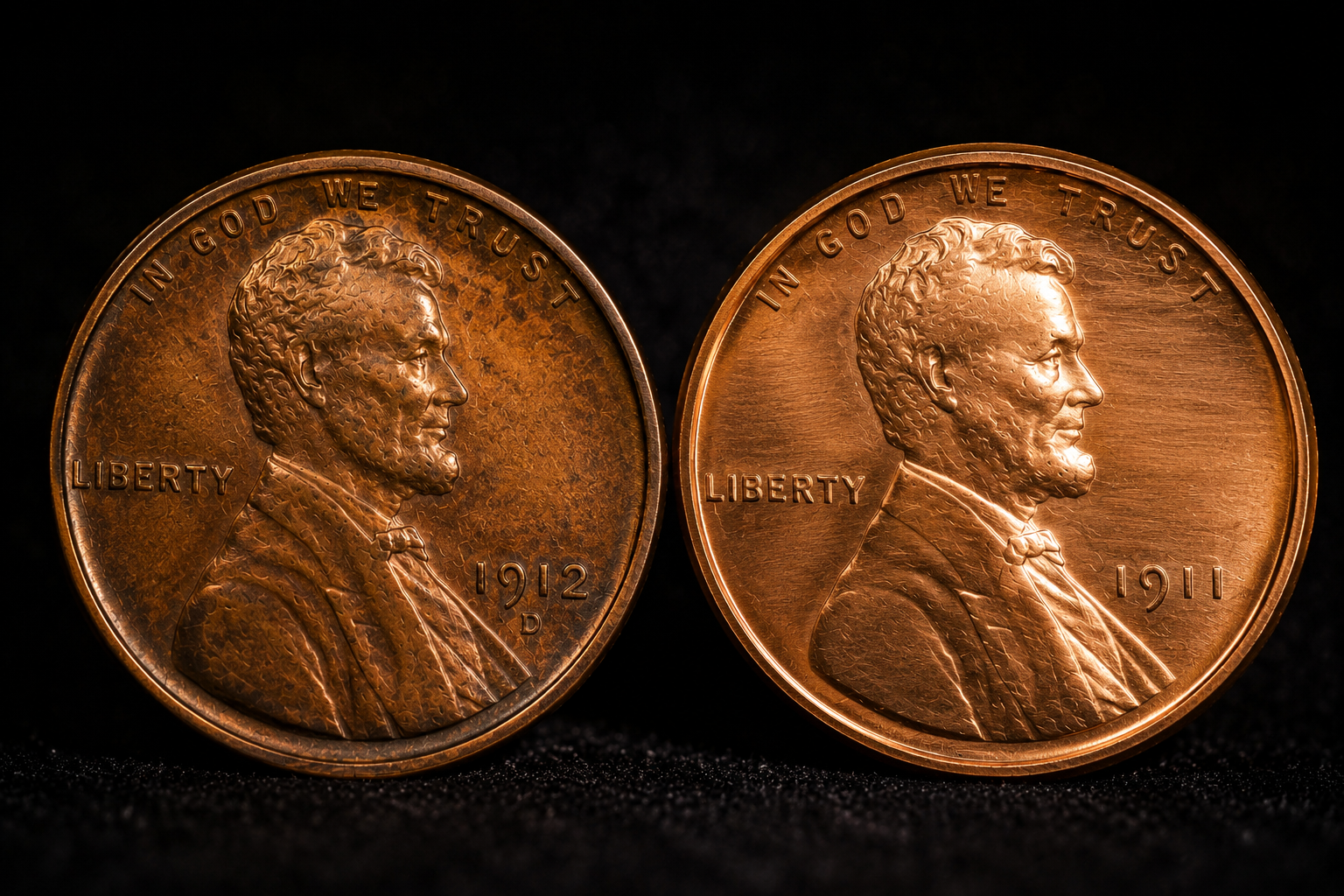
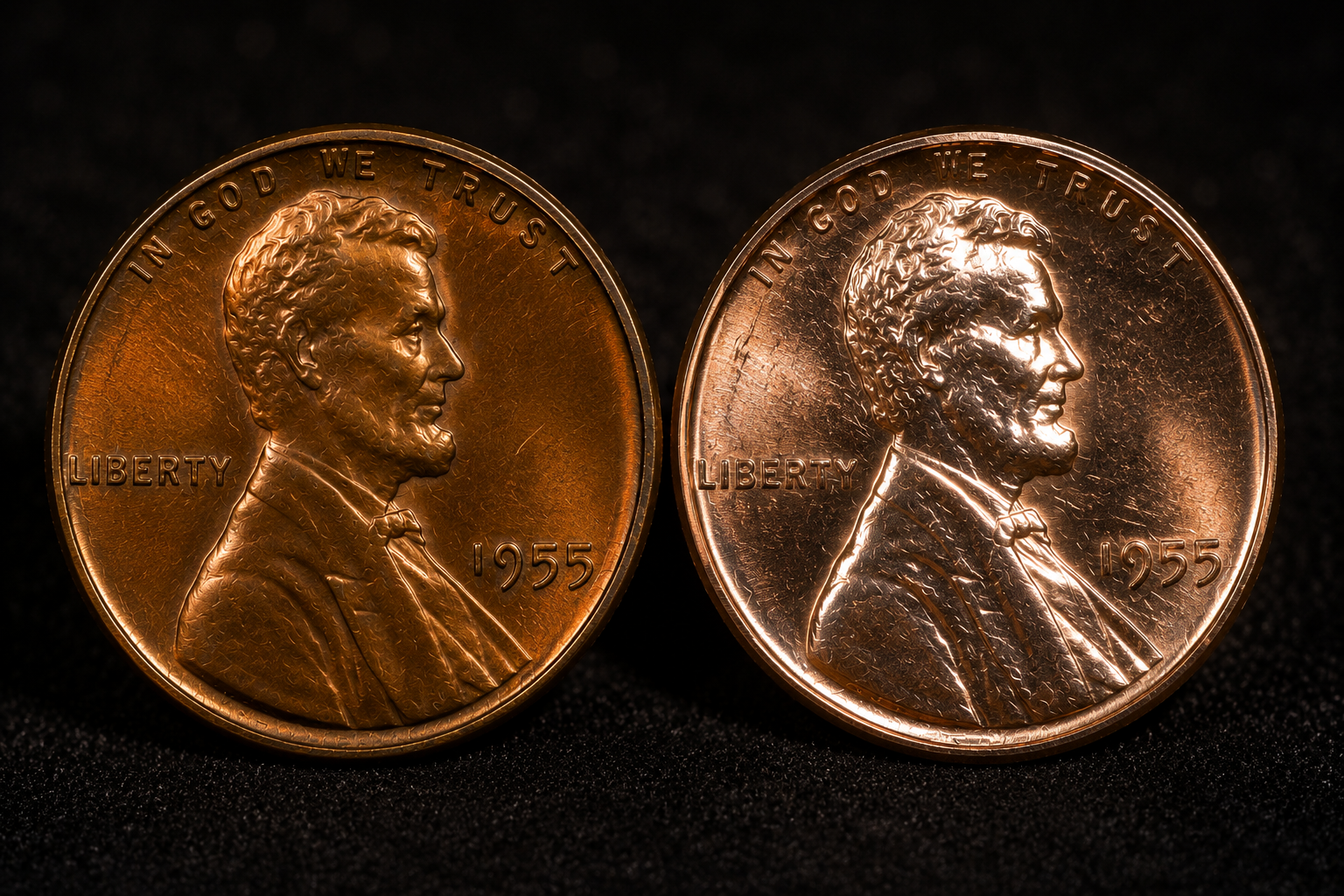
Consider two Wheat cents from the same year. The first has warm brown color, several tiny marks, and a surface that appears modest under room light. When rotated beneath a lamp, however, traces of natural luster move through the protected areas around the lettering and portrait. The color changes gradually, and the surface texture remains consistent.
The second coin is brighter and more orange. It looks cleaner and may initially appear more impressive. Under directional light, the fields reflect strongly, but the light does not flow naturally. Fine parallel lines appear across Lincoln’s portrait, and the protected areas beside the letters have nearly the same brightness as the exposed fields.
The second cent may look newer, but the first is more likely to preserve original surfaces.
An expert does not automatically reject every bright copper coin. A genuinely uncirculated red cent can be both bright and original. The decision depends on whether the color, luster, texture, and design remain consistent with one another.
This is also why two coins with the same grade can look completely different. Grade alone cannot describe every aspect of surface quality. One coin may offer stronger originality, more natural color, or better luster even when the numerical grade is identical.
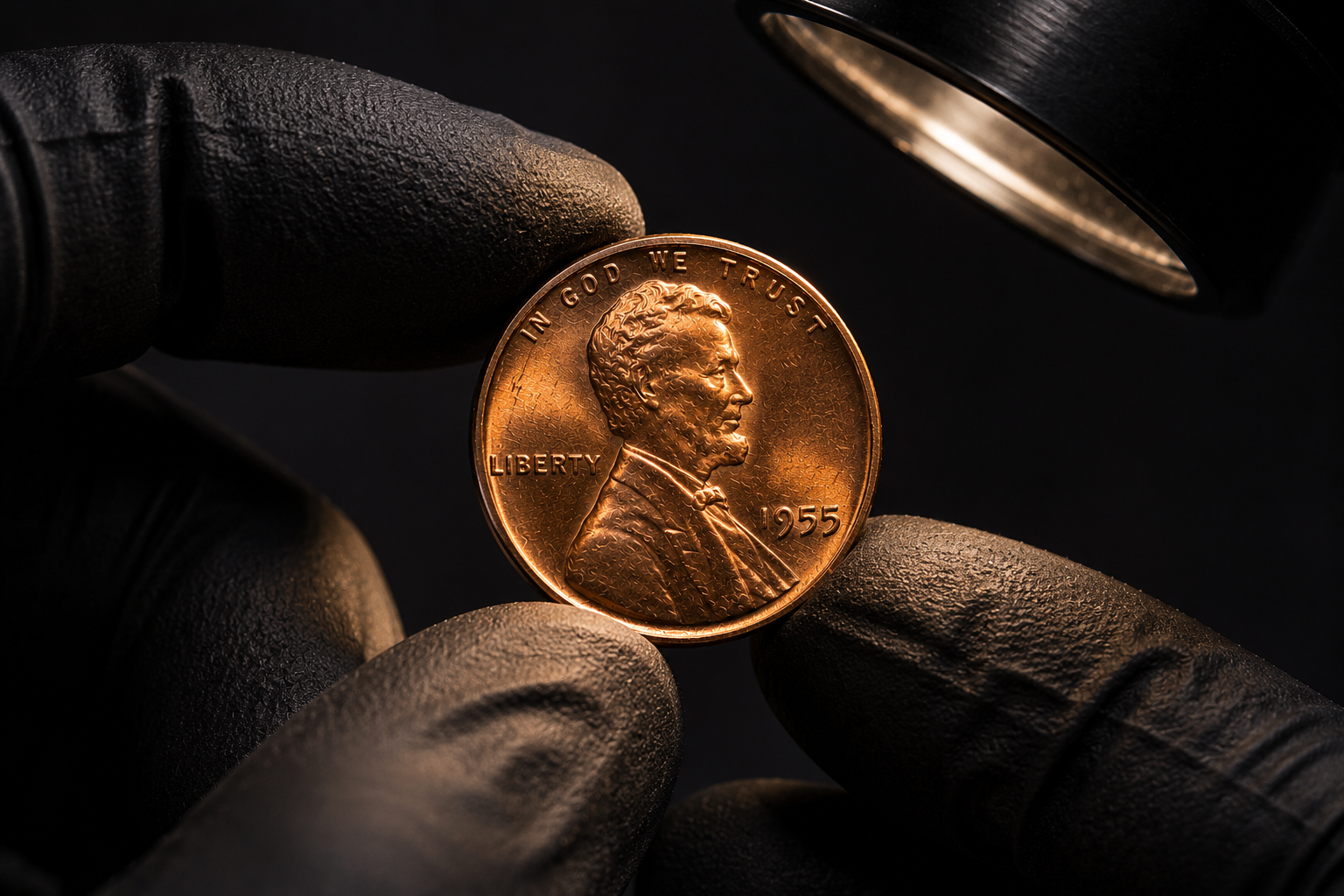
How Experts Evaluate Surface Originality
Experts do not decide that a coin is original because of one isolated clue. Surface originality is evaluated by combining color, texture, luster, wear, strike quality, and the way each area responds under light.
The first clue is often consistency. An original coin usually presents a surface that makes visual sense from one area to another. The fields, portrait, lettering, and protected spaces may reflect light differently because of their shape, but they still appear to belong to the same coin.
A disturbed coin can look less consistent. One field may appear unusually bright. The portrait may contain fine lines that become visible only at certain angles. Protected areas beside letters may retain darker color while exposed surfaces look freshly polished. These differences suggest that the surface has been altered after minting.
Experts also examine the relationship between wear and brightness. A circulated coin with flattened high points should not usually display the same appearance as a freshly struck example. If heavily worn areas remain unusually bright while protected areas show little natural color, the surface deserves closer inspection.
Originality is therefore not judged by asking whether the coin looks old or new. It is judged by asking whether every visible characteristic fits together naturally.
Protected Areas Can Reveal the Truth
Some of the most valuable clues are found in the smallest spaces on the coin.
Protected areas sit close to raised letters, dates, mint marks, rims, and portrait details. Because they are less exposed to circulation, rubbing, and handling, they often retain more original color and texture than open fields.
On a Lincoln cent, experts may study the narrow spaces around the date, inside the lettering, beneath Lincoln’s chin, and beside the coat. These locations can preserve traces of original luster even when the rest of the coin has experienced light wear.
If the protected areas retain a natural appearance while the open fields show slightly softer color, the difference may be completely normal. If the open surfaces are intensely bright but the protected areas remain dark, the contrast may suggest polishing or incomplete cleaning.
Cleaning often struggles to reach every recessed space evenly. The result can be a coin with bright exposed areas and darker material trapped around the design. This pattern does not prove alteration by itself, but it gives the collector a reason to investigate further.
Experts read these protected spaces because they can preserve evidence that the more visible areas have lost.
Why Natural Toning Is Not Automatically a Problem
Many beginners see toning as something that should be removed. They assume that darkening, brown color, or uneven shades make a coin less attractive or less valuable.
Experienced collectors understand that toning is a natural chemical reaction between metal and its environment. Copper, silver, nickel, and other coinage metals change appearance over time. The exact result depends on storage, humidity, temperature, packaging materials, and exposure to air.
Natural toning can protect evidence of originality because it develops gradually over the existing surface. It may highlight flow lines, settle differently around design elements, or create color transitions that would be difficult to reproduce through polishing.
Not all toning is attractive, and not all color is natural. Some coins develop dark spots, corrosion, or environmental damage. Artificial toning can also be created intentionally. The presence of color alone is therefore not enough to prove originality.
The important question is whether the toning appears consistent with the coin’s metal, age, and surface texture. Natural color usually works with the underlying luster rather than covering it completely. When the coin moves, light may still travel beneath or through the toned surface.
This is why experts often prefer a naturally toned coin over a brighter example that has lost its original texture. The darker coin may preserve more evidence, even if it appears less dramatic in a photograph.
Why Photographs Can Make Cleaned Coins Look Better
Online photographs can make artificial shine difficult to identify. A bright coin may photograph exceptionally well because strong reflections create contrast and make the design appear sharp.
The camera records only one lighting arrangement at one moment. It cannot automatically show how luster moves, whether hairlines flash at another angle, or whether the surface becomes flat when rotated.
Sellers can also adjust brightness, contrast, sharpness, and color temperature. Even without intentional deception, these settings may make a cleaned coin appear more natural than it does in hand.
An original brown cent may look dull in one image while a polished cent looks brilliant. In person, however, the original coin may show depth, texture, and moving luster that the photograph failed to capture.
This is why experienced collectors avoid judging surface originality from one image alone. They look for photographs taken under different angles, ask whether the seller describes cleaning, and compare the reflections across multiple areas.
Images are useful, but they are not a substitute for movement. Original surfaces reveal their strongest evidence when the coin is tilted beneath light.
Common Beginner Mistakes
The most common mistake is assuming that dirt and toning should be removed. A beginner may believe they are protecting the coin by making it cleaner, when the process can permanently reduce its collector appeal.
Another mistake is confusing any brightness with mint luster. A coin can be highly reflective without retaining the microscopic surface structure created at the mint.
Beginners may also compare coins under different lighting conditions. One coin photographed beneath a bright lamp can appear superior to another photographed under soft natural light, even when the second coin has much better surfaces.
Some collectors focus only on scratches and miss broader texture changes. Polishing can disturb an entire field without leaving one large mark. The surface may look smooth and bright while still being clearly altered.
Another common error is assuming that every old coin should be dark. Originality is not determined by age alone. Some carefully stored copper coins retain red color, and some silver coins remain brilliant for decades. The question is not whether the coin is bright, but whether that brightness is supported by natural luster and intact texture.
Finally, beginners sometimes believe that a cleaned coin can become original again after enough time. New toning may hide part of the alteration, but it cannot restore removed metal or recreate mint flow lines.
How to Train Your Eye
The best way to understand original surfaces is through controlled comparison.
Choose several coins of the same denomination and type. Place them beneath one directional light source and examine each coin from the same distance.
Begin by holding the first coin still. Notice its brightness, color, and visible marks. Then rotate it slowly and watch how the reflections move.
Repeat the process with the other coins.
Look for flowing bands of light, interruptions on the high points, bright protected areas, flat reflections, and fine lines that appear only during movement.
Do not try to assign grades immediately. The goal is simply to recognise different surface behaviours.
Comparing similar coins is especially effective because differences become easier to identify. Two Lincoln cents may have nearly identical wear, but one may display natural texture while the other shows harsh shine. Side-by-side examination makes that contrast clearer.
This practice follows the same logic explained in why experts compare coins side by side. Visual memory develops faster when the eye can study several examples under identical conditions.
Over time, the difference between original luster and artificial shine becomes less mysterious. You begin to recognise originality as a combination of movement, texture, color, and consistency rather than one simple appearance.
| Feature | Original Surface | Artificial or Disturbed Surface |
|---|---|---|
| Light Movement | Flows naturally as the coin rotates | May appear flat, harsh, or uneven |
| Texture | Retains mint-created surface character | May appear smoothed, rubbed, or polished |
| Color | Usually consistent with metal, age, and storage | May look unusually bright or chemically altered |
| Protected Areas | Often retain stronger luster or natural color | May contrast sharply with cleaned open fields |
| Hairlines | Absent or limited to ordinary contact | Fine parallel lines may appear under angled light |
| Collector Appeal | Often preferred for authenticity and history | Frequently discounted because originality is lost |
Why Original Surfaces Matter to Long-Term Value
Collectors value original surfaces because they are finite. Every year, more coins are cleaned, polished, damaged, or improperly stored. Once a surface has been altered, the number of surviving original examples becomes smaller.
This scarcity can influence demand. Two coins with similar detail may receive very different market reactions if one retains natural surfaces and the other shows obvious cleaning.
Originality can also strengthen confidence. A coin with consistent wear, natural color, and undisturbed texture is easier to evaluate because the evidence remains visible. Alteration can hide or confuse that evidence.
This does not mean every original coin is valuable. Date, mint mark, rarity, grade, demand, and eye appeal still matter. A common worn coin remains common even when its surfaces are original.
However, when collectors compare similar coins, originality often becomes a deciding factor. The coin that preserves more of its authentic surface usually offers a stronger connection to its history and may be easier to sell later.
Reality Check
Not every bright coin is cleaned, and not every dark coin is original. Some uncirculated coins retain brilliant natural luster, while altered coins can develop new toning over time. Experts reach conclusions only after studying light movement, texture, color, wear, and protected areas together.
“Shine tells you how strongly a coin reflects light. Originality tells you whether the surface still preserves its history.”
Final Verdict
Experienced collectors care more about original surfaces than shine because brightness can be created, while originality can only be preserved. Natural mint luster, consistent texture, believable color, and undisturbed protected areas provide evidence about how a coin was struck, stored, handled, and circulated. Cleaning or polishing may make a coin look newer, but it can erase microscopic details that never return. The best evaluation therefore begins not by asking which coin is brightest, but by asking which coin still retains the most authentic surface.
Frequently Asked Questions
Does a shiny coin always mean it has been cleaned?
No. Uncirculated coins can retain strong natural brightness and original mint luster. The key is how the light moves across the surface and whether the texture, color, and protected areas remain consistent.
Can an old coin still have original bright surfaces?
Yes. Coins stored carefully in stable conditions may retain significant original luster for decades. Age alone does not determine whether a coin should be dark or toned.
Is natural toning better than cleaning?
Collectors generally prefer natural toning over abrasive or harsh cleaning because toning can develop without removing the original metal texture. However, unattractive or damaging environmental reactions can still affect a coin negatively.
Can cleaning be reversed?
No. Color may change again over time, but removed metal, flattened flow lines, and polishing marks cannot be restored to their original mint condition.
Why do experts rotate coins under light?
Rotation reveals how reflections travel across the surface. Original luster usually moves in a structured pattern, while cleaning, wear, and polishing can interrupt or flatten that movement.
Should collectors ever clean coins at home?
Collectors should avoid rubbing, polishing, or using household cleaners on collectible coins. Improper treatment can permanently alter the surfaces and reduce collector appeal.