Why One Small Mark Doesn’t Always Lower a Coin’s Grade
Estimated Reading Time: 9 minutes
Finding a mark on an otherwise attractive coin can feel like discovering a serious problem. A small scratch crosses the field, a contact mark sits near the portrait, or a tiny nick appears beside the lettering, and a beginner may immediately assume the coin must receive a lower grade. Professional coin evaluation is rarely that automatic.
Experts certainly care about marks, but they do not treat every mark equally. A tiny contact mark near the rim does not necessarily have the same importance as an equally sized mark across Lincoln’s cheek. Depth matters. Location matters. Visibility matters. The condition of everything surrounding the mark matters too. Grading is an evaluation of the entire coin, not a system in which every imperfection subtracts a fixed number of points.
Learning this changes the way you examine coins. Instead of asking, “Does this coin have a mark?” you begin asking the more useful question: “How much does this particular mark affect the coin as a whole?” That is much closer to the way experienced collectors and graders think.
What This Article Explains
- Why one mark does not determine a coin’s grade by itself.
- Why the location of a mark can matter more than its size.
- How experts consider depth, severity, and visibility.
- Why graders do not simply count every contact mark.
- How luster and surrounding surface quality affect what you see.
- When one individual mark really can become important.
Table of Contents
A Mark Is Not a Grade by Itself
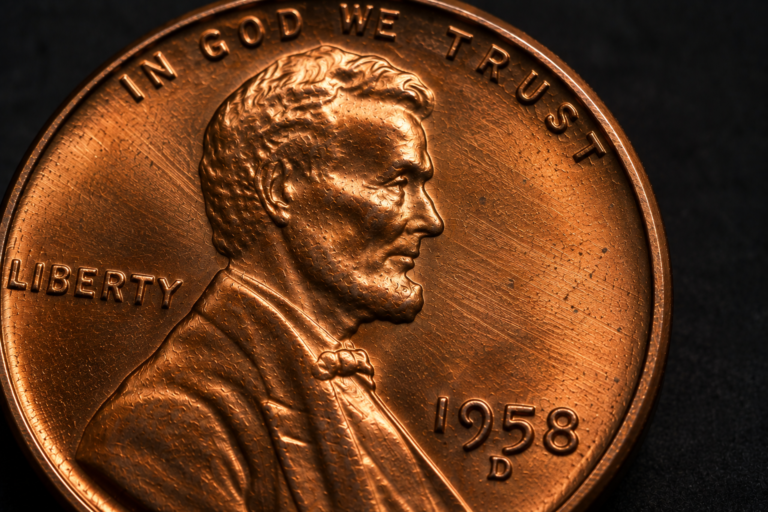
Coins acquire marks in many ways. Even a coin that never entered circulation can contact other coins during mint handling, transportation, or storage. These marks are commonly called contact marks or bag marks, a term associated with coins striking or rubbing against one another during bulk handling.
The presence of a contact mark therefore does not automatically prove circulation wear, nor does one minor mark automatically push a coin into a particular grade. Experts consider marks as one part of a larger evaluation that also includes wear, luster, strike, surface preservation, and eye appeal.
This is why experts evaluate the entire coin before focusing on individual flaws. They first develop an overall impression, then investigate the features responsible for that impression.
A well-preserved coin with strong luster, sharp detail, and attractive surfaces does not suddenly become poor because of one insignificant contact mark. At the same time, one severe mark can become important if it dominates a visually sensitive part of the design.
Context is everything.
Why Location Can Matter More Than Size
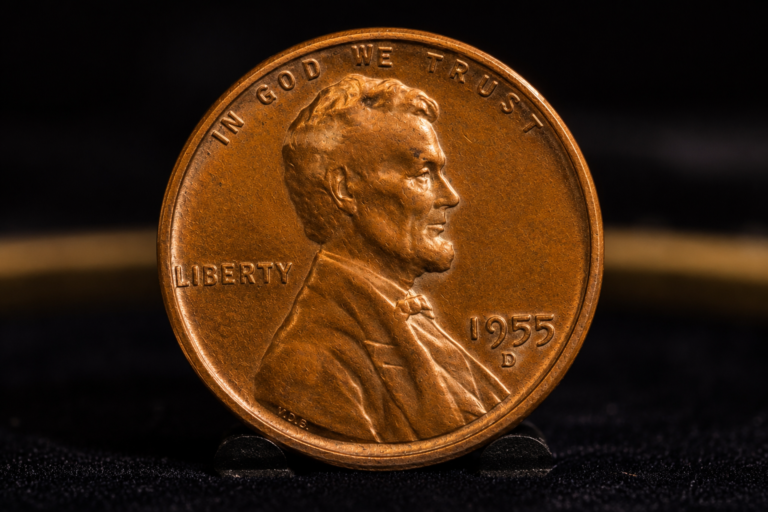
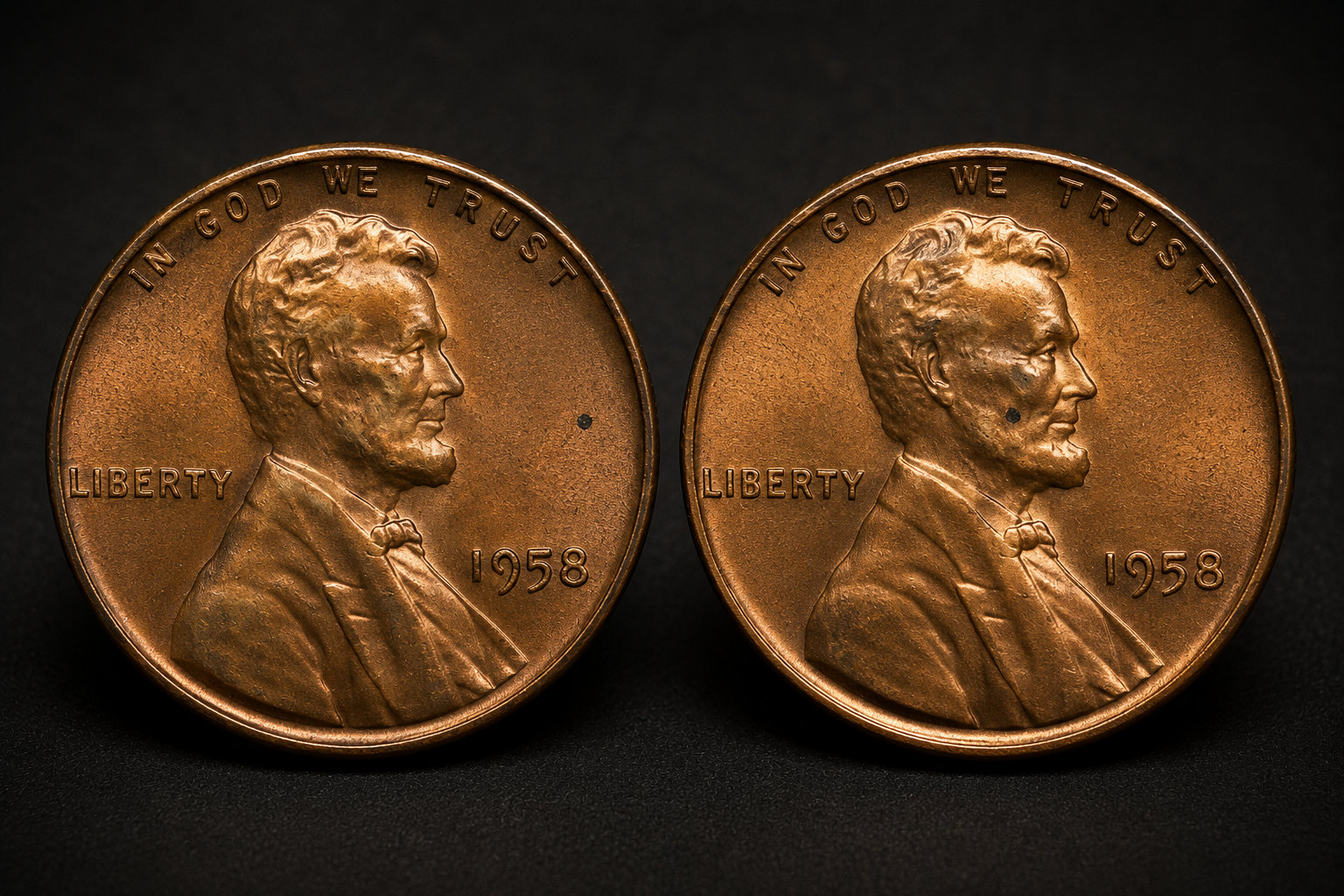
Imagine two Lincoln cents with marks of almost identical length and depth. On the first coin, the mark sits close to the rim in an area that does not attract much attention. On the second, it crosses Lincoln’s cheek.
Although the physical marks may be similar, their visual effect is not.
Lincoln’s face is a major focal area. The eye naturally moves toward it, which means a mark there can become noticeable almost immediately. A similar mark near the edge may blend into the surrounding design and have much less influence on overall eye appeal.
This principle applies across American coinage. Marks on prominent portrait areas, broad open fields, and other visually important locations often attract more attention than marks hidden among detailed design elements.
That does not mean graders use a simple map where one location always receives a fixed penalty. Coin grading is more nuanced than that. Location is considered together with severity, visibility, and the overall condition of the surfaces.
Size, Depth, and Severity Matter
The word “mark” covers many different types of surface disturbance. A tiny contact tick, a light abrasion, a noticeable scratch, and a deep gouge are not equivalent.
A shallow contact mark may be visible only when light reaches it from a particular direction. A deeper mark can cut through the surface and remain obvious from several viewing angles. Severe damage may even distort nearby metal or interrupt design elements.
Length also matters, but length alone does not determine severity. A longer, extremely light line can sometimes be less distracting than a short but deep hit on a portrait.
Experts therefore consider the physical character of the mark rather than simply recording its existence. They ask how deep it appears, whether metal has been displaced, whether it crosses important detail, and how strongly it attracts attention under normal examination.
This is another reason experts do not let obvious damage dominate the entire evaluation. Surface problems need to be interpreted in relation to the design and preservation of the coin around them.
Why Experts Do Not Simply Count Marks
It would be convenient if grading worked by counting marks. Three marks might equal one grade, five another, and ten another. Real coins make such a system impossible.
Ten microscopic contact ticks scattered through detailed areas may be less visually distracting than one deep mark across a clean open field. Several small marks can also blend into a heavily textured design, while a single mark on a smooth cheek may become the first feature anyone notices.
The distribution of marks matters as well. A cluster of hits concentrated in one focal area can create a much rougher impression than the same number of minor marks spread across the entire coin.
Experts are therefore evaluating the combined effect of the marks rather than producing a simple total.
This explains part of the reason coins with the same numerical grade can have different eye appeal. One coin may have several minor scattered marks, while another has fewer but more noticeable marks. Their surfaces can look quite different even when their overall technical evaluations fall within the same grade.
How Luster Changes the Visual Impact of a Mark
A mark does not exist visually in isolation. The surrounding surface changes how strongly you notice it.
On a coin with vibrant original luster, moving reflections can make small contact marks appear and disappear as the viewing angle changes. On a dull or heavily disturbed surface, the same mark may behave differently because the surrounding metal no longer reflects light in the same way.
Strong luster does not erase a mark or make it irrelevant. It simply forms part of the overall surface quality being evaluated.
This is why experts examine luster before being distracted by appearance. Watching how light travels across the entire coin helps reveal both the quality of the original surface and the true visibility of individual imperfections.
Directional light is especially useful. A mark that seems severe under one harsh reflection may become far less noticeable when the coin is viewed normally. Another mark may look insignificant while the coin is still but flash strongly every time it rotates.
Experts care about this behavior because grading is not based on finding the worst possible angle from which to make a coin look bad. The goal is to understand how the surface presents as a whole.
One Mark vs Overall Surface Preservation
Suppose a Lincoln cent has strong original luster, clean fields, sharp detail, and only one noticeable contact mark. Compare it with another cent that has no single dramatic mark but dozens of small abrasions covering much of the surface.
Which coin has better surfaces?
The answer cannot be found by identifying the largest individual mark. The first coin may still present as cleaner and more attractive overall because most of its surface remains exceptionally well preserved.
This is one of the most important transitions from beginner evaluation to expert evaluation: stop allowing one feature to represent the entire coin.
The same principle applies to color, strike, wear, and luster. No single characteristic should automatically replace the complete evaluation.
When One Mark Really Can Matter
None of this means individual marks are unimportant. Sometimes one mark really does change the character of a coin.
A deep gouge across a portrait can dominate the entire obverse. A severe scratch through an important design element can become impossible to ignore. Significant post-mint damage can also move beyond ordinary grading considerations and lead to a coin being treated as problem-damaged rather than simply having routine contact marks.
Location again becomes critical. A noticeable mark in a prime focal area may affect eye appeal far more than several smaller imperfections elsewhere.
The key is proportional judgment. Experts neither panic over every tiny tick nor ignore serious damage. They determine how strongly the mark changes the overall impression of the coin.
How to Evaluate a Mark Like an Expert
When you notice a mark, resist the temptation to make an immediate judgment. Start by examining its location. Is it on a major focal area, an open field, a high point, or a less noticeable part of the design?
Next, examine its physical character. Is it shallow or deep? Does it merely interrupt the surface, or has it displaced metal? Does it cross important design detail?
Then rotate the coin under directional light and judge visibility. Does the mark dominate from normal viewing angles, or does it appear only under one narrow reflection?
Finally, look away from the mark and evaluate everything else. Study the luster, strike, remaining detail, surrounding marks, and overall eye appeal.
If you find yourself repeatedly returning to the same small mark while ignoring 95 percent of the coin, you may be giving that imperfection too much influence.
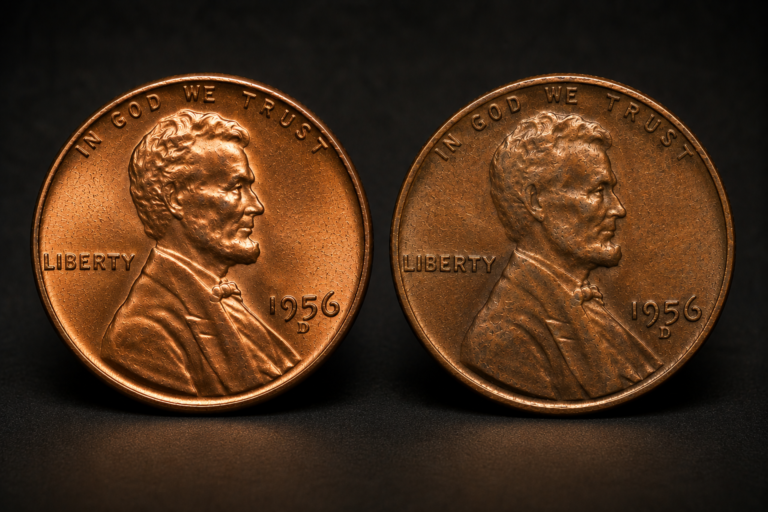
Comparing similar examples can help enormously. As explained in why experts compare coins side by side, differences in mark severity become easier to understand when several coins are viewed under identical lighting.
| Mark Characteristic | Usually Less Concerning | Potentially More Important |
|---|---|---|
| Location | Near the rim or in a less prominent area | Major focal area such as a portrait |
| Size | Tiny contact mark | Large, immediately visible mark |
| Depth | Light surface contact | Deep scratch or gouge |
| Visibility | Noticeable only at certain angles | Dominates normal viewing |
| Distribution | Few scattered minor marks | Distracting cluster in one focal area |
| Surrounding Surface | Strong, original, well-preserved surface | Already heavily disturbed surface |
Reality Check
There is no universal rule saying that one small mark costs a coin a specific number of grading points. Grading standards vary by coin type, grade range, severity of the imperfection, and the overall appearance of the coin. A minor contact mark can be acceptable within a high grade, while a severe or prominently located mark can have a much greater effect.
“Experts don’t ask whether a coin has a mark. They ask how much that mark changes the coin.”
Final Verdict
One small mark does not automatically lower a coin’s grade because professional evaluation considers much more than the existence of a single imperfection. Experts study where the mark appears, how large and deep it is, how visible it becomes under normal viewing, and how it relates to the quality of the surrounding surfaces. A tiny mark in an inconspicuous location may have little influence, while a deeper mark across a major focal area can matter considerably more. Learn to judge the effect of a mark rather than simply counting it, and your evaluations will become far more realistic.
Frequently Asked Questions
Does one scratch automatically lower a coin’s grade?
No. Its effect depends on factors including severity, location, visibility, and the overall preservation of the coin. A severe scratch can matter greatly, while a minor contact mark may be acceptable within the grade.
Why does the location of a mark matter?
Marks in major focal areas attract the eye more strongly. A mark across a portrait or clean open field can therefore be more distracting than a similar mark near the rim or within a busy design area.
Can a coin with contact marks still receive a high grade?
Yes. Mint State coins can have contact marks because coins may strike one another during mint handling and transportation without entering circulation. The number, severity, placement, and overall visual impact of those marks help determine how important they are.