Why Experts Look at the Fields Before the Design
Estimated Reading Time: 9 minutes
A coin’s portrait, date, lettering, and other design elements naturally attract attention. But when experienced collectors want to understand the condition of a coin’s surface, their eyes often move quickly toward something less dramatic: the open fields around the design.
Those relatively open areas can reveal an extraordinary amount of information. Fine hairlines may become easier to see. Contact marks have fewer design elements around them to compete for attention. Changes in luster can be followed across a broader surface, and disturbed texture may become more obvious as the coin moves beneath directional light.
This does not mean professional graders follow a rigid rule requiring them to inspect the fields before everything else. Depending on the coin and the question being investigated, high points, focal areas, strike, or the whole-coin impression may receive immediate attention. The real lesson is that fields deserve early scrutiny because they often provide unusually clear evidence about what has happened to a coin’s surface.
What This Article Explains
- What collectors mean when they refer to a coin’s field.
- Why open fields can make surface disturbances easier to recognize.
- How hairlines and contact marks behave under directional light.
- Why fields are useful when studying mint luster.
- How cleaning can alter the appearance of open surfaces.
- Why unusual reflections do not automatically prove damage.
- How fields and high points answer different questions about a coin.
Table of Contents
- What Exactly Is a Coin’s Field?
- Why Open Fields Reveal Problems So Quickly
- Hairlines Have Fewer Places to Hide
- Fields Make Contact Marks Easier to Judge
- Luster Has Room to Move Across the Fields
- Why Cleaning Can Become Obvious in the Fields
- Not Every Strange Reflection Is Damage
- Why Clean Fields Can Make a Coin Stand Out
- Fields vs High Points
- A Simple Field Examination Routine
What Exactly Is a Coin’s Field?
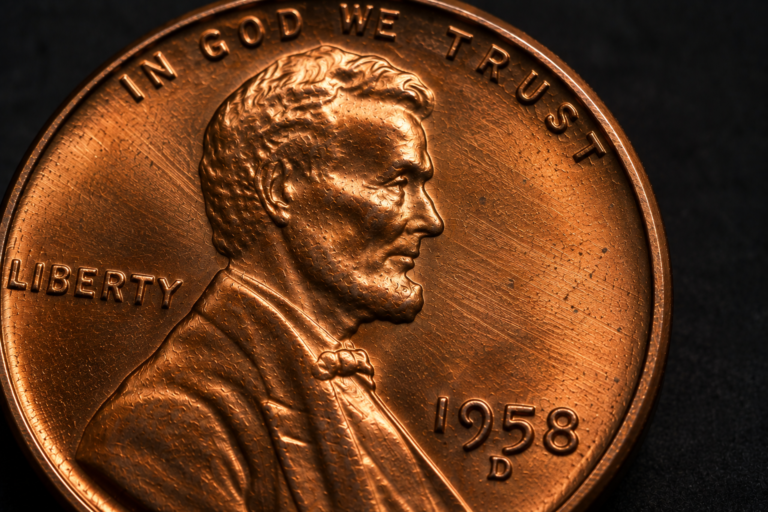
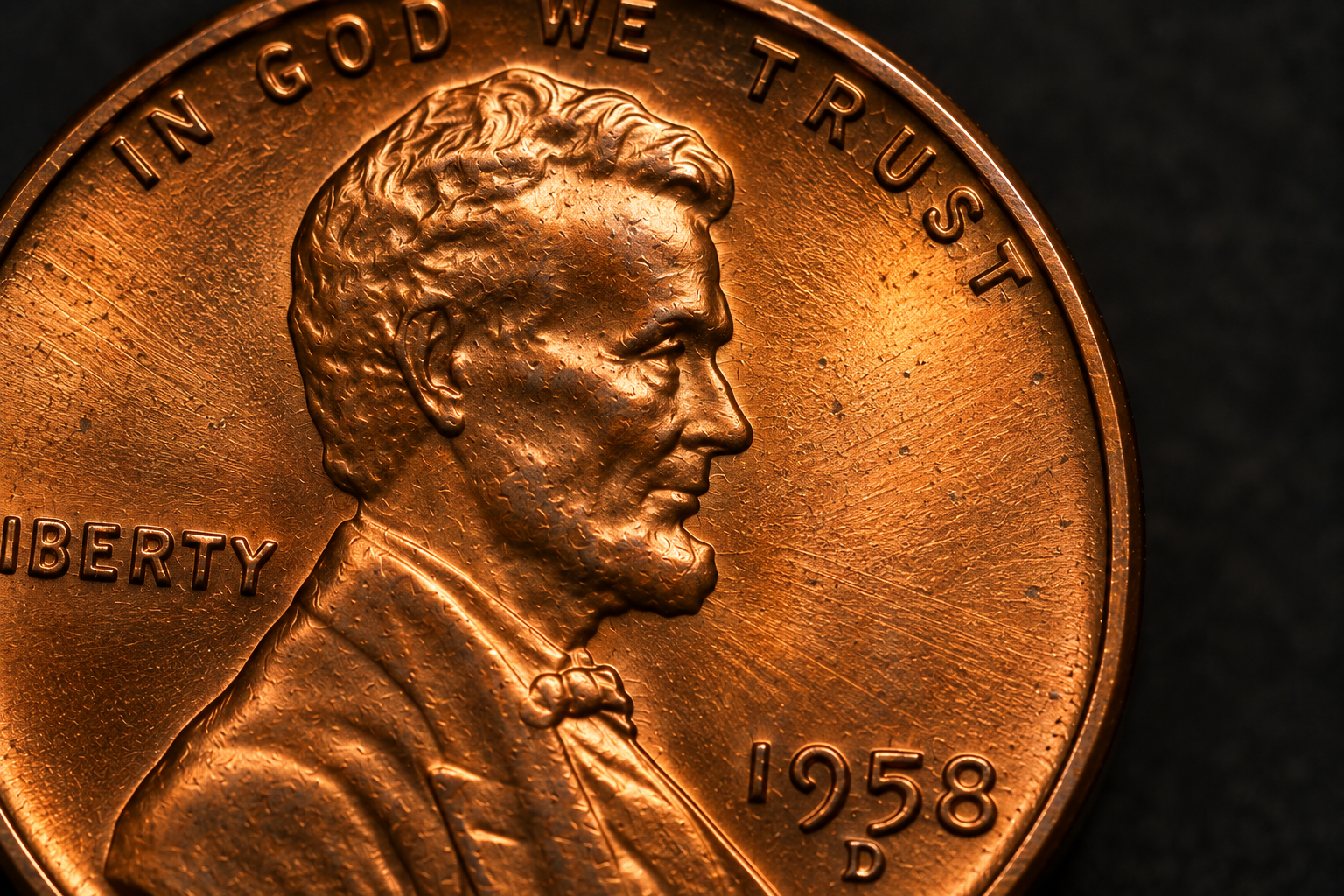
In numismatics, the field is the background area of a coin surrounding the main design elements, or devices. On a Lincoln cent, for example, Lincoln’s portrait, the date, and the inscriptions form prominent parts of the design, while the more open background surrounding them is the field.
The field should not be confused with the rim. The rim forms the raised outer boundary of the coin, while the field occupies areas inside it around the devices.
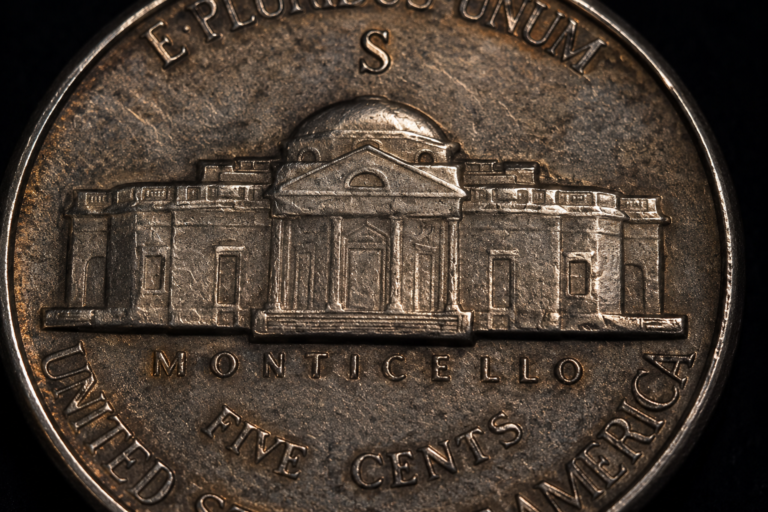
Fields are not always perfectly flat or completely empty. Their size, shape, texture, and visual prominence vary greatly among coin designs. Some coins contain broad open fields, while others have dense designs that leave relatively little open space.
That difference matters because a broad, visually quiet area can act almost like a canvas on which surface disturbances become easier to recognize.
Why Open Fields Reveal Problems So Quickly
Consider a tiny contact mark surrounded by hair, feathers, lettering, or another detailed part of a design. The surrounding shapes create visual competition. Your eye is processing many lines, edges, shadows, and relief changes at once.
Move an identical mark into a broad open field and it may become much easier to notice.
The mark has not necessarily become more severe. It has become more visually isolated.
The same principle can apply to scratches, abrasions, hairlines, patches of altered texture, and interruptions in luster. Open surfaces give these changes fewer design details to hide among.
This is one reason directional lighting reveals subtle surface changes so effectively. When the light crosses a relatively open field, small differences in surface texture can create reflections that stand apart from their surroundings.
However, an open field should not be expected to look like perfectly smooth glass. Mint-made surfaces can show flow lines, die-related texture, and other characteristics. The goal is not to find absolute smoothness. It is to understand whether the surface looks consistent with the rest of the coin.
Hairlines Have Fewer Places to Hide
Hairlines are extremely fine lines on a coin’s surface. They deserve careful interpretation because not every fine line has the same cause or importance.
One isolated line does not prove that a coin was cleaned.
Experienced collectors look for context. Are there numerous fine lines? Do they run in similar directions? Are they concentrated in exposed areas? Do they cross the field in a pattern consistent with wiping or another form of mechanical disturbance? How do they react when the coin rotates under light?
Open fields can make these patterns easier to recognize because the lines are not competing with dense design detail.
A group of fine parallel hairlines may remain almost invisible under one lighting position and suddenly flash when the coin is tilted. This is why cleaning hairlines can remain invisible until the light reaches the correct angle.
The expert response is not to label every flashing line as evidence of cleaning. It is to study the pattern, surrounding texture, luster, and the rest of the coin before reaching a conclusion.
Fields Make Contact Marks Easier to Judge
Contact marks are common on coins. Even Mint State coins can acquire marks through contact with other coins during handling, transportation, or storage.
But their visual impact varies enormously.
A small mark within a busy design area may be relatively inconspicuous. Place the same mark in a broad, clean field and the eye may find it immediately.
This does not mean marks in fields automatically receive a fixed grading penalty. Location is only one part of the evaluation. Size, depth, number, severity, and the surrounding surface all matter.
As explained in why the location of a contact mark changes its visual impact, experts do not simply count marks. They evaluate how strongly those marks affect the coin as a whole.
Luster Has Room to Move Across the Fields
Fields are especially useful when studying mint luster because broader surfaces can make the movement of reflected light easier to follow.
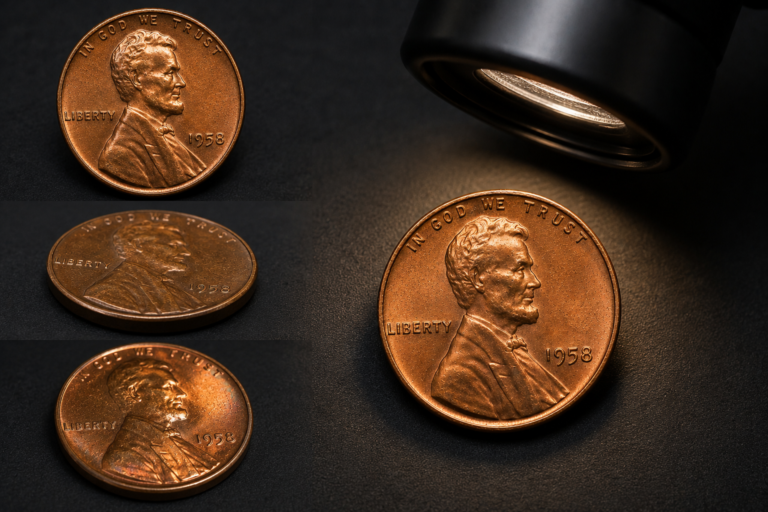
On many Mint State circulation strikes, rotating the coin beneath a fixed directional light causes reflections to sweep across the surface in a recognizable pattern. On suitable coins, this creates the familiar cartwheel effect.
Rather than concentrating on brightness, an experienced collector watches the behavior of that reflection.
Does it move continuously across the field? Does it weaken abruptly in one area? Does part of the surface appear dull compared with the surrounding metal? Is there an unusually reflective patch whose texture does not match the rest?
These observations do not automatically diagnose the cause of every difference, but they tell the examiner where closer investigation is needed.
This is why experts study the behavior of luster before concentrating on color. Color is visually powerful, but the movement of light can provide information about the underlying surface that color alone cannot.
Why Cleaning Can Become Obvious in the Fields
Improper cleaning can affect many areas of a coin, but evidence of that disturbance may be particularly noticeable across open fields.
Mechanical wiping can leave groups of fine lines. Abrasive cleaning may alter surface texture. Polishing can produce an unnaturally reflective appearance while disturbing or removing normal mint surface characteristics.
Broad fields can make these changes easier to compare with nearby undisturbed areas.
Brightness alone, however, is not proof of cleaning. Some original coins are naturally brilliant, and lighting can make a normal surface appear much brighter in photographs than it does in hand.
The stronger evidence comes from combinations of characteristics: repeated hairlines, altered texture, unusual reflection patterns, and inconsistencies between different areas of the surface.
This is also why experienced collectors avoid diagnosing a coin from one suspicious-looking patch alone.
Not Every Strange Reflection Is Damage
Directional lighting is powerful precisely because it exaggerates tiny differences in the surface. That also means it can mislead an inexperienced eye.
A minor contact mark can look deep when it catches a strong reflection. Natural texture can appear rough under extreme magnification. A thin reflection may resemble a scratch in a photograph even when another angle shows something quite different.
Toning can complicate the appearance further by changing how different areas reflect light.
The solution is movement.
Instead of making a decision from one reflection, slowly rotate the coin and watch what happens. A genuine surface line will behave differently as the geometry between the coin, light, and eye changes. Other apparent features may disappear or reveal themselves as reflections rather than physical disturbances.
This is why experts move the coin instead of trusting one reflection and why one fixed viewing angle cannot reveal every surface characteristic.
Why Clean Fields Can Make a Coin Stand Out
When two otherwise similar coins are compared, relatively clean fields can make one example immediately appear stronger.
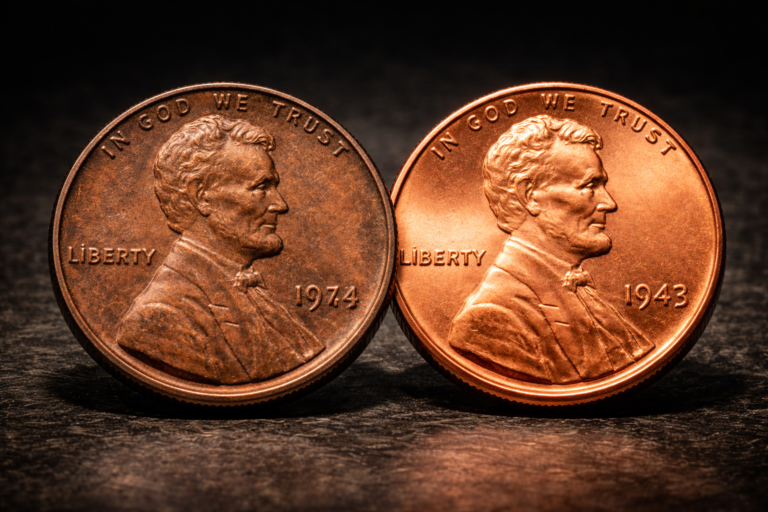
Imagine two Lincoln cents with similar color, strike, and luster. The first has broad fields with only a few minor, unobtrusive marks. The second has several noticeable hits around the portrait and date.
The first coin may look calmer and better preserved even before you consciously identify every individual mark.
This is part of why clean focal areas can make one coin immediately appear stronger.
But clean fields alone do not establish a high grade. A coin can have attractive fields while showing wear, weak luster, poor strike, or significant problems elsewhere. Fields are important evidence, not a grading shortcut.
Fields vs High Points: They Answer Different Questions
It might seem contradictory to say that experts pay close attention to fields when high points are also critical during examination. In reality, the two areas often answer different questions.
High points are particularly useful when investigating friction and wear because they are among the areas most exposed to contact during circulation.
Fields, meanwhile, can be especially revealing when evaluating surface preservation, contact marks, hairlines, texture, and the behavior of luster.
This is why high points provide different information about wear and friction.
Neither area should be examined in isolation. Experts move between fields, devices, high points, focal areas, rims, and the whole coin because each provides a different part of the story.
A Simple Field Examination Routine
You can practice reading fields without immediately trying to assign a grade.
Begin by looking at the whole coin under normal lighting. Notice the overall appearance before magnification or individual defects begin to dominate your attention.
Next, place the coin beneath one stable directional light and focus on one of the larger open fields. Slowly tilt and rotate the coin rather than moving the light constantly.
Watch the luster first. Follow the reflection across the field and notice whether its behavior changes unexpectedly.
Then look for marks. Do not count them. Instead, notice their size, depth, location, and how strongly they attract your eye.
Look for groups of fine hairlines, especially repeated lines moving in similar directions. If you see them, change the viewing angle before deciding what they mean.
Compare the field with nearby devices. Does the texture appear consistent? Does one area look unusually bright, dull, smooth, or disturbed?
Finally, return to the whole coin. A microscopic feature that looks dramatic under magnification may have very little visual impact at normal viewing distance.
| What Experts See | What It May Suggest | What It Does Not Prove Alone |
|---|---|---|
| Clean open field | Good surface preservation | A high grade |
| Fine isolated line | Minor contact or abrasion | Improper cleaning |
| Groups of hairlines | Possible mechanical surface disturbance | Cleaning without additional evidence |
| Strong, continuous luster | Well-preserved mint surface characteristics | That every part of the coin is uncirculated |
| Interrupted reflection | An area worth closer examination | Damage or wear by itself |
| Deep contact mark | A more significant surface hit | An exact reduction in grade |
| Unusual brightness | A surface worth investigating | Polishing or cleaning automatically |
| Dull area | Possible friction, disturbance, or different surface behavior | Circulation wear without further examination |
Reality Check
Fields are revealing, but they are not a grading shortcut. A clean field cannot compensate automatically for significant wear, poor surface quality elsewhere, or other serious problems. Likewise, a few visible marks in an open field do not automatically make a coin low grade. Experts combine evidence from the fields with the high points, devices, strike, luster, marks, wear, and overall eye appeal before reaching a broader conclusion.
“The design attracts your eye. The field gives the surface fewer places to hide.”
Final Verdict
Experts pay close attention to a coin’s fields because open surfaces can make important evidence easier to recognize. Hairlines have fewer design details to hide among, contact marks become easier to judge, and the movement of luster can often be followed clearly across broad areas. Fields can also expose inconsistencies in texture or reflection that deserve closer examination. But they never tell the entire story by themselves. The strongest evaluation comes from understanding what the fields reveal, comparing that evidence with the high points and devices, and then returning to the whole coin. Once you learn to read the quiet areas around the design, you begin seeing surface information that is easy to miss when the portrait and lettering receive all your attention.
Frequently Asked Questions
What is the field of a coin?
The field is the background area surrounding the main design elements, or devices, on a coin. Its appearance varies by design, but broad open fields are often useful for studying luster, marks, hairlines, and surface texture.
Do hairlines in the field always mean a coin was cleaned?
No. One or two fine lines do not prove improper cleaning. Experts consider the number and pattern of the lines, their direction, the surrounding surface texture, luster, and how the lines react under changing light before deciding what they may represent.
Does a coin with clean fields automatically deserve a high grade?
No. Clean fields can improve surface quality and eye appeal, but grading also considers wear, luster, strike, marks elsewhere on the coin, surface preservation, and other characteristics. Fields are one important part of the complete evaluation.