Why Open Fields Reveal Coin Problems So Quickly

Estimated Reading Time: 9 minutes
A tiny contact mark can almost disappear among the lines of a portrait, lettering, or another detailed part of a coin. Put a mark of similar size in a broad open field and suddenly your eye finds it immediately. The mark did not become larger. The surface around it simply gave it fewer places to hide.
This is one reason experienced collectors pay so much attention to open fields. These visually quiet areas can make hairlines, abrasions, contact marks, changes in texture, and interruptions in luster easier to detect. Under directional light, even subtle disturbances may stand apart from the surrounding surface.
But visibility must not be confused with severity. A tiny mark that is easy to see is not automatically a serious problem, and an unusual reflection does not automatically prove wear, cleaning, or damage. Experts use open fields to find clues. They then examine those clues in context before deciding what they mean.
What This Article Explains
- Why visual contrast makes problems easier to see in open fields.
- Why the same mark can look more distracting in one location than another.
- How open fields reveal patterns of fine hairlines.
- Why interruptions in luster deserve closer examination.
- How experts compare surface texture across broad areas.
- Why mint-made texture can sometimes confuse beginners.
- How magnification can exaggerate the apparent importance of tiny defects.
- A simple method for examining an open field in seconds.
Table of Contents
- The Secret Is Visual Contrast
- Why the Same Mark Looks Worse in an Open Field
- Hairlines Become Easier to Follow
- Open Fields Expose Luster Breaks
- Surface Texture Becomes Easier to Compare
- Why Cleaning Patterns Can Stand Out
- Mint-Made Texture Can Fool Beginners
- Magnification Can Make Problems Look Worse
- Why Movement Matters More Than One Reflection
- Open Fields Are Revealing, Not Unforgiving
- A 15-Second Open-Field Test
The Secret Is Visual Contrast
Open fields are useful because they reduce visual noise.
A detailed part of a coin may contain raised design elements, lettering, edges, shadows, changes in relief, and numerous small lines. Your eye has to separate a possible surface problem from all of those normal design features.
A broad field is different. Because the area contains fewer major design elements, a line or mark that interrupts the surface can create stronger visual contrast.
This is the basic reason a disturbance may seem more obvious there. The field does not magnify the problem. It makes the difference between the disturbance and the surrounding surface easier for your eye to recognize.
As explained in why open fields deserve early attention during surface examination, these areas can provide unusually clear evidence about surface preservation.
Why the Same Mark Looks Worse in an Open Field
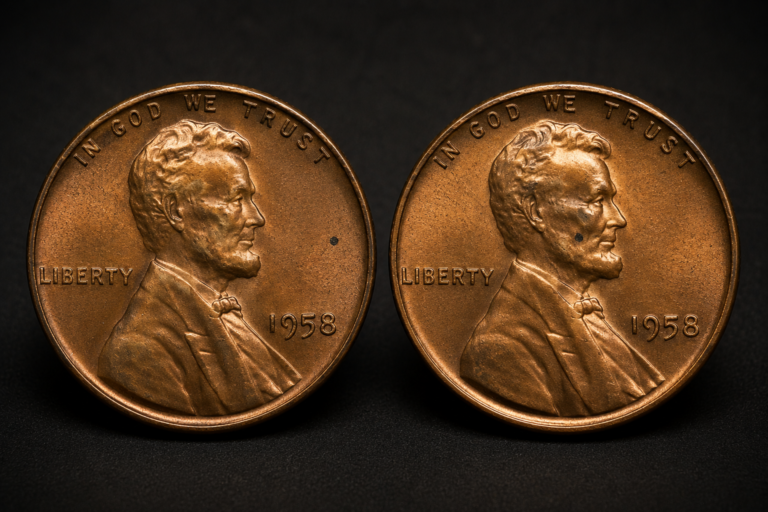
Imagine two Lincoln cents. Each has a small contact mark of approximately the same size and depth.
On the first coin, the mark lies within a detailed part of Lincoln’s hair. On the second, it sits alone in the open field in front of the portrait.
The second mark may attract your attention much faster because it is visually isolated. There are fewer surrounding lines and design elements competing with it.
This does not automatically mean the second coin deserves a lower grade. The actual significance of a mark depends on its location, severity, depth, surrounding surface, and effect on overall eye appeal.
That distinction is central to why the visual impact of a mark depends heavily on its location.
Experts therefore separate two questions: How easy is this mark to see? and How important is this mark to the coin’s overall evaluation?
Those questions are related, but they are not identical.
Hairlines Become Easier to Follow
Open fields can be particularly useful for studying hairlines because fine lines become easier to follow across a visually quiet surface.
An experienced collector does not simply notice that a line exists. The collector studies its direction, length, repetition, concentration, and behavior under light.
One isolated fine line might result from ordinary contact or another minor surface event. Numerous lines running in similar directions may deserve closer attention, especially if the surrounding texture or luster also appears disturbed.
This is why the pattern matters more than the existence of one hairline.
When a coin has been mechanically wiped or otherwise improperly treated, groups of fine directional lines can sometimes become visible as the coin is tilted. Open fields can make those patterns easier to recognize because the lines can be followed across a larger uninterrupted area.
However, visible hairlines do not automatically prove cleaning. Experts compare them with the surrounding surface and look for additional evidence before making that conclusion.
Open Fields Expose Luster Breaks
Broad fields can also provide an excellent place to observe the behavior of mint luster.
Under directional light, reflections may sweep across the field as the coin rotates. If the surface is well preserved, that movement can appear relatively continuous. When the reflection suddenly weakens or changes in a small area, the interruption naturally attracts attention.
The important skill is recognizing the difference between detecting a change and diagnosing its cause.
A change in reflection may deserve investigation, but it does not automatically mean circulation wear. Toning, contact, surface disturbance, strike characteristics, or other factors can alter the way a small area reflects light.
Experts therefore investigate the area rather than immediately labeling it.
This is why interruptions in luster deserve attention before color. The behavior of reflected light can direct the examiner toward areas that need closer study.
Surface Texture Becomes Easier to Compare
Another advantage of a broad field is that it gives the eye a larger area across which to compare texture.
Suppose most of the field shows one consistent surface character, but a small section suddenly looks unusually smooth, dull, rough, or reflective. That difference can stand out when the coin is moved under light.
The expert then asks why.
Has the area experienced friction? Is there a concentration of tiny abrasions? Does the texture reflect a mint-made characteristic? Has something altered the surface after the coin left the Mint?
Again, the field helps locate the difference. It does not provide the diagnosis by itself.
This distinction prevents one of the most common beginner mistakes: treating every unusual-looking area as damage.
Why Cleaning Patterns Can Stand Out
Improper cleaning may alter a coin in several ways. Mechanical wiping can leave fine directional lines. Abrasive treatment can disturb texture. Polishing may create a reflective appearance that behaves differently from normal mint luster.
Open fields can make some of these effects easier to recognize because the examiner can compare the disturbed area with a broader surrounding surface.
For example, repeated parallel hairlines may become obvious when directional light catches them simultaneously. An unusually smooth patch may reflect differently from the field around it.
But brightness is not evidence of cleaning by itself.
An original coin can be brilliant. A photograph can also make a normal surface look unusually bright. Reliable evaluation requires multiple characteristics, not a rule that says “shiny equals cleaned.”
This is why repeated hairlines can help reveal disturbed surfaces, but those lines still need to be interpreted in context.
Mint-Made Texture Can Fool Beginners
Not every line, irregularity, or unusual texture in a field happened after the coin entered circulation.
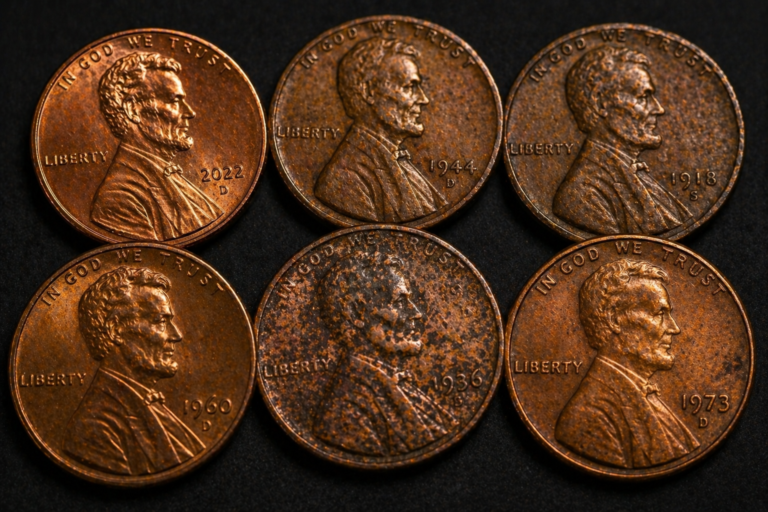
Coins can show characteristics connected with the dies and striking process. Die polish lines, for example, originate from work performed on the die and can appear on struck coins as raised lines. Flow-related surface characteristics and signs of die deterioration can also influence how a field looks.
This distinction matters because a beginner may see lines in an open field and immediately call them scratches.
A scratch is cut into or disturbs the coin’s surface. A die-origin line is transferred from the die during striking and can therefore have different physical characteristics.
Determining the exact origin may require magnification and knowledge of the specific coin issue, but the broader lesson is simple: surface irregularity does not automatically mean post-mint damage.
Magnification Can Make Problems Look Worse
Magnification is extremely useful for identifying small features, but it can distort your sense of their importance.
A tiny contact mark viewed at strong magnification may fill a large portion of your field of vision. A microscopic hairline can look like a major scratch. Small patches of texture can appear dramatic simply because you are seeing them at a scale far beyond normal viewing.
Experts use magnification to investigate, then return to a more natural viewing distance to judge visual impact.
This matters especially in open fields because small imperfections are already easy to isolate visually. Adding excessive magnification can make a minor feature seem more important than it actually is.
The goal is not to find a perfectly flawless surface. Most coins will reveal something when examined closely enough. The goal is to determine which characteristics meaningfully affect preservation, originality, or eye appeal.
Why Movement Matters More Than One Reflection
A stationary coin gives you one reflection. A moving coin gives you information about how the surface behaves.
Keep a directional light relatively stable and slowly tilt the coin. Watch a suspicious line or patch as the reflection moves across it.
Does the feature remain visible? Does it flash only at a narrow angle? Does the surrounding luster continue through it? Does the area react differently from the rest of the field?
Movement can answer questions that one still image cannot.
This is why movement reveals information a stationary coin can hide and why one reflection cannot represent the entire surface.
It is also why a coin that looks flawless in one photograph can reveal numerous fine lines when viewed from another angle without either image necessarily being deceptive.
Open Fields Are Revealing, Not Unforgiving
Once collectors learn how much information fields can reveal, there is a danger of becoming too critical.
A visible mark in an open field does not automatically make a coin undesirable. Mint State coins can have contact marks. Older circulated coins can show numerous surface disturbances and still be entirely normal for their level of preservation.
The field makes those characteristics easier to see, but increased visibility does not increase their physical severity.
Experts therefore return to the whole coin. How distracting is the feature at normal viewing distance? Is it located in an important focal area? How does it compare with other examples of the same type and grade range? What is the quality of the rest of the surface?
Relatively clean fields can contribute strongly to why well-preserved surfaces can strengthen overall eye appeal, but no field should be judged in isolation from the rest of the coin.
A 15-Second Open-Field Test
You can practice this examination without trying to assign a numerical grade.
First, look at the whole coin. Then identify one of its largest open fields and place the coin beneath a stable directional light.
Slowly tilt the coin and follow the reflection across that field. Notice whether the luster appears continuous or whether small areas behave differently.
Next, identify obvious marks and fine lines without immediately judging them. Look for repeated directions or concentrations rather than simply counting every imperfection.
If something looks suspicious, change the viewing angle. Compare its texture and reflection with the surrounding surface.
Use magnification only when you need to understand the feature more clearly.
Then reduce the magnification and look at the entire coin again.
That final step is essential. The field helps you find evidence. The whole coin tells you how much that evidence actually matters.
| What Appears in the Field | Why It Stands Out | What Experts Check Next |
|---|---|---|
| Single contact mark | Strong contrast with a quiet background | Size, depth, location, and visual impact |
| Fine hairlines | Easier to follow across an open surface | Pattern, direction, repetition, and surrounding texture |
| Luster interruption | Breaks an otherwise moving reflection | Friction, disturbance, toning, or another cause |
| Dull patch | Contrasts with surrounding reflectivity | Texture and behavior under changing light |
| Very bright area | Reflects differently from nearby surfaces | Originality, texture, and luster behavior |
| Parallel lines | Repetition becomes easier to recognize | Possible wiping or another origin |
| Rough texture | Can be compared with the surrounding field | Whether it appears mint-made or post-mint |
| Tiny isolated scratch | Visually exposed against the open surface | Actual severity at normal viewing distance |
Reality Check
Open fields reveal differences quickly, but visibility is not the same as severity. A tiny contact mark can be extremely easy to see against a clean field while remaining relatively minor in the overall evaluation. Hairlines do not automatically prove cleaning, a change in luster does not automatically prove wear, and unusual texture does not automatically prove post-mint damage. The field shows you where to look. Evidence from the rest of the coin helps explain what you are seeing.
“Open fields do not make problems larger. They simply make them harder to hide.”
Final Verdict
Open fields reveal coin problems quickly because they reduce the visual noise surrounding small surface disturbances. Contact marks become isolated, hairline patterns are easier to follow, changes in texture stand apart from neighboring areas, and interruptions in luster can become obvious as light travels across the surface. But the expert skill is not merely finding more flaws. It is interpreting them correctly. Visibility does not equal severity, and no single line, reflection, or dull patch should be diagnosed without context. Use the open field to locate clues, use movement and light to investigate them, and then return to the whole coin to decide how much they really matter.
Frequently Asked Questions
Why are scratches easier to see in open coin fields?
Open fields contain fewer design elements, edges, and relief changes competing for attention. A scratch or contact mark can therefore create stronger visual contrast with the surrounding surface and become easier to notice.
Do hairlines in an open field prove that a coin was cleaned?
No. Individual hairlines can have different causes. Experts consider their direction, repetition, concentration, surrounding texture, luster, and other surface evidence before deciding whether they may be associated with improper cleaning.
Are marks in open fields always more important for grading?
No. A mark can be easier to see in an open field without being physically more severe. Its grading significance depends on factors such as location, size, depth, number, surrounding surface preservation, and overall visual impact.